Owusu on Africa
Ghana moves to convince junta-led Sahel states to return to ECOWAS


By Fidel Amakye Owusu
The decision by three landlocked nations—Burkina Faso, Mali, and Niger – to leave the Economic Community of West African States (ECOWAS) has sparked an unprecedented diplomatic crisis in the region. These countries have been members of the bloc since its establishment in 1975, and their departure represents a significant shift in West Africa’s political landscape.
Initially, ECOWAS appointed the President of Senegal to mediate between the coastal states and the Sahelian nations, owing to his considerable goodwill with the military governments. However, these mediation efforts faltered, and a summit in late 2024 ultimately accepted the withdrawal of Burkina Faso, Mali, and Niger from the bloc.
The strategic importance of keeping the landlocked states within ECOWAS cannot be overstated, particularly given the region’s security challenges. For years, violent extremist organizations have posed growing threats to several coastal nations, with their strongholds in the three Sahelian countries.
The departure of these states from ECOWAS raises serious questions about future regional security dynamics.
This situation underscores the necessity for continued cooperation between the coastal states and the junta-led nations. Furthermore, the growing influence of Russia as a primary backer of these regimes could have far-reaching implications for the region, as global powers increasingly turn their attention to Africa.
Ghana’s Diplomatic Efforts and the Road to Reconciliation
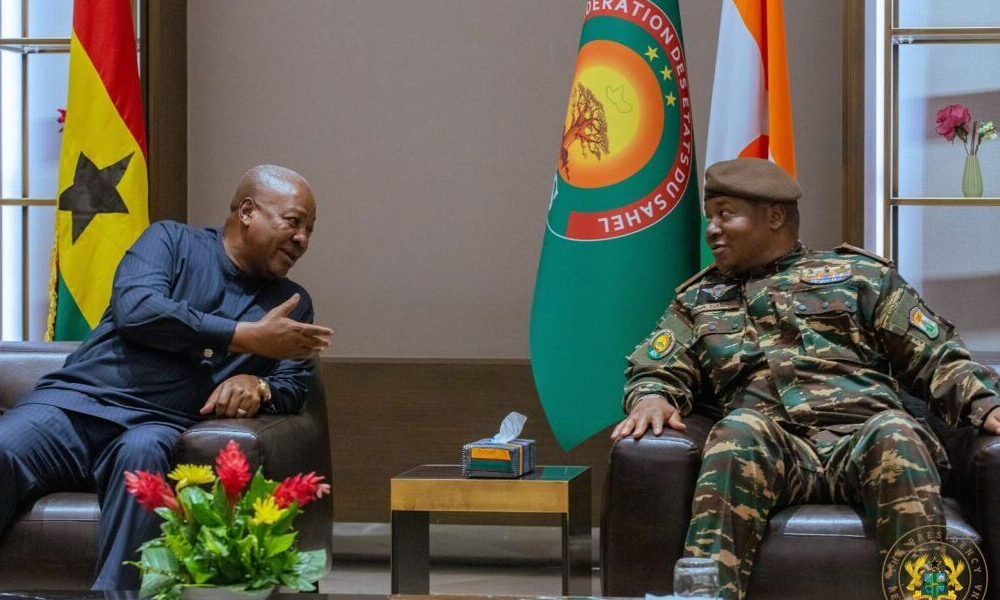
In a sign of diplomatic engagement, the newly inaugurated President of Ghana extended an invitation to the military leaders of the Sahelian countries, with the leader of Burkina Faso attending the ceremony. Shortly after taking office, the Ghanaian president appointed a Special Envoy to the Sahel, selecting a distinguished retired military commander for the role.
In his inaugural speech, he emphasized the importance of African states engaging with multiple global actors in a multipolar world.
Despite these diplomatic moves, one of the key challenges in negotiating with the military juntas is their insistence on maintaining central control over their countries’ future. This creates a direct conflict with the ECOWAS protocol, which prohibits coup leaders from running for elections during transitions, complicating efforts to reintegrate the Sahelian states into the bloc.
Although the Ghanaian president enjoys some goodwill with the juntas, the question remains: what could convince them to reconsider their decision and rejoin ECOWAS? Ghana’s leader has demonstrated impressive diplomatic skills in the past, navigating complex issues such as Ghana’s maritime dispute with Côte d’Ivoire (Ivory Coast) and the Ebola crisis a decade ago.
As ECOWAS Chairman, he also played a key role in the region’s fight against violent extremist organizations in 2013 and 2014.
Now, with the Sahel in turmoil, the world watches to see whether the Ghanaian president’s diplomatic acumen will succeed in bringing the fractured region back into the fold of ECOWAS.
Fidel Amakye Owusu is an International Relations and Security Analyst. He is an Associate at the Conflict Research Consortium for Africa and has previously hosted an International Affairs program with the Ghana Broadcasting Corporation (GBC). He is passionate about Diplomacy and realizing Africa’s global potential and how the continent should be viewed as part of the global collective.