Politics
Ghana has a smaller fistful of dollars
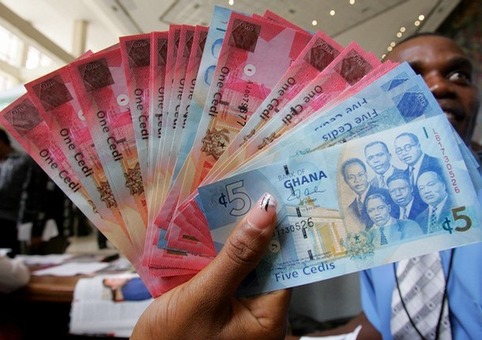
You know you are in trouble when pastors are seeking divine intervention for your currency. On the Sunday that followed the Bank of Ghana’s attempt to halt the flow of dollars out of the country, Ghanian preacher Archbishop Duncan-Williams commanded the cedi to rise in the name of Jesus, and asked his congregation to pray for the currency’s health.
On 4 March, exactly a month after the imposition of restrictions on foreign exchange (forex) activities, in part to stem the downward spiral of the exchange rate, the regulator took out a full-page advert in the dailies. Offering “clarification to notices” on forex trading, it aimed to calm the nerves of participants in the forex market and reassure the business community of the good intentions of the directives, which sought to reinforce the provisions of the various financial laws already in place, for ex- ample the Foreign Exchange Act of 2006.
Parallel currency
The restrictions in forex trading are part of a series of problems currently challenging the Ghanaian economy. They include the behavior of the currency, high interest rates, inflation, increasing levels of national debt and reduced commodity prices. The sharp decline in the exchange rate appears to have triggered a second look at parallel currency usage in Ghana.
The government had given some service providers, such as hotels, exemptions to allow them to quote their rates in United States dollars. Others jumped on the bandwagon with dollar quotations for rent, school fees and even cable television services. The regulator canceled all such exemptions and directed all businesses to state their fees in cedi. At an exchange rate of ¢0.90 to the dollar in 2007, the cedi depreciated to ¢2.56 in February.
The drop was so marked that the regulator imposed restrictions on operations of foreign exchange accounts and foreign accounts as well as the repatriation of export proceeds. In line with other emerging markets experiencing similar runs on their currencies, the central bank increased interest rates by adding 2 percent to the policy rate, pegging it at 18 percent.
The effect of the high interest rate has, among other things, made the cost of doing business expensive. “The issues confronting Ghana are not unique”, says finance minister Seth Terkper. He went on to say, “We have an exposure in terms of our bonds, we have exposure in terms of seasonality, we have a direct exposure .. when the dollar changes, it affects gold. Part of the problems we are facing are global in character.”
The pressure of inflation, currently at 13.8 percent, is also adding to the economic challenges as the central bank’s latest outlook on inflation predicts that the “government is likely to miss the inflation target of 9.5 percent for 2014”, just as it missed last year’s target of 9 percent. Acknowledging the government’s relatively high debt stock, President John Mahama, in his February state of the nation address, said: “Our domestic debt and the current high interest rates are a major challenge to the economy.”
Commodities to blame
Speaking at the American Chambers of Commerce Summit in Accra in February, vice-president Kwesi Amissah-Arthur attributed the depreciation of the cedi to a decrease in commodity prices, with gold and cocoa both dropping 20% in value since 2011.
“In 2013, Ghana lost $1.3bn [in] potential export revenue due to price declines on these two products,” he said.
The forex trading restrictions have dampened economic activity. According to one bank chief executive: “It is not business as usual.” Bankers hope this will lead to only short-term problems.
In its latest assessment of the Ghanaian economy, the International Monetary Fund urged the government to “address the short-term vulnerabilities, contain rising public debt levels and reduce interest rates” in order to stabilise the economy and support private-sector development, growth and employment creation over the medium term.
Source: The Africa Report