Alorh’s eye on the Motherland
Geopolitics of territories: Horn Region


By Mary Alorh
Former Ghanaian President John Evans Atta Mills’ neutral stance during the Ivorian crisis in 2010 demonstrated remarkable diplomatic acumen. When urged by then-opposition leader Nana Akufo-Addo to take sides, Mills famously responded with the Fante phrase “Dzi wo fie asem” (“Mind your own business”), emphasizing the importance of maintaining regional harmony and cooperation over political interference.
This approach not only reinforced Ghana-Ivory Coast relations but also fostered lasting goodwill and collaboration between the neighboring nations. In stark contrast, Ethiopia’s recent foreign policy choices, particularly regarding Somaliland, have sparked significant geopolitical tensions in the Horn of Africa.
Ethiopia-Somaliland Relations and their Regional Implications
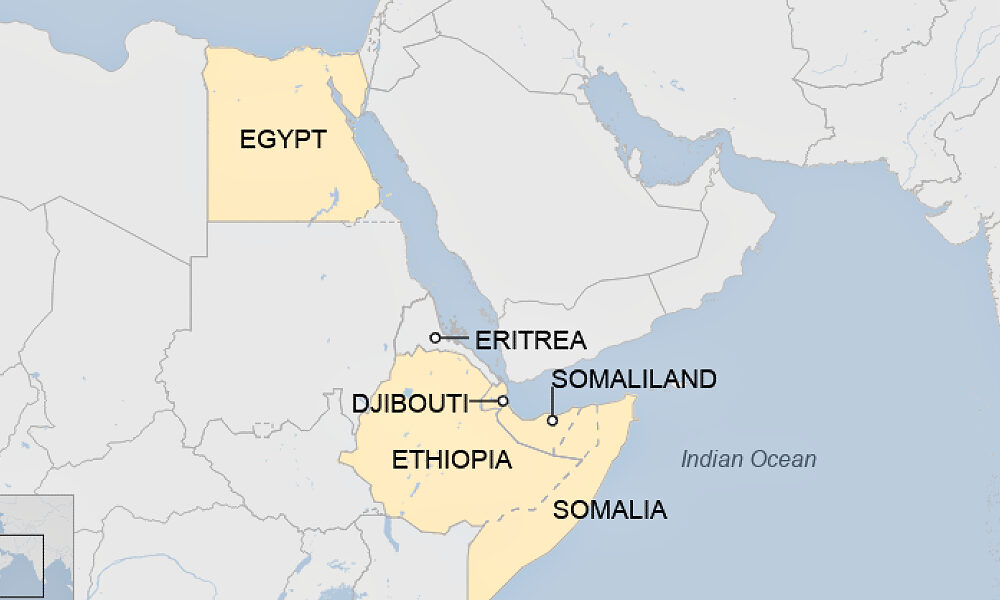
In 2018, Ethiopia, a landlocked nation, purchased shares in a DP World-managed port in Somaliland, an autonomous region located on the southern coast of the Gulf of Aden and considered part of Somalia. Despite Somaliland’s lack of international recognition, Ethiopia deepened its ties by signing a 50-year agreement in early 2024.
This deal grants Ethiopia access to Somaliland’s Red Sea coast for the development of a naval base and a commercial port along 19 kilometers (12 miles) of shoreline. In exchange, Ethiopia committed to recognizing Somaliland’s statehood.
This move has heightened tensions with Somalia, which views Somaliland as a breakaway region and regards Ethiopia’s actions as a direct threat to its sovereignty. Already grappling with internal instability and the ongoing menace of Al-Shabaab insurgents, Somalia now faces increased external pressure in its own region.
Somalia’s Strategic Alliance with Egypt
Feeling encircled, Somalia has sought to bolster its position by aligning with Egypt, a nation locked in its own dispute with Ethiopia over the Grand Ethiopian Renaissance Dam (GERD) on the Blue Nile. The GERD, Ethiopia’s flagship hydropower project, has been a source of contention due to concerns over its potential impact on Egypt’s primary water source.
Egypt relies on the Nile for 90 percent of its freshwater and views Ethiopia’s unilateral actions regarding the dam as a severe threat to its water security. Disagreements stem from Ethiopia’s rejection of colonial-era treaties (1929 and 1959), which granted disproportionate control of Nile waters to Egypt and Sudan despite Ethiopia contributing 80 percent of the river’s flow.
To counterbalance Ethiopia’s growing influence, Somalia and Egypt signed a defense pact, paving the way for Egyptian troops to operate within the African Union peacekeeping mission in Somalia and under bilateral agreements. This partnership underscores both nations’ shared concerns over Ethiopia’s ambitions in the region.
Risk of Escalation in the Horn of Africa
Ethiopia’s newfound access to the Red Sea positions it as an emerging maritime power, a development Egypt perceives as a direct threat to its security and the strategic Suez Canal. Somaliland, for its part, regards Egypt’s troop presence as unwarranted interference, intensifying tensions in the Horn of Africa.
The evolving dynamics threaten to disrupt Ethiopia’s historical dominance in Somalia and reshape the region’s power balance. The security situation is poised to deteriorate further.
Ethiopia has signaled its readiness to defend its interests, while Somalia appears prepared to support Ethiopian rebel factions, potentially fueling a wider conflict. The interplay of national ambitions, historical grievances, and external alliances underscores the fragile stability of the region and the urgent need for diplomatic resolution to avoid escalating violence.
Mary Alorh is Director of Administration at DefSEC Analytics Africa Ltd., and is an expert in Gender, Youth, and Peace & Security initiatives in West Africa.