Owusu on Africa
Gabon Embraces Resource Nationalism: Plans to Halt Manganese Exports by 2029


By Fidel Amakye Owusu
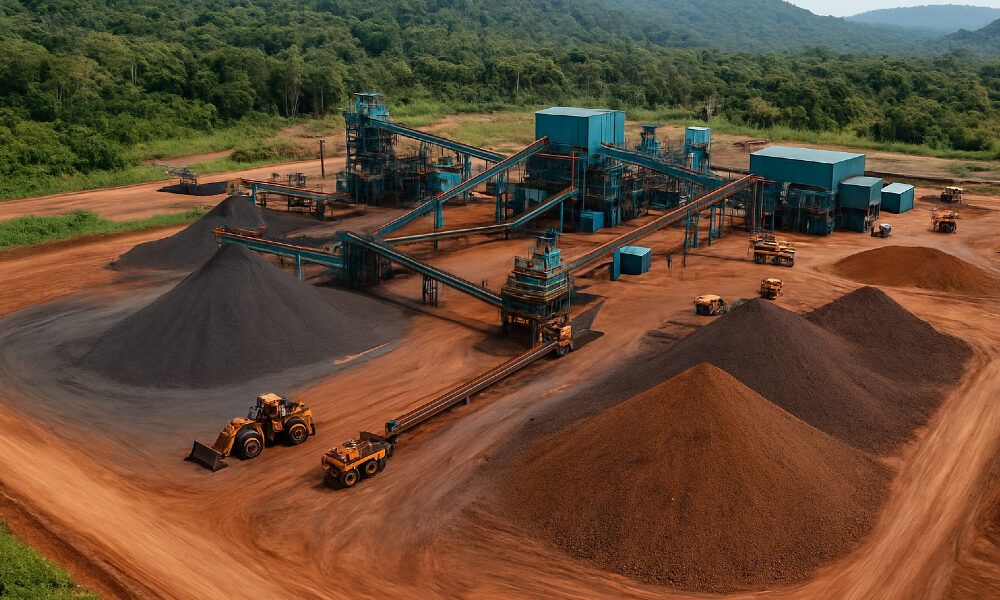
In 2024, Gabon emerged as the world’s second-largest producer of manganese, churning out 4.6 million metric tons of the critical metal – second only to South Africa. That same year, the Central African nation supplied over 60 percent of the United States’ manganese ore imports, underscoring its growing strategic importance in global mineral markets.
Rich in natural resources – including diamonds, gold, oil and gas, niobium, and phosphate rock – Gabon stands out in Africa for its wealth of commercially viable deposits. With a population of just 2.5 million, these resources have helped position Gabon among the continent’s nations with the highest per capita incomes.
The Gap Between Wealth and Well-Being
Yet, despite this resource abundance, the country faces persistent socio-economic challenges. Youth unemployment remains alarmingly high, and poverty levels continue to rise in tandem.
Moreover, Gabon ranks relatively low on the Human Development Index, revealing a stark contrast between its economic potential and social realities.
A few days ago, President Brice Nguema announced on May 30, 2025, that Gabon will halt the export of raw manganese by 2029. The directive, issued from the highest office in the land, signals a clear commitment to reshaping the country’s resource strategy.
The move is intended to foster domestic industrial development by encouraging local processing of manganese. According to the president, this transition will not only create skilled employment opportunities but also enable value addition and help retain capital within the national economy.
A Regional Trend Toward Resource Sovereignty
Gabon’s pivot reflects a broader trend across Africa, where resource-rich nations are increasingly adopting policies of resource nationalism. From renegotiating mining contracts to enforcing local participation requirements and imposing higher taxes, countries are seeking to extract greater value from their natural endowments.
To support this transformation, authorities plan to establish a public-private partnership fund, which will serve as the financial engine driving the development of local processing infrastructure.
While some of these initiatives have sparked controversy, others – like Gabon’s – are being carefully planned and implemented through transparent, rule-based processes. If successful, Gabon’s approach could offer a blueprint for sustainable resource-driven development in the region.
Fidel Amakye Owusu is an International Relations and Security Analyst. He is an Associate at the Conflict Research Consortium for Africa and has previously hosted an International Affairs program with the Ghana Broadcasting Corporation (GBC). He is passionate about Diplomacy and realizing Africa’s global potential and how the continent should be viewed as part of the global collective.