Opinion
From Tomatoes to Cocoa and Textiles: Africa’s Quiet Industrial Turn


By Franco Bonghan
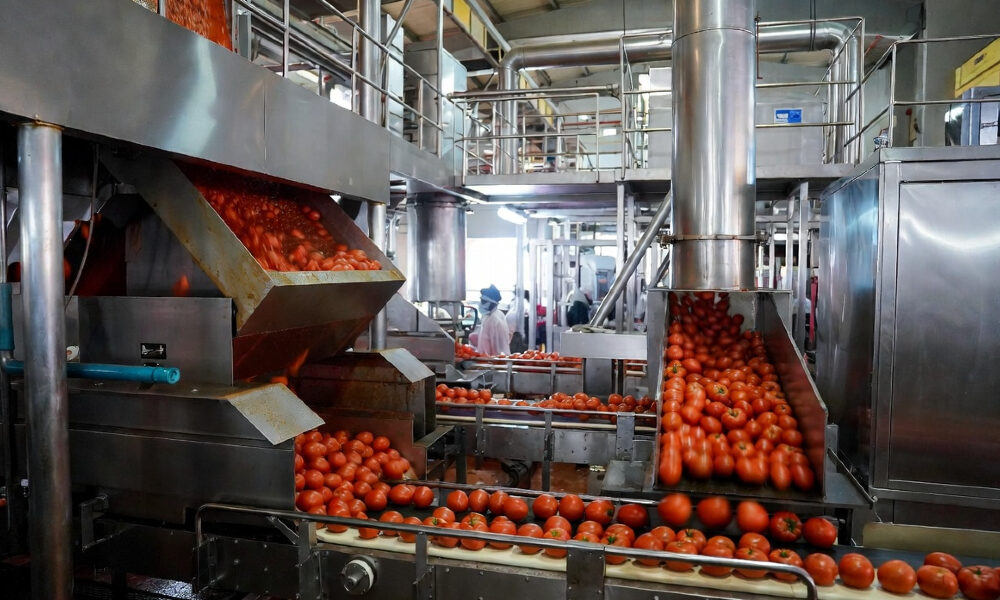
When Burkina Faso banned fresh tomato exports to feed its own processing plants, it did more than protect a crop. It quietly repudiated four decades of economic doctrine that told an entire continent to stay poor on purpose.
The decision – suspending tomato exports “until further notice,” cancelling export permits, and redirecting seized produce to domestic factories – looks, on its surface, like a minor agricultural policy adjustment. It is nothing of the sort. It is a deliberate, sovereign act of industrial self-defense, and Africa should be paying close attention.
The Policy That Broke African Industry
To understand why this matters, one must revisit the wreckage. In the 1960s through the 1980s, many African economies pursued import-substitution industrialization with genuine ambition – building textile mills, food-processing facilities, and light manufacturing sectors designed to serve their own populations first.
It was imperfect, often inefficient, and sometimes corrupt. But it was a beginning.
Then came structural adjustment.
The International Monetary Fund and World Bank, wielding debt relief as leverage, compelled African governments to dismantle precisely those protections. Infant industries were forced open to global competition before they had learned to walk.
State-owned factories were privatized or shuttered. Import barriers fell. And the continent, in the language of the day, was “reformed” – reformed into a reliable supplier of cheap raw commodities and an eager consumer of expensive finished goods.
The results were not abstract. Local textile industries collapsed across West Africa.
Food-processing capacity withered. Nigeria, which once had a thriving cotton-to-garment pipeline, began importing fabric. Ghana, which grows some of the world’s finest cocoa, sends the raw beans abroad and buys back chocolate at a premium.
Africa exports tomatoes and imports tomato paste. It exports crude oil and imports refined fuel. It exports raw cotton and imports clothing. Decade after decade, the continent has been exporting its jobs, its technology, and its economic sovereignty – one unprocessed shipment at a time.
Why Infant Industry Protection Works – and Why Africa Needs It Now
The economic case for protecting infant industries is neither radical nor new. It is, in fact, the path every major industrialized economy walked before preaching free trade to others.
The United States shielded its manufacturers behind high tariffs throughout the 19th century. South Korea and Japan deployed aggressive industrial policy – subsidies, protection, and state direction – to build the export powerhouses the world now takes for granted.
Germany’s industrial ascent was built on exactly the logic that structural adjustment told Africa to abandon.
Burkina Faso’s tomato policy captures this logic with unusual clarity. By guaranteeing domestic processors a reliable supply of raw tomatoes, the government achieves several things simultaneously.
First, it retains value on the continent. Rather than exporting a raw product only to reimport it as paste at a higher price – a transaction that enriches intermediaries and foreign processors while impoverishing local farmers – Burkina Faso keeps the margin at home.
Second, it gives infant industries the breathing room they need to survive. Local processing plants, unable to compete immediately against subsidized European or Asian imports, require a period of protected operation to reach the scale and efficiency at which they can stand on their own. That is not a market failure; it is how industrial capacity is built everywhere.
Third, it generates stable, diversified employment. Commodity agriculture, by its nature, produces seasonal and precarious incomes. Processing plants, by contrast, create year-round jobs for factory workers, technicians, logistics operators, and maintenance crews – the kind of employment that builds a middle class and anchors communities.
Fourth, every metric ton of tomatoes processed domestically represents one fewer container of imported paste, relieving pressure on foreign exchange reserves and strengthening food security. For economies chronically strained by import bills denominated in dollars and euros, that arithmetic is not trivial.
Finally, this is precisely the structural transformation that the African Union’s Agenda 2063 envisions: modern agriculture, domestic value addition, and an industrial base that works for Africans rather than around them.
A Blueprint, Not an Exception
The significance of Burkina Faso’s move lies not only in what it does for tomatoes, but in what it demonstrates for everything else.
Ghana possesses the raw ingredients for a world-class domestic chocolate and confectionery industry. Yet the cocoa value chain – roasting, grinding, conching, packaging – remains largely foreign-owned and foreign-based. A Ghanaian cocoa policy modeled on Burkina Faso’s approach would not merely boost farmer incomes; it would catalyze an entire industrial cluster.
Nigeria, blessed with cotton, petroleum, and an enormous domestic consumer market, has the scale to support both a revived textile sector and a serious petrochemical industry. Its failure to process either commodity at scale is a policy failure, not a resource one.
Across the continent, mineral-rich states – the Democratic Republic of Congo with its cobalt, Zimbabwe with its lithium, South Africa with its platinum – sit atop the raw materials that the global clean-energy transition will demand in vast quantities. The choice they face is the same one Burkina Faso has made with tomatoes: process at home, or watch the value creation happen elsewhere.
The Continent Africa Wants Will Not Come Gently
There will be objections. Trading partners will invoke World Trade Organization rules. Regional blocs will raise concerns about intra-African commerce. Economists trained in the Washington Consensus tradition will warn of inefficiency and retaliation. Some of these concerns merit serious engagement. None of them should be allowed to substitute for a coherent industrial strategy.
The Africa that Agenda 2063 envisions – prosperous, integrated, and industrially capable – will not materialize by politely asking global markets to be generous. It will require bold, sometimes disruptive choices, taken deliberately and defended firmly.
Burkina Faso’s tomato ban is one such choice. It will inconvenience traders. It may provoke diplomatic friction. It is, nonetheless, the right move – for Burkinabé farmers, for the workers who will staff those processing plants, and for the long-term trajectory of a continent that has been exporting its potential for far too long.
The lesson embedded in this story is simple and replicable. When Africa exports raw and imports finished goods, it exports jobs, technology, and sovereignty.
When it controls supply, builds processing capacity, and aligns national policy with a pan-African industrial vision, it begins – finally – to break the commodity trap.
“Made in Africa” should be an economic reality, not a marketing slogan. Burkina Faso’s tomatoes are a small, instructive, and genuinely hopeful sign that the continent may finally be serious about making it one.
Franco Bonghan is an international development strategist and Co-Founder/Co-Chair of the African and Caribbean Energy Network (ACEN) and Founder of Bright Light Projects (BLP). He curates the LinkedIn newsletter Global Pulse Africa, unpacking Africa’s economic challenges and showcasing innovative solutions for a sustainable future.