Opinion
From Supplicants to Strategists: Reclaiming Africa’s Agency on the Global Stage


By Mark-Anthony Johnson
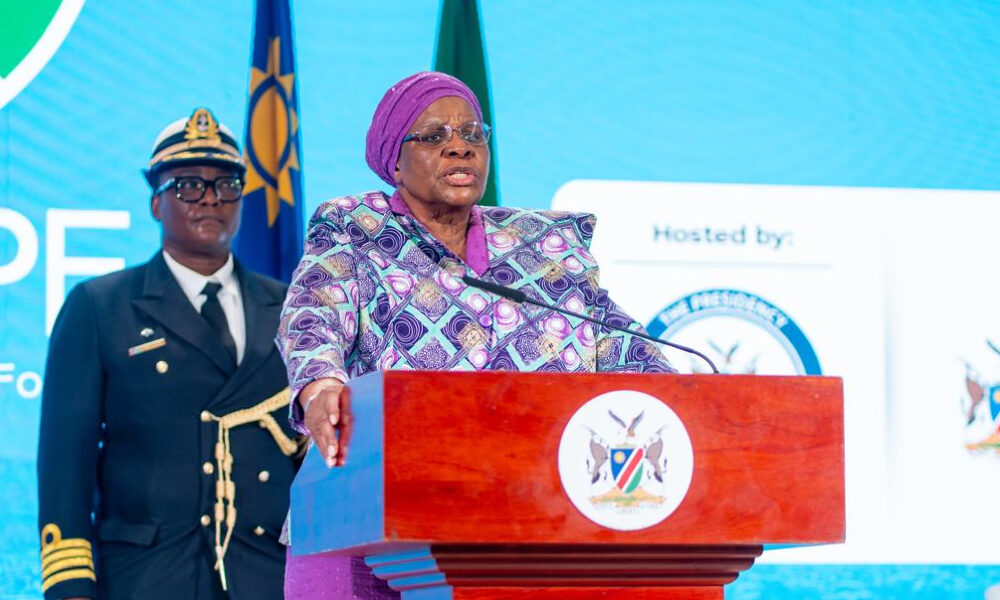
“We cannot be beggars in the international community when we have abundant resources. We must have the leverage – and even bring them to the point where they beg us. It is possible; it depends on how you approach it.”
– Namibian President Netumbo Nandi-Ndaitwah
When Namibian President delivered these words in October at the Namibia Public-Private Forum in Windhoek, she articulated what many across Africa have long thought but few leaders have dared to say so plainly. Her statement cuts to the heart of a fundamental question facing the continent: Why do resource-rich nations continue negotiating from positions of weakness?
The answer, President Nandi-Ndaitwah suggests, lies not in Africa’s endowments but in its mindset.
A Call for Psychological Decolonization
The President’s keynote address was more than diplomatic rhetoric – it was a clarion call for what might be termed psychological decolonization. She challenged Namibians and government officials to abandon the “poverty mentality” that has long characterized the continent’s engagement with global partners.
This framing is significant. By naming the problem as one of mindset rather than mere policy, she acknowledges that decades of dependency relationships have created mental barriers as formidable as any economic constraint.
Her prescription is straightforward: Namibia must negotiate from strength, not supplication.
The Resource Paradox
Africa’s resource abundance has long presented a paradox. The continent holds approximately 30 percent of the world’s mineral reserves, vast energy potential, and millions of hectares of arable land.
Namibia itself possesses significant deposits of diamonds, uranium, zinc, and other critical minerals, alongside emerging opportunities in green hydrogen production. Yet despite this wealth, African nations frequently find themselves as price-takers rather than price-makers, exporters of raw materials rather than finished goods, and recipients of aid rather than architects of investment terms.
President Nandi-Ndaitwah’s vision challenges this status quo directly. By strategically managing resources and insisting on value addition before export, she argues, Namibia can reverse the power dynamic.
The goal is not merely to secure better deals but to fundamentally restructure relationships so that international partners seek Namibian cooperation rather than Namibia seeking international approval.
From Theory to Practice
The critical question, of course, is implementation. Transforming mindset into market power requires concrete strategies.
President Nandi-Ndaitwah outlined several key principles in her address:
Negotiation from strength means entering international discussions with clear red lines and non-negotiables, backed by the willingness to walk away from unfavorable terms. It requires coordination among African nations to prevent the race-to-the-bottom dynamics that have historically benefited foreign corporations at local expense.
Creating genuine leverage demands moving beyond raw material extraction. Value addition – processing minerals domestically, developing local manufacturing capacity, and capturing more of the supply chain – transforms theoretical resource wealth into practical bargaining power.
When a country exports refined products rather than ore, it exports jobs, expertise, and multiplied value.
Resource protection in this context means resisting pressure to privatize strategic assets on unfavorable terms or to grant extraction rights without meaningful technology transfer, employment guarantees, and environmental safeguards. As President Nandi-Ndaitwah warned, nations must not be “bullied” out of their patrimony.
The Broader African Imperative
While President Nandi-Ndaitwah spoke to Namibia’s specific circumstances, her message resonates across the continent. From the Democratic Republic of Congo’s cobalt to Nigeria’s oil, from Ghana’s gold to South Africa’s platinum, African nations possess resources that are not merely valuable but essential to global economic transformation – particularly the transition to renewable energy.
This presents an unprecedented opportunity. As the world scrambles to secure supply chains for batteries, solar panels, and hydrogen fuel, resource-rich African nations hold cards they have never held before.
The question is whether they will play them strategically or squander the moment through fragmented negotiations and short-term thinking.
The Risks of Bold Rhetoric
President Nandi-Ndaitwah’s approach is not without risks. Aggressive resource nationalism can discourage investment, particularly when investors perceive instability or unpredictability.
International partners accustomed to favorable terms may respond with pressure, whether through diplomatic channels, financial markets, or alternative sourcing. The challenge for Namibia and other African nations is to project confidence without triggering backlash, to demand fairness without appearing unreasonable.
Moreover, transforming mindset requires transforming institutions. Negotiating from strength requires technical expertise, transparent governance, and the capacity to enforce contracts and regulations.
Without these foundations, bold rhetoric risks becoming empty posturing.
A Moment of Possibility
Yet for all these challenges, President Nandi-Ndaitwah’s vision arrives at a propitious moment. Global supply chain disruptions, geopolitical competition, and the urgency of climate action have created conditions where resource-rich developing nations possess more leverage than at any point since decolonization.
China’s infrastructure investments, have demonstrated that alternatives to Western capital exist. Growing South-South cooperation offers new partnership models.
The question is whether African leaders will seize this moment or let it pass. President Nandi-Ndaitwah has laid down a marker.
Her call to move from begging to bargaining, from supplication to strength, offers a roadmap – if the political will exists to follow it.
Looking Inward to Move Forward
“It’s time we look inwards,” President Nandi-Ndaitwah urged. This introspection must encompass not just resources and strategies but the fundamental assumptions that have governed Africa’s international engagement.
It means asking difficult questions about why resource wealth has so often failed to translate into broadly shared prosperity, why corruption has undermined so many promising initiatives, and why external actors have been permitted to extract value with minimal local benefit.
Looking inward also means recognizing that true leverage comes not just from what lies beneath African soil but from what African societies can build above it – institutions, expertise, infrastructure, and human capital. Resources alone do not create bargaining power; the capacity to develop and deploy them strategically does.
President Nandi-Ndaitwah’s vision is ambitious, even audacious. Whether Namibia – or Africa more broadly – can realize it remains to be seen.
But in articulating the goal so clearly, she has performed an essential service: naming the psychological barriers that have constrained possibility and insisting that alternatives exist.
The era of begging, she suggests, can end. Whether the era of genuine partnership can begin depends on choices African nations make today – choices about governance, strategy, and above all, about how they see themselves in the global order.
The resources are there. The leverage is possible. The only question is whether the mindset will follow.
Mark-Anthony Johnson is the founder and CEO of JIC Holdings, a global asset and investment management firm founded in 2009. With over 30 years of experience and strong ties to Africa, his investments span mining, infrastructure, power, shipping, commodities, agriculture, and fisheries. He is currently focused on developing farms across Africa, aiming to position the continent as the world’s breadbasket.