Opinion
From Prison Rations to $50 Plates: The Lobster Lesson Africa Cannot Afford to Ignore


By Sheena Raikundalia
Consider the humble lobster.
In the 17th and 18th centuries, it was fed to prisoners and indentured laborers – so despised that colonial servants reportedly petitioned to limit how often it appeared on their plates. It was called the “cockroach of the sea.”
Today, a single lobster tail commands US$50 at a white-tablecloth restaurant, and the crustacean has become a symbol of luxury dining worldwide. Nothing about the lobster changed. Everything about the perception of it did.
That transformation – a masterclass in rebranding – holds a lesson of urgent relevance for Africa.
The Superfoods Hiding In Plain Sight
Across the continent, traditional crops have sustained communities for millennia. Yet as globalized food culture advances, they are increasingly dismissed as “poverty food” – the culinary equivalent of the pre-rebranded lobster.
The irony is profound, because the nutritional science tells a radically different story.
Take the indigenous vegetables common to East African kitchens: Managu (African Nightshade), Terere (Amaranth), and Saga (Spider Plant). These are not mere side dishes. They are biological powerhouses.
Managu, for instance, is rich in Vitamin A, which is critical for maintaining mucosal barriers – the body’s first line of defense against viral infection, as the COVID-19 era reminded the world in vivid terms.
The same logic applies to root staples. Nduma (Arrowroot) and Ngwaci (Sweet Potatoes) were dietary cornerstones for generations of African ancestors – and for good biochemical reason. Unlike refined sugars, they deliver a slow, steady release of glucose, avoiding the metabolic spikes that underlie so much of the chronic disease burden now overwhelming the continent’s health systems.
Nduma is notably high in magnesium, which supports nerve function and cardiovascular health, while the orange-fleshed variety of sweet potato ranks among the most potent natural sources of beta-carotene available anywhere on Earth.
Then there is the gut-health dimension. Approximately 70 percent of the human immune system resides in the gut – a fact that lends considerable weight to Africa’s long tradition of fermented foods.
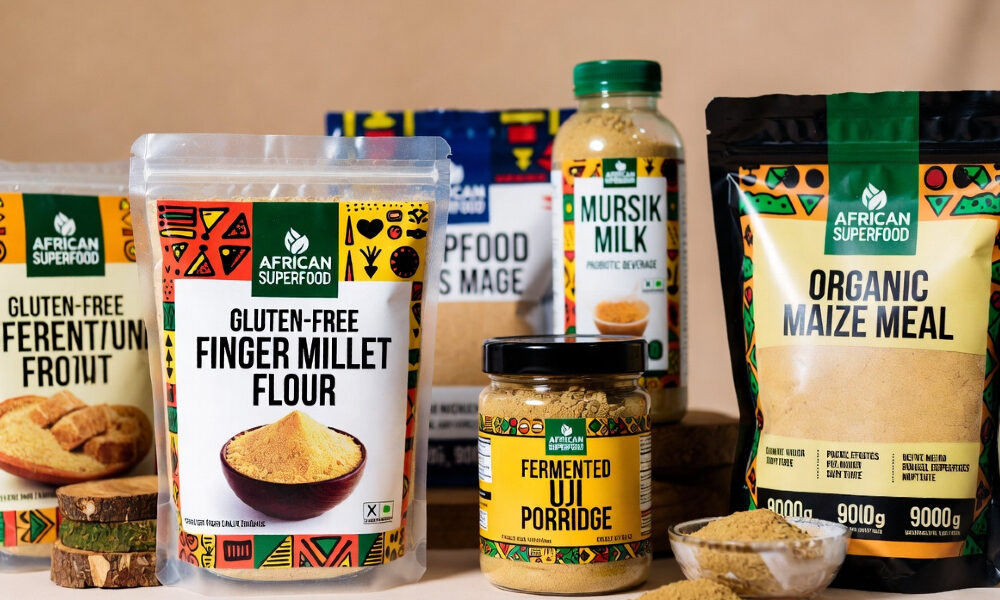
Mursik, the fermented milk central to Kalenjin culture in Kenya, and Uji, the fermented porridge widely consumed across the region, are rich in probiotics. The evidence is increasingly clear: incorporating fermented foods into a child’s early diet is among the most effective traditional strategies for building infection resistance.
Every dollar a Western brand earns on an Africanized superfood product is a dollar that could have accrued to an African farmer, processor, or entrepreneur.
The Economic Opportunity Hiding In Plain Sight
None of this is obscure knowledge among nutritionists and food scientists. The global wellness industry has already discovered many of these ingredients – often under rebranded names, at premium prices, sold back to markets that have long possessed them.
Moringa is a case in point. So is Baobab, now a fixture of upscale European health stores.
Teff, Ethiopia’s ancient grain, found its global audience through the gluten-free movement.
The pattern is consistent and instructive: Africa produces. Someone else packages, prices, and profits.
The commercial logic is not complicated. Gluten-free flour milled from African grains, Wimbi (finger millet) pancake mixes marketed to health-conscious parents across the United States and Europe, probiotic beverages derived from indigenous fermentation traditions – these are not niche products.
They are entries into a global wellness market worth hundreds of billions of dollars annually, and one growing at a pace that outstrips almost every other consumer category.
Perception Is Policy
The lobster did not lobby for its own rehabilitation. Change came from entrepreneurs and restaurateurs who understood that value is not intrinsic – it is constructed.
The question for Africa is whether the continent will wait for foreign food brands to construct that value for its own heritage crops, or whether it will seize the initiative itself.
That is ultimately a question of self-perception as much as economics. Treating ancestral foods as embarrassments to be outgrown – inferior substitutes for imported bread or processed flour – is a form of cultural depreciation with real financial consequences.
Every dollar a Western brand earns on an Africanized superfood product is a dollar that could have accrued to an African farmer, processor, or entrepreneur.
The path forward demands investment in value-added processing, in branding rooted in genuine nutritional science, and in the kind of confident self-presentation that transforms a commodity into a premium. It demands, in short, the same instinct that turned a scorned crustacean into a fine-dining centerpiece.
The “Lobster of Africa” is already here. The only question is who tells its story – and who reaps the reward.
Sheena Raikundalia is an accomplished entrepreneur, former lawyer, government policy advisor, and angel investor with deep expertise across the legal, financial services, and impact investment sectors in Europe and Africa. She has played a pivotal role in advancing Africa’s technology and innovation ecosystems, leveraging a career that spans top-tier London law firms, leadership as Country Director of the UK-Kenya Tech Hub for the UK Foreign, Commonwealth & Development Office (FCDO), and her current position as Chief Growth Officer at agri-tech company Kuza One. Sheena is recognized for her strategic vision, commitment to fostering innovation, and strong advocacy for Africa’s growth potential in technology, entrepreneurship, and impact investment.