Opinion
From Access to Ownership: The Case for Economic Sovereignty
Cheap access makes consumers. Shared ownership makes wealth. Africa’s next economic chapter depends on knowing the difference.


By Sheena Raikundalia
There was a time when flying was an extraordinary privilege, reserved for diplomats, executives and the very rich. In 1986, the cheapest return flight from Dublin to London on British Airways cost £209. When Ryanair arrived, it launched at £99. The low-cost carriers did not merely make an existing product cheaper. They unbundled it, opened new routes, rewrote the business model and turned a luxury into mass transport.
Africa’s wealth-creation story is now passing through a similar moment, and it is worth asking what comes after the discount.
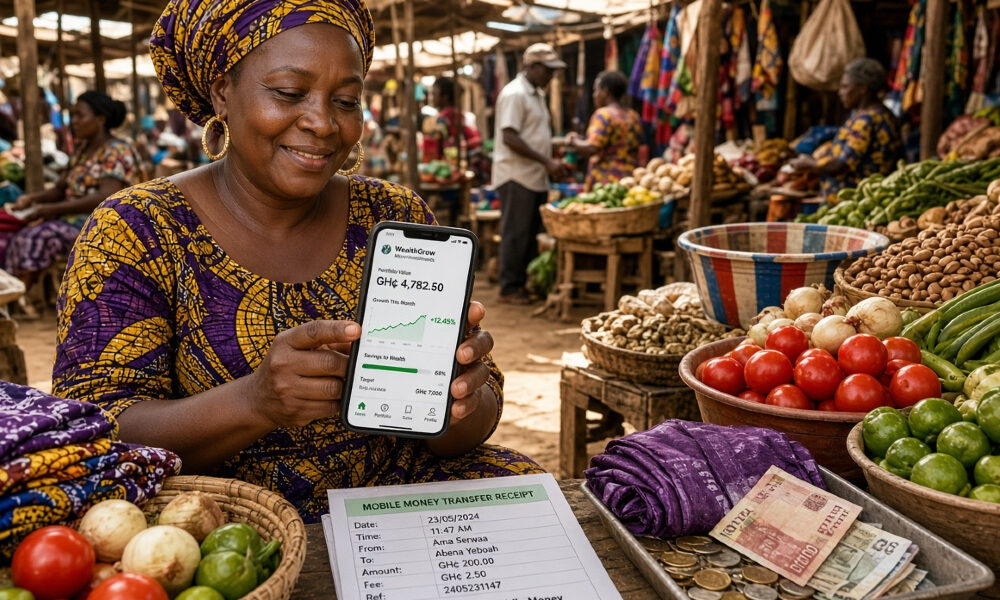
Consider a mama mboga – a small-scale, last-mile fruit and vegetable vendor – in Nairobi, or a boda boda rider – a commercial motorcycle taxi operator – in Kisumu. Not long ago, investing required brokers, paperwork, and a minimum outlay of 100,000 Kenyan shillings (about US$775) for a Treasury bill, a sum exceeding many households’ monthly income several times over. Today, she can invest as little as KES 100 (about US$1) into a money market fund using the phone in her apron pocket, via platforms such as M-Ziidi and Ndovu. Millions are doing exactly that. According to the cited figures, the number of Kenyans investing in unit trusts more than tripled in under two years, surging from 1.29 million to 4.14 million.
That is real progress, and the continent should celebrate it. Mobile money did not just move cash around. It taught a generation of Africans, many of whom had never held a bank account, that financial products could be small, instant and trusted.
The Consumer Trap
Yet decentralizing access is not the same as decentralizing ownership. This is the uncomfortable gap that Africa’s fintech optimists too often skip over.
Across the continent, farmers, traders and creators use digital platforms every day. They sell through marketplaces, pay through apps, advertise on social networks and borrow against their phone histories. Most of them own none of the infrastructure beneath those activities, none of the data they generate and none of the value chains they power. The platform captures the margin, the network effect and the insight. The user captures the convenience.
If we stop at cheap access, we will have built something impressive but hollow: a continent of efficient digital consumers. History offers a warning. Economies that grew by letting others own their pipes, their ports and their raw materials found that growth and prosperity are not the same thing. Africa knows this story well. It should not be eager to repeat it in code.
A Different Model
Imagine an alternative. Africa does not merely turn more people into customers of cheaper services. It turns them into producers, investors and owners. That requires moving from democratizing access to democratizing ownership. Five arenas show what this could look like.
Energy. Millions of households and small businesses pay for electricity from solar mini-grids and pay-as-you-go systems. Can they own a stake in the grids they finance, instead of renting power indefinitely from distant balance sheets?
Agriculture. Smallholders supply the harvest, yet the real money often lies in cold storage, processing and logistics, the assets that sit between the farm gate and the supermarket shelf. Can farmers hold equity in the facilities that buy their crops?
Private capital. Africa’s stock exchanges list only a handful of companies, leaving the continent’s vast base of small and medium-sized enterprises, its true job creators, largely closed to ordinary savers. Can everyday investors back growing local businesses and share in their success?
Intellectual property. African music, film and software are exported to the world with growing swagger. Can the people who create them keep real ownership of the rights, rather than signing them away for a streaming platform’s exposure?
Data. Every sale a merchant rings up leaves a trail that lenders would pay dearly to read. Can local traders use their own transaction data to unlock fair credit, rather than donating its value to the platforms that collect it?
Each question points to the same principle. Africa does not simply need more infrastructure. It needs to rethink who can access it, who owns it and who captures the value it creates.
What It Will Take
Technology alone will not deliver this. The cheap-access revolution was largely a technical achievement: lower costs, better software, ubiquitous phones. Ownership is harder, because it is about law, finance and power.
It will require shared-ownership structures, such as cooperatives, community trusts and crowdfunded equity, that are modernized for the mobile age and not nostalgic relics of the past. It will require local-currency financing, so that African enterprises are not forced to borrow in dollars against revenues earned in shillings, naira or cedis, a mismatch that has sunk many promising ventures. It will require distribution networks that reach the village as readily as the capital. And it will require bold regulation: data-protection regimes that give citizens a claim over their own information, securities rules that let small investors back small firms safely, and competition policy that stops digital gatekeepers from absorbing every gain.
None of this is easy, and some of it will be resisted by those who profit from the present arrangement. That is precisely why it matters.
The Next Chapter
The first chapter of Africa’s financial revolution asked a simple question: how do we get more people into the economy? The answer, on the evidence, was to make entry cheap, fast and mobile. The continent has answered it with extraordinary ingenuity.
The next chapter must ask a harder one. Not “who can participate?”, but “who owns what they participate in?” An economy in which hundreds of millions can buy, sell and save but few can own is not a transformed economy. It is the old one with a better interface.
The ambition for African wealth creation should not be only to widen the doorway into the economy. It should be to hand over the keys.
Sheena Raikundalia is an accomplished entrepreneur, former lawyer, government policy advisor, and angel investor with deep expertise across the legal, financial services, and impact investment sectors in Europe and Africa. She has played a pivotal role in advancing Africa’s technology and innovation ecosystems, leveraging a career that spans top-tier London law firms, leadership as Country Director of the UK-Kenya Tech Hub for the UK Foreign, Commonwealth & Development Office (FCDO), and her current position as Chief Growth Officer at agri-tech company Kuza One. Sheena is recognized for her strategic vision, commitment to fostering innovation, and strong advocacy for Africa’s growth potential in technology, entrepreneurship, and impact investment.