Owusu on Africa
France’s African Reckoning: A Strategic Pivot Too Long Delayed


By Fidel Amakye Owusu
Better late than never – though in geopolitics, lateness often means irrelevance.
The Contradictions of French Liberalism
Three years ago, I argued that France’s post-colonial policy represented a glaring contradiction: while Paris progressively dismantled the Gaullist concentration of executive power at home, it simultaneously propped up strongmen wielding unchecked authority across its former African colonies. The irony was almost perverse.
France liberalized domestically even as it bankrolled autocracy abroad.
These nations enjoyed nominal independence, yet France’s leverage over their political and economic systems was profound. Had policymakers in Paris chosen to wield that influence responsibly, they could have championed accountable governance and improved millions of lives across the Francophone world.
They did not. Instead, French diplomats prioritized stability over democracy, treating African leaders as clients rather than partners and ordinary Africans as afterthoughts.
A Multipolar Scramble for Influence
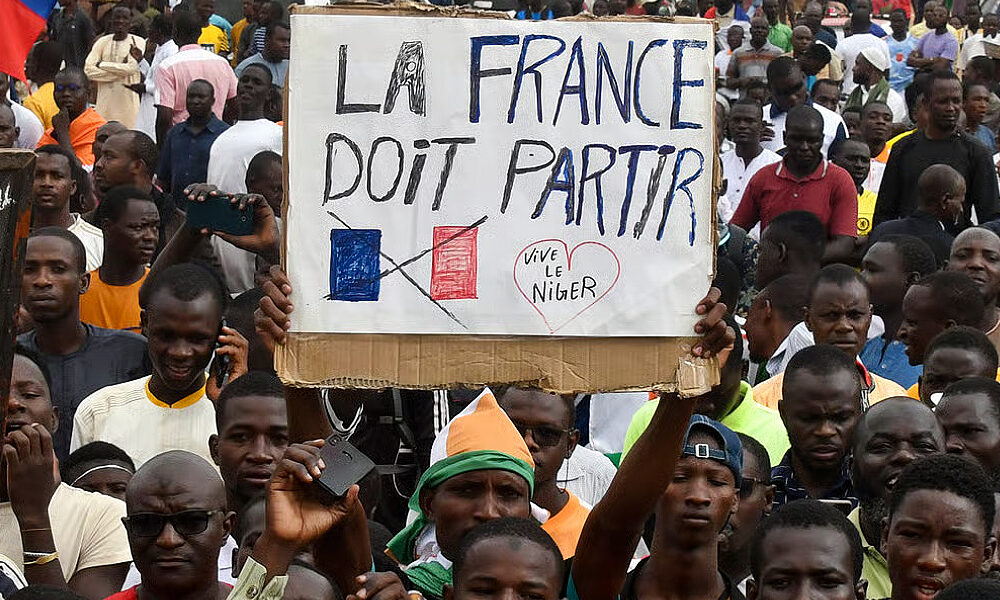
The consequences of that strategic myopia are now unmistakable. France’s influence across the continent has eroded dramatically, and the timing could scarcely be worse.
We stand at a pivotal moment of global realignment, driven in part by Africa’s demographic explosion and its burgeoning consumer markets. The continent’s youth population is the fastest-growing in the world, and its economies represent some of the planet’s most dynamic frontiers.
Yet France finds itself increasingly sidelined in a competition it once dominated. The contest for African partnerships no longer pits Paris against London, Washington, or Brussels alone.
Today, Türkiye, the United Arab Emirates, India, and Brazil compete aggressively for economic ties and diplomatic influence. Most significantly, China and Russia have made substantial inroads, offering infrastructure investment and military cooperation without the uncomfortable questions about human rights that accompany Western engagement.
Too Little, Too Late?
President Emmanuel Macron’s belated push to reclaim French market share acknowledges this uncomfortable reality. His new African strategy represents an overdue recognition that patronizing post-colonial relationships have run their course.
Whether this recalibration arrives too late – or whether France can genuinely reinvent its role as a partner rather than a patron – remains the continent’s most consequential question for European influence in the decades ahead.
The multipolar world has arrived. France must decide whether it will adapt or be left behind.
Fidel Amakye Owusu is an International Relations and Security Analyst. He is an Associate at the Conflict Research Consortium for Africa and has previously hosted an International Affairs program with the Ghana Broadcasting Corporation (GBC). He is passionate about Diplomacy and realizing Africa’s global potential and how the continent should be viewed as part of the global collective.