Opinion
Fortifying Africa’s Trade Defenses Against Unfair Practices


By Danilo Desiderio
In an increasingly competitive global economy, African nations face mounting pressure to protect their domestic industries from unfair trade practices such as dumping, subsidies, and sudden import surges. Central to this effort are trade remedy mechanisms – policy tools used by governments to impose corrective measures when imports demonstrably harm local producers.
These mechanisms typically come into play after a thorough investigation into allegations of price dumping, foreign subsidies, or abnormal increases in imports. If evidence confirms that domestic industries are suffering material injury, appropriate countermeasures are applied to restore balance and fairness in trade relations.
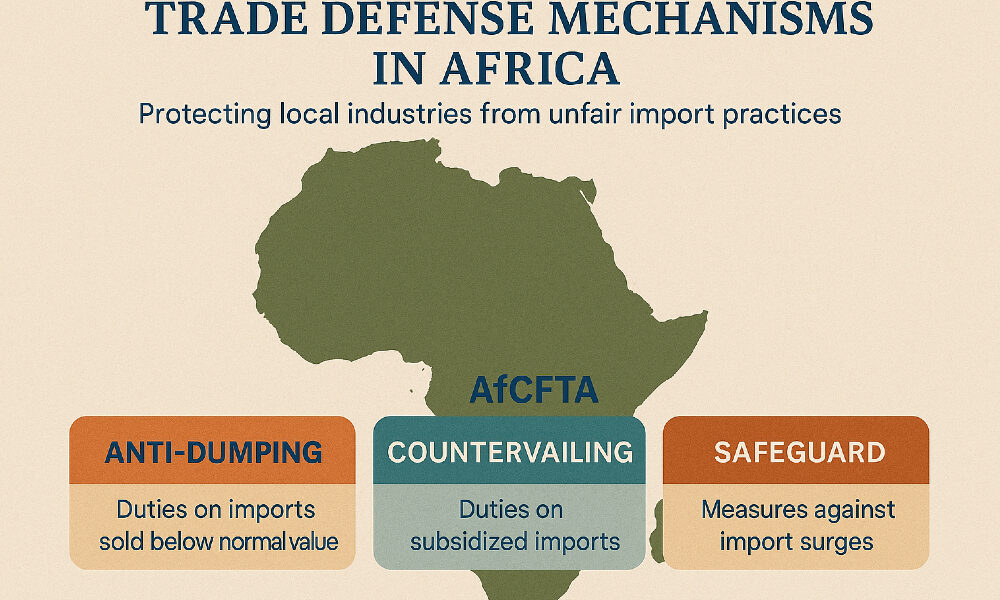
There are three primary types of trade remedies: anti-dumping , countervailing (anti-subsidy) , and safeguard measures.
- Anti-dumping duties are imposed when imported goods are sold at prices below their normal value in the exporting country, often undercutting domestic producers.
- Countervailing measures target products benefiting from government subsidies abroad, with duties applied to offset the unfair advantage these subsidies create.
- Safeguard measures, on the other hand, are temporary actions taken in response to a surge in imports that threatens serious injury to a domestic industry, regardless of where those imports originate.
The Challenge of Implementation in Africa
Despite their importance, the adoption and enforcement of these tools remain limited across Africa. Currently, only a handful of countries – including South Africa, Egypt, Morocco, Tunisia, Mauritius, Madagascar, Kenya, and Ghana – have fully operational trade remedy laws and investigative bodies. Seychelles and Somalia are in the process of finalizing draft legislation.
One of the biggest hurdles to broader implementation is cost. Establishing and maintaining effective trade defense systems requires significant financial investment.
Investigations often involve hearings, site visits, and international fact-finding missions – all of which can be expensive and time-consuming.
For example, a 2012 study estimated that initiating an anti-dumping case in South Africa cost around US$25,000 – a figure that has likely risen over the past decade. In Egypt, setting up a robust institutional framework took six years and approximately US$10 million.
Similarly, Mauritius spent nearly a decade developing its system.
Yet, despite these challenges, there is a growing normative and legal foundation supporting trade defense across the continent. The World Trade Organization (WTO) provides a global framework for addressing unfair trade practices, while various African Regional Economic Communities (RECs) have integrated similar provisions into their regional agreements.
Most notably, the African Continental Free Trade Area (AfCFTA) includes an Annex on Trade Remedies within its Protocol on Trade in Goods. This annex offers participating states a structured approach to addressing unfair trade and import surges, enabling them to take remedial action against one another while promoting harmonization of national laws.
Toward a More Resilient Trade Environment
The AfCFTA also encourages member states to align their domestic legislation with continental standards, creating a unified and predictable trade environment. However, despite these promising frameworks, many African countries still struggle to implement trade remedies effectively due to limited budgets, lack of technical expertise, and weak institutional capacity – as highlighted in a recent TRALAC blog post.
Addressing these systemic challenges is not just necessary – it’s urgent. As African nations deepen their participation in free trade agreements, they must also strengthen their ability to shield vulnerable industries from external pressures. Without adequate protection, domestic production could decline, industrial growth could stall, and jobs could be lost.
By investing in robust trade defense mechanisms, African countries can foster a more stable and equitable trading system. These tools help safeguard emerging sectors, level the field, and ensure that trade remains a driver of development – not a weapon wielded by more powerful economies.
In today’s geopolitical climate, where trade is increasingly used as a strategic tool rather than a cooperative endeavor, Africa cannot afford to remain exposed. The aggressive trade policies of major powers like the United States serve as a stark reminder: a strong offense may win battles, but a solid defense secures long-term economic resilience.
Danilo Desiderio serves as the CEO of Desiderio Consultants Ltd in Nairobi, Kenya, specializing in African customs, trade, and transport policies. He is a customs and trade expert at the World Bank and a senior associate to the Horn Economic and Social Policy Institute (HESPI).