Editorial
We are Angry
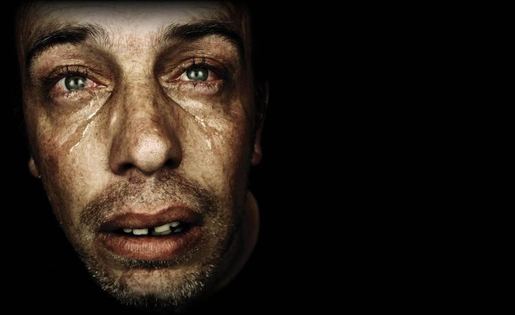
Many people are puzzled; wondering why it took so long to announce that the Grand Jury in Ferguson, Missouri was not going to indict Officer Darren Wilson in the shooting death of Michael Brown, an 18-year old black man. But there’s another emotion carousing the veins of many a black person: Anger. We are angry – incensed – that a jury decided not to even charge Mr. Wilson with a simple misdemeanor for what many thought was an open – shut case of guilt. After all, all evidence showed that Michael Brown was unarmed. It does not matter, people feel, that Officer Wilson saw a large lout reach his waistband for some imaginary pistol while charging. We believe that there is just no real justification for someone to discharge his or her weapon more than 10 times at another human being. In fact, on top of asking when a group of people will get a little more justice, this same group cannot help but feel that a charging Rottweiler would not be treated as worthlessly as Michael Brown was. The boy, people say, was not armed, and if this is not an excessive use of force, perhaps nothing else will present things any better. People whisper that in spite of his size and girth, he was an unarmed man facing another man with a gun. Did the officer of the law have to use lethal force? Some say yes. But did the force have to be deliberately lethal? Again, we are outraged that in the face of what seems like overwhelming evidence, a man is, free while another lies dead in his grave because of what is, interpretively, a racial injustice.
On a night when Black America is reminded that the battle for respect or the end of racism cannot be defeated or completely uprooted, some reminded us that the U.S. Supreme Court in the Seattle and Louisville cases suggests that there is an ideal scenario within which to frame racial equality or treatment. While we may parse this case for some sense of comfort in history, these ideal things are too sequestered from this open, raw and festering wound espoused by the death of Michael Brown. In fact, while we referred to him as St. Trayvon Martin, the canonization of Michael Brown cannot be underestimated.
In a bizarre press conference featuring a prosecutor laying blame for this brouhaha on the media, the November 25, 2014 announcement was simple: The 18-year old Mr. Brown died, ostensibly, as a result of his own actions. We were aghast: Darren Wilson is a 28-year old man – trained by a reputable police institution. Why did he not use a taser on Mr. Brown? After all, even hulks of pure evil would not remain standing if electrical volts shot through their veins.
Invariably, would Michael Brown have ended up dead if he were white? A false equivalence, some may say this is. Bollocks, we intend to respond: Slavery, Apartheid and Colonialism were laws of the land in their respective times – and they were, outright in their unfairness to a certain section of the people. What was, in fact, so wrong about them was not that they were law; they were just bad to the fair doctrine of human rights. So, if we can prove, beyond reasonable doubt that racism is a de facto reality in American society, then we have a legal right to fight for our rights up front. In Michael Brown’s case, we may even conclude that he fought and lost against a system he did not trust. Thus, although Michael Brown is not on trial – and Darren Wilson will not suffer his trigger happiness, what stands on trial is this subliminal and oftentimes overt system that is inherently unfair to a section of people – at the level of slavery, apartheid and colonialism.
On a different level is a question of value: Is a black life of less value than a white life? Many in the American society seem to think that because black on black crime is commonplace, the young men and women that meet a violent end to their lives do not bleed the same red blood or feel the same pain. But this is biologically improbable. On a humanitarian basis, the fact is that if none of the police officers or people involved in Rodney King, Amadou Diallou, Abner Louima, Trayvon Martin and now Michael Brown were found guilty of wrongdoing, why should society feel like people of color have any value?
But perhaps these Michael Brown circumstances will be different: When the non-indictment was announced, protests rang out in various U.S. cities. As at November 27, 2014, media reports suggest that over 400 people across these United States have been arrested for disturbing the peace. People in the United Kingdom were appalled that we in North America let things go to this level. Even Russia took a dig at the United States. In a statement to the Russian media, someone in the Kremlin crafted nonsense that suggested that the U.S. had better look into its own human rights record before lecturing to those who seek to claim what is theirs territorially. And this is why Michael Brown may be different: Much to the chagrin of conservatives, Barack Obama mentioned Ferguson’s filthy underbelly in his speech to the UN this summer. As Russia sees it, Ferguson and Michael Brown are now a matter of geopolitics, and closer to home, the pulsating pain of the lack of indictment is what, obviously, led to the aforementioned protests, gun shots and return fire in Ferguson, buildings on fire in Missouri. In places like Times Square in New York City, that city’s Police Commissioner received his share of fake blood in the face. Some major roads and highways into and from St. Louis, Missouri were blocked by human blockades in the immediate aftermath of the press conference – and the fires that raged past 2 a.m. were still not quelled on the morning of the day afterwards.
Interestingly, someone smashed a Fox News camera while they were broadcasting live on air. Of course, the CNN reporter was stoned – but the person that broke the Fox camera specifically cussed the cable news channel by name. This is the same network that took the side of Trayvon Martin’s killer – the one that trumpeted the fact that Officer Wilson had a fractured eye socket while showing Michael Brown flashing gang signs. Attesting to this camera incident, it seems as though just as many a black person has had a direct racial altercation with the police, people know who is for them and who is against them.
While some of the racial profiling stories are as exaggerated as some of the Michael Brown death witness stories were, we must look at the circumstances. How does one explain Michael Brown’s body being on the street for a full 4 and half hours after he was gunned down? On the other hand, even if the jury was put in place 3 months before Michael Brown was shot dead, does it not stink that in a town that is 70 percent black, there are 9 white jurors and only 3 black ones? Is there a chance that if circumstances were different – like 9 black jurors and 3 white ones – Michael Brown’s killer would be facing justice? This disparity is exactly the same kind of difference you saw in the Ferguson, Missouri police force. A mostly white law and order unit polices the small suburb of mostly black people. The mayor is white and most arrests, traffic stops and everything else is, seemingly, meted against a mostly poor or lower middle class black group of people.
While President Obama gave what some felt was a rejoinder to the Michael Brown killing indictment decision, many people across the spectrum – this editorial board included – felt a sense of hopelessness. Obama, we felt, was not angry enough; outraged enough – even sensitive enough to this moment. There was a fierce urgency for him to espouse some of the rage many felt – and it did not matter that the cable networks were suggesting that even Obama’s soothing words could not quell the angst. And yet while no one can quell the fact that the United States has made significant progress – President Obama is testament to that – this Michael Brown thing makes many of us feel like we might as well be right back at the outskirts of the 1960s. Too many black people are senselessly gunned down by system and it does not matter that the majority of blacks die at the hands of other blacks in gangland violence. It is these senseless deaths by authorities that capture the heart of the matter. Trayvon Martin; John Crawford – the man who was shot in a Walmart while looking at a toy gun; and of recent, Tamir Rice, the 12 year old boy who was shot dead because he had a gun that turned out to be a toy gun. Like Prof. Michael Dyson pointed out, when blacks kill blacks, they go to jail. When police and authority figures kill blacks, they are exonerated. It is like they receive indemnification – they are guilty of killing people but this is beyond their control. What rubbish! Are the police not meant to protect and serve? Who are they protecting if not themselves? Who are they serving if not themselves?
On the conference call to discuss the repercussions of the Michael Brown indictment, one of us was very emphatic: Police should know better. They are trained to know better and they should not, under any circumstances, be trigger happy in ending the very life they are supposed to protect. Another one us was very angry simply because Michael Brown was unarmed. He did not deserve to die. Thus, unlike the Trayvon Martin incident, and unlike many of the countless protests following a senseless killing, it seems as though Michael Brown’s death and subsequent no-indictment has people are baying for blood – Darren Wilson’s or anyone else. Over 100 gunshots went off after news on the indictment broke. Conversations with various correspondents revealed that even if things would get worse as a result, some people were calling for the blood of a policeman: An eye for an eye, so to speak.
But whatever we say, whatever we do, will any of us ever be satiated? Revenge does not quench our thirst for hope. What are a few broken glasses in the face of a senseless death? What is a senseless death to people that do not think that the dead are less human than the killer? Is it ironical that President Obama cannot be angry in a moment of senseless death? It just feels like Michael Brown is all of us, and all of us are Michael Brown. We do not live in a post racial society. It does not matter that this whole scenario may have been expounded because of the media. Would things have been much less heightened by the fact that social media has all manner of rumors? Or is there a chance that we are all emotional because we have been misled by not having all the facts? That could be the heart of the matter. What we have, instead, is a combination of our past, our present and our future, but this is the dissonance that the grand jury in Missouri had to deal with. They may have known that Michael Brown died because he was black – but what evidence did they have at their disposal? How are they supposed to indict a man when the man has the law on his side? President Obama’s first words – somewhat tongue in cheek since he just almost extra judiciously gave illegal immigrants amnesty – were that the United States is a nation of laws. No time have these words made more sense. Unfortunately, although justice is balanced, the law is different – it is biased, it requires direction and contains bias. The law is the law – colored and interpreted by sides – the defense and the prosecution. And just like that, we are back at the beginning: Puzzled, Unhappy – Angry.