Business
Farmcrowdy – a new start-up providing a new way of getting investment and expertise into small-scale farming
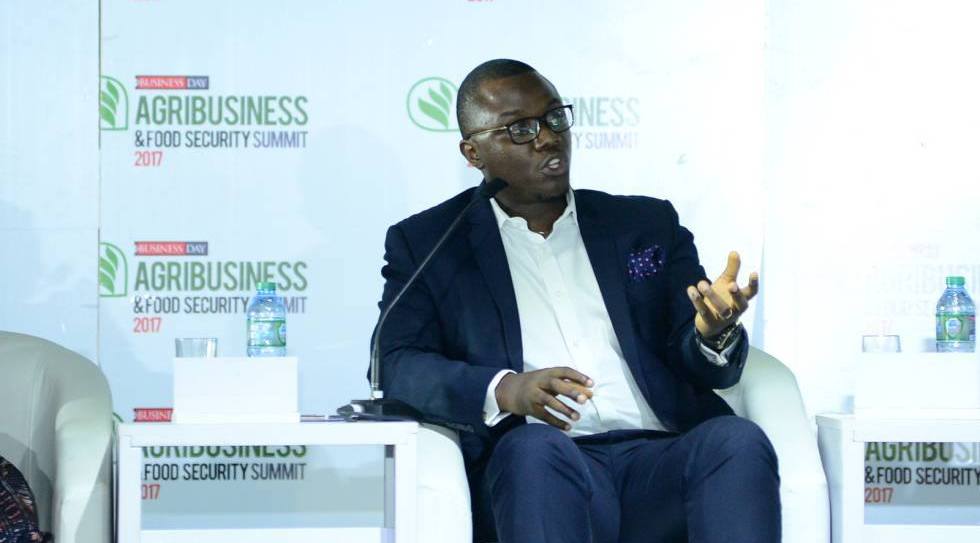
Nigeria’s start-up Farmcrowdy pioneers a new way of getting investment and expertise into small-scale farming.
Against the backdrop of the Nigerian federal government’s initiative to encourage agriculture, Farmcrowdy is matching investors to small-scale farmers.
Farmcrowdy’s founders started doing research on their start-up business in 2016. They were trying to work out which farmers they could invest in and how to go about it.
The small-scale farmers they looked at had problems with things like: accessing loans to extend the area of land they could cultivate; having enough knowledge to use farm inputs; and selling their harvest at a decent price.
From the investors’ point of view there was no database of farmers of farmers to invest in, no way of knowing whether individual farmers would be a good bet and therefore no way to get a return.
According to Farmcrowdy founder and CEO Onyeka Akumah: “We set up a platform to connect both sides and to see what the different available options were. This helped us identify farmers to partner with. The idea was to share the profits between the different stakeholders. The people doing that initial research became the co-founders of the company and we launched in November 2016. Since then, the team has grown to 27 people”.
In the 16 months from its launch, it has worked with 2,000 small-scale farmers across 8 states with its sponsors (which is the term it uses for investors) down US$2 million to back its small-scale farmers. It focuses on 4 farm crops – maize (corn), soya bean, cassava, rice – and poultry for chicken meat.
The process of selecting farmers is key: “We looked at crop-growing areas and looked for farmer-ambassadors there. They would then introduce us to co-operatives or farmers’ associations who in turn would introduce us to farmers in the categories we are looking”.
It looks for those with 2.5-7.5 acres and wants farmers with extra land they could cultivate.
“The community leaders identify the farmers and vouch for them. The pool of farmers take responsibility for individual farmers. We look for passionate farmers who in turn recommend other farmers (like them)”.
Farmcrowdy’s sponsors have 2 ways of engaging with its online platform. Firstly, they can become sponsors and if happy with their investment, encourage others to respond. In this way, it builds its reputation as a “trusted platform” and word-of-mouth encourages new sponsors.
Secondly, potential sponsors can simply sign up to the platform to follow a particular farmer, some of whom post pictures and videos. It helps them make an informed decision about whether to sponsor in the future.
There are around 8,000 farm followers and after every sponsorship cycle about 10 percent of them become sponsors because through following farmers, they understand the process. In November last year, it launched an app to access the platform and there have been 50,000 downloads. In this way, it is always lining up more sponsors.
So what does Farmcrowdy know about its sponsors?: “They are excited about the agricultural space and have been focused into it by the federal government. They are middle class Nigerians aged between 28-40. If we identify farmers in a particular state, people from that state will start investing. Most of the sponsors are from Nigeria as you have to have a Nigerian bank account, which means that 99 percent are either from within the country or the diaspora”.
Farmcrowdy has also built into its model various ways of helping the farmers’ chances of making its sponsors a return:” We have expertise for farmers on our team, including technical field specialists who are agronomists. They help find the co-ordinators for the pools of farmers and provide partner forums for companies who want to engage with the farmers. For example, the technical specialist might work with a fertilizer company to help improve farmer yields. The companies cannot work with individual farmers but can work with groups of farmers and agricultural institutions across the states”.
But how do you improve harvest prices?: “We get pre-arranged prices with the buyers and they give us a range for the purchase price. With that, we can then promise our sponsors a rate of return. Also with farmers, if they want to make some money, they can hold on to see whether there is a better price beyond the glut season. With the chicken farmers, it’s based on a pre-arranged price for a particular weight of chicken”.
In December 2017 Farmcrowdy closed a US$1 Million seed investment round from Cox Enterprises, Techstars Ventures, Social Capital, Hallett Capital and Right-Side Capital; as well as angel investors Tyler Scriven, Michael Cohn, Josephine Group, FC Agro Allied SPV and Christof Walter.
Farmcrowdy’s expansion plans over the next 2 years are two-fold: within the huge Nigerian agricultural sector and looking at some new countries outside of Nigeria: “Agriculture is a very interesting space. There are 8 million small-scale farmers in Nigeria. So we want to be working with more farmers and fine-tuning the business model. At present, it is a country model. It is Nigerians sponsoring Nigerian farmers so that Nigerians can eat. But in the 4th quarter of 2018 or the 1st quarter of 2019, we have eyes on Ghana, Kenya and Uganda. We want to see whether the same process will work in other countries”.
Source: Balancing Act Africa