Opinion
Exporting More Cash Crops Via AGOA
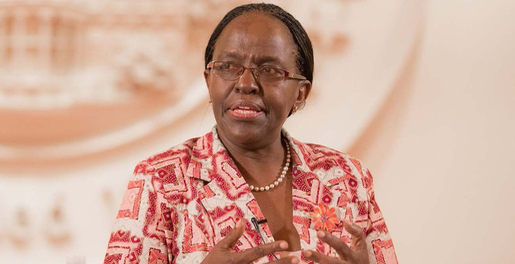
Liberata Mulamula says that for a market access program like African Growth and Opportunity Act (AGOA) to benefit a country like Tanzania, it must, first and foremost start by recognizing that although the country does not have the adequate capacity to manufacture goods, there are a whole host of primary products or raw materials that could still be leveraged for the East African nation’s economic development.
Tanzania’s ambassador to the United States says that like neighbors, Kenya, Uganda, Rwanda and Burundi, Tanzania is an agrarian society that is much better placed to export agricultural products, at least for the short and medium term. In the 1960s, Tanzania was responsible for producing nearly 24 percent of the world’s total sisal crop, but production started to decline rapidly in the 1970s.
Sisal is still crucial to the country’s economy, and more importantly, the country appreciates the fundamental difference between cash and food crops. In fact, although gold, at 33 percent, is Tanzania’s largest export, it is the amount of national effort put into cash vs. food crops that places tobacco and coffee at the 5.9 percent and 3.4 percent – way over oranges and bananas.
That said, by their definition, cash crops are agricultural commodities produced more for their commercial value than for use by the grower. On the other hand, the majority of cash crop farmers in Tanzania are also small-scale subsistence farmers – growing sisal alongside beans and peas; beans with tobacco; maize with cotton.
Because of this fact, Ambassador Mulamula is cautiously optimistic that those in charge will consider sub Saharan Africa’s cash crops when it comes to enhancing AGOA. She believes that although many people deserve credit for creating and fighting for AGOA, there’s also the fact that others may be more worried about Africa’s textile and garment industry and what it may lose in the immediate term than about the long term aspects of an enhanced AGOA. To this, the diplomat agrees that if AGOA is not renewed in the next two month period, some African countries like neighbor Kenya will lose out.
However, what are we to do with the other side of the coin? The battle in Africa is more than just textiles or the loss of revenue. Viscous circles of poverty must be broken. And if key cash crops can do this for Tanzania, then Tanzania is for it.
Here, Ambassador Mulamula suggests that any improvements to AGOA, on top of proposals for cash crops must also focus on the transfer of technology to extract the kind of capital that comes from cash crops – be it light manufacturing or processing of coffee into the inputs for a decaffeinated beverage. Ambassador Mulamula wholeheartedly embraces this message and takes it to the various audiences she presents to as Ambassador of Tanzania.
The Ambassador also points out that Tanzania neither has oil nor the ever-elusive manufacturing base that will supply any ready market in the United States. So, in the short term, Tanzania cannot benefit as much from AGOA.
According to ustr.gov, exports from Tanzania to the United States show a cash crop like unroasted coffee bringing in US$32 million worth of product into the United States. Relatively, tobacco earns over US$300 million annually by supplying markets like Kenya, Belgium and Uganda. So, a small change in the tariff rate quota for agricultural products in the U.S. would be very good.
With Latin American having invaluable access to the U.S. market, why can’t the same be done for Africa? Would this not be seen as the effort to increase partnerships for growth and alleviating poverty? Is this not the cornerstone of the relationship between Tanzania and the U.S.?
Ideally, if Tanzania could competitively export its tariff rate quota commodities to the U.S., American companies could, in turn, be incentivized to increase investments in Tanzania; guaranteeing that AGOA adds to the formal employment rolls in the country. in both the short and medium term. Short of this, while Tanzania may continue to benefit from Power Africa and Feed the Future, these benefits will not be as widespread as implementing the country’s comparative advantage in agricultural products.
Liberata Mulamula is currently serving as Tanzania’s Ambassador to the United States.