News
Ethiopia’s Prime Minister Abiy Ahmed, awarded 2019 Nobel Peace Prize
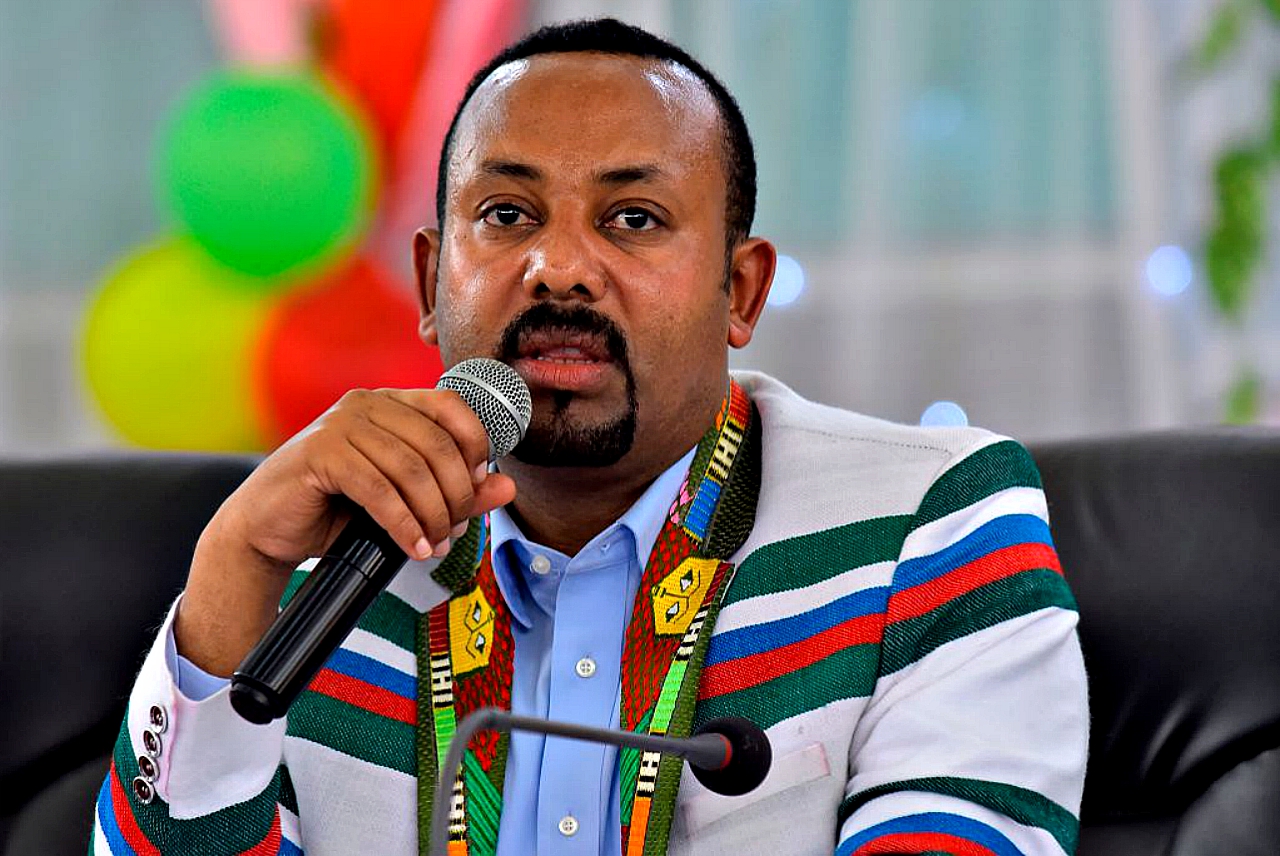
AP | Ethiopian Prime Minister Abiy Ahmed won the Nobel Peace Prize for 2019 in recognition of his efforts to end his country’s 2-decade border conflict with Eritrea.
The Norwegian Nobel Institute on Friday also praised the “important reforms” that Abiy, Ethiopia’s leader since April 2018, has launched at home. The prize comes as Abiy faces pressure to uphold the sweeping freedoms he introduced.
The Nobel committee said some people may consider it too early to give him the prize, but “it is now that Abiy Ahmed’s efforts need recognition and deserve encouragement.”
The award, the 100th Nobel Peace Prize, reflects the committee’s taste for trying to encourage works in progress.
Abiy said he was “humbled and thrilled.”
In a call with the Nobel committee, he laid out his hope that the award will be taken “positively” by other African leaders “to work on the peacebuilding process on our continent.”
Abiy, 43, took office after widespread protests pressured the longtime ruling coalition and hurt one of the world’s fastest growing economies. Africa’s youngest leader quickly announced dramatic reforms and “Abiymania” began.
On taking office, Abiy surprised people by fully accepting a peace deal ending a 20-year border war between the 2 East African nations that saw tens of thousands of people killed. Ethiopia and Eritrea had not had diplomatic ties since the war began in 1998, with Abiy himself once fighting in a town that remained contested at the time of his announcement last year.
Within weeks, the visibly moved Eritrean president, Isaias Afwerki, visited Addis Ababa and communications and transport links were restored. For the first time in 2 decades, long-divided families made tearful reunions.
The improving relations led to the lifting of United Nations sanctions on Eritrea, one of the world’s most reclusive nations.
The Nobel committee also pointed to Abiy’s other efforts toward reconciliation in the region — between Eritrea and Djibouti, between Kenya and Somalia, and in Sudan.
Ethiopia is Africa’s second-largest country in terms of population with about 110 million people.
Eritrea, which has a population of about 4 million, gained independence from Ethiopia in 1993 after a 30-year guerrilla war. About 80,000 people died in a war between the 2 countries from 1998-2000.
The Nobel committee acknowledged that “peace does not arise from the actions of one party alone.”
It said that when Abiy “reached out his hand, President Afwerki grasped it, and helped to formalize the peace process between the two countries.”
It added that it “hopes the peace agreement will help to bring about positive change for the entire populations of Ethiopia and Eritrea.”
The government of Eritrea, still one of the world’s most closed-off nations, did not immediately comment but its ambassador to Japan tweeted congratulations, adding: “People of #Eritrea; #Ethiopia with blood, sweat ; tears have won again over evil.”
Leaders elsewhere in Africa, including those of Liberia, Ghana and neighboring Somalia, responded with praise and encouragement. U.N. Secretary-General Antonio Guterres said he has often stated that “winds of hope are blowing ever stronger across Africa” and that Abiy was one of the main reasons why.
At home, Abiy offered one political surprise after another. He released tens of thousands of prisoners, welcomed home once-banned opposition groups and acknowledged past abuses. People expressed themselves freely on social media, and he announced that Ethiopia would hold free and fair elections in 2020. The country has one of the world’s few “gender-balanced” Cabinets and a female president, a rarity in Africa.
And for the first time Ethiopia had no journalists in prison, media groups noted last year.
The new prime minister also announced the opening-up of Ethiopia’s tightly controlled economy, saying private investment would be welcome in major state-owned sectors — a process that continues slowly.
But while Abiy became a global darling, speaking at the World Economic Forum in Davos, Switzerland, troubles arose at home.
A grenade was thrown at him during an appearance in the capital. A large group of soldiers confronted him in his office in what he called an attempt to derail his reforms. In a display of the brio that has won Abiy widespread admiration, the former military officer defused the situation by dropping to the floor and joining the troops in pushups.
The Nobel committee acknowledged that “many challenges remain unresolved.”
Amnesty International secretary Kumi Naidoo said the award should “push and motivate Abiy to tackle the outstanding human rights challenges that threaten to reverse the gains made so far.”
Abiy had been among the favorites for this year’s prize in the run-up to Friday’s announcement, though winners are notoriously hard to predict. The Nobel committee doesn’t reveal the names of candidates or nominations for 50 years.
The committee has in the past used its prestigious award to nudge a peace process forward and Friday’s recognition of Abiy falls into that line of thinking.
Since 1901, 99 Nobel Peace Prizes have been handed out, to individuals and 24 organizations. While the other prizes are announced in Stockholm, the peace prize is awarded in the Norwegian capital, Oslo.
So far this week, 11 Nobel laureates have been named. The others received their awards for their achievements in medicine , physics , chemistry and literature . There were 2 literature laureates, Poland’s Olga Tokarczuk and Austria’s Peter Handke, after no prize was awarded last year due to sex abuse allegations that rocked the Swedish Academy.
With the glory comes a 9-million kronor (US$918,000) cash award, a gold medal and a diploma. Even though the peace prize is awarded in Norway, the amount is denominated in Swedish kronor.