Zina’s Youth View on Africa
Ethiopia’s Grand Renaissance Dam Is Complete – Now What for the Horn of Africa?


By Godfred Zina
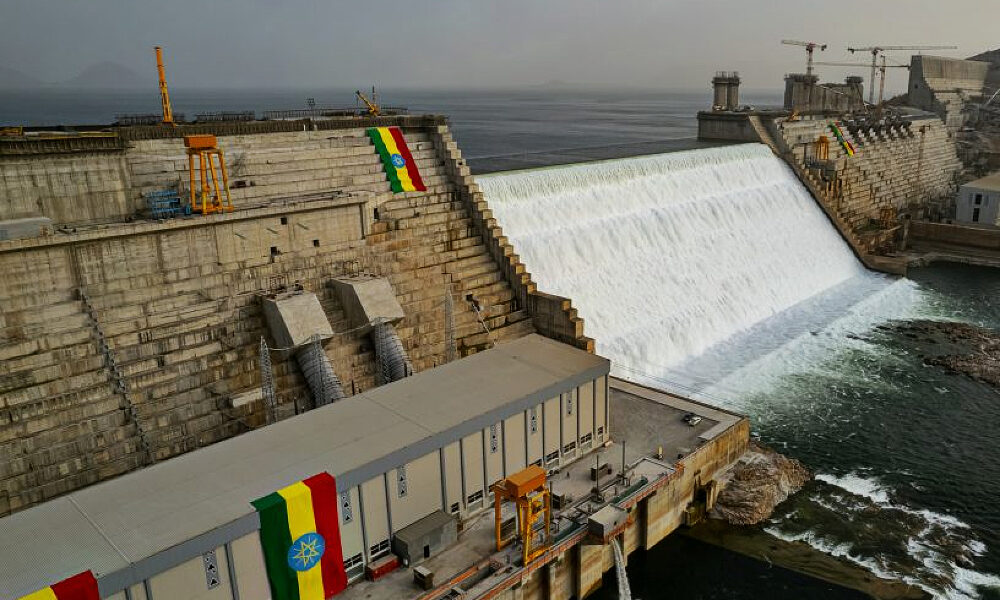
The Grand Ethiopian Renaissance Dam (GERD), Africa’s largest hydroelectric project, has reached completion after more than a decade and US$4 billion in investment. For Ethiopia, this is not just a feat of engineering—it is a strategic turning point.
The dam symbolizes Addis Ababa’s ambition to become East Africa’s energy powerhouse and reassert itself as a regional leader. But the celebration in Ethiopia is met with growing anxiety downstream, especially in Egypt, where fears over water security threaten to spiral into broader geopolitical conflict.
Energy for Ethiopia vs Perceived threat for Egypt
Ethiopia’s plan to begin full operations in September will significantly increase its electricity generation capacity, providing power domestically and for export across East Africa. This could be a game-changer for regional development and integration.
But for Egypt, which depends on the Nile River for over 90 percent of its freshwater, the GERD is perceived as an existential threat.
If Ethiopia fails to reconcile with its diverse ethnic constituencies and address lingering post-conflict grievances, GERD risks becoming more of a political trophy than a driver of development.
Cairo fears that Ethiopia’s unilateral control over the Nile’s headwaters could reduce water flows critical to Egypt’s agriculture and the survival of over 100 million citizens. Without a legally binding water-sharing agreement, the project has deepened mistrust and stalled decades of Nile Basin diplomacy.
The Nile: A River of Power, Not Just Water
At the heart of the dispute is a clash of historical narratives. Egypt continues to rely on colonial-era treaties that granted it dominance over the Nile’s waters.
Ethiopia, on the other hand, refuses to be bound by agreements it had no part in crafting. Instead, Addis Ababa is forging new alliances with upstream nations like Kenya and Uganda, reflecting a shifting balance of power in the region.
This realignment challenges the legacy of water entitlement in the Nile Basin and could redefine transboundary water governance in Africa. For the first time, the upstream states—long marginalized in decision-making – are asserting their rights and reshaping the conversation.
Regional Tensions: GERD and Beyond
But GERD is only one piece of Ethiopia’s broader geopolitical puzzle. In January, Addis Ababa signed a controversial maritime access deal with Somaliland, granting landlocked Ethiopia a potential naval base on the Red Sea.
The move reignited old rivalries, triggering backlash from Somalia, Eritrea, and Egypt. While Türkiye mediated a temporary truce between Ethiopia and Somalia, the deal reflects Ethiopia’s bold attempt to reshape regional trade routes and strategic alignments.
Yet these external ambitions may be undermined by internal instability. Despite a 2022 peace agreement that ended the brutal civil war in Tigray, tensions persist across Ethiopia’s regions.
Ethnic grievances, competition over natural resources like gold, and growing political fragmentation threaten to reignite violence – especially as the 2026 elections approach.
The GERD Gamble
So, what does GERD’s completion really mean?
In theory, it could usher in a new era of clean energy, regional economic integration, and pan-African cooperation. In practice, it may spark renewed diplomatic standoffs with Egypt and Sudan while inflaming Ethiopia’s internal fractures.
If Ethiopia fails to reconcile with its diverse ethnic constituencies and address lingering post-conflict grievances, GERD risks becoming more of a political trophy than a driver of development.
As the turbines begin to spin at GERD, the Nile no longer flows through one capital’s interests – it flows through a changing regional order.
Investors will be wary, and power exports could stall if the country descends into renewed unrest.
Meanwhile, Egypt and Sudan remain anchored to outdated water treaties. Should Ethiopia succeed in strengthening ties with Kenya, Uganda, and other upstream states, it will not only reshape who controls the Nile but also redefine sovereignty and resource politics in the Horn of Africa.
A Fork in the River
The African Union and Gulf mediators may soon be called upon to de-escalate tensions. But time is short.
As the turbines begin to spin at GERD, the Nile no longer flows through one capital’s interests – it flows through a changing regional order.
The dam is built. Now the hard part begins.
Godfred Zina is a freelance journalist and an associate at DefSEC Analytics Africa, a consultancy specializing in data and risk assessments on security, politics, investment, and trade across Africa. He also serves as a contributing analyst for Riley Risk, which supports international commercial and humanitarian operations in high-risk environments. He is based in Accra, Ghana.