Opinion
Ethiopia’s AFCON Bid: More Than a Tournament, a Geopolitical Gambit


By Gregory September
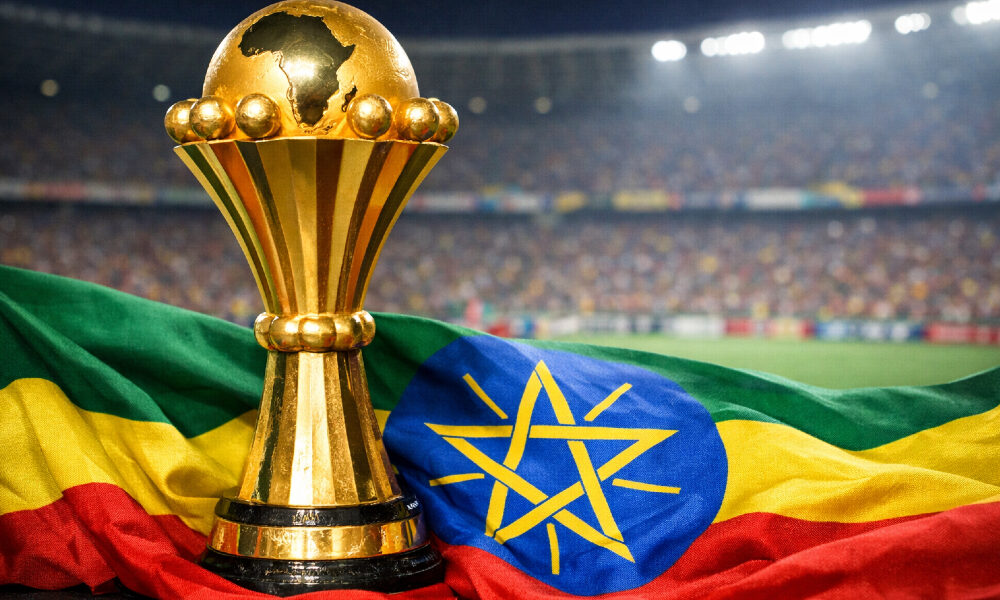
Ethiopia is not merely pursuing the 2028 Africa Cup of Nations (AFCON) – it is wagering its political resurgence on it. This ambitious bid represents far more than a sporting event; it is a calculated play for soft power, national unity, and continental relevance that could fundamentally alter the Horn of Africa’s position on the global stage.
If successful, the tournament would mark Ethiopia’s fourth time hosting the continent’s premier football championship and its first bid in over half a century, since 1976. The stakes extend beyond stadiums and match schedules: they encompass regional influence, economic revitalization, and the credibility of Prime Minister Abiy Ahmed’s reform agenda.
A Return After Decades of Absence
The Ethiopian Football Federation’s formal submission to the Confederation of African Football (CAF) arrives at a pivotal moment. Backed by governmental support and plans for state-of-the-art stadiums, Ethiopia seeks to reclaim a continental spotlight it last held during the Cold War era.
The country previously hosted AFCON in 1962, 1968, and 1976 – an impressive record that positions it among Africa’s historical football powers.
Yet the decades-long gap reveals a harder truth: Ethiopia’s infrastructure deteriorated so severely that it lacked CAF-approved venues for generations, forcing its national team into the indignity of playing “home” matches abroad. The current bid represents both ambition and redemption.
The timing reflects strategic recalibration. Ethiopia initially eyed 2029 before CAF restructured its tournament cycle to four-year intervals, prompting a pivot to 2028.
This decision aligns with the government’s infrastructure timeline, particularly the development of flagship projects like the 62,000-seat Adey Abeba Stadium and renovations in Bahir Dar. Under Abiy Ahmed’s administration, sports diplomacy has emerged as a cornerstone of Ethiopia’s continental positioning – a soft power lever in a region often defined by harder geopolitical realities.
The Strategic Calculus: Why AFCON Matters
For Ethiopia, hosting AFCON 2028 would deliver dividends across multiple dimensions. First, it would amplify the nation’s soft power at a critical juncture when East Africa’s geopolitical weight is expanding.
As the African Union’s headquarters host and a demographic giant with over 120 million people, Ethiopia possesses inherent continental significance – but lacks the contemporary cultural cachet that comes from hosting major international events.
Second, the tournament could catalyze national unity in a fractured political landscape. Distributing matches across regional stadiums would symbolically integrate diverse ethnic constituencies, offering shared moments of pride in a country where identity politics have fueled devastating conflicts. Football, in this context, becomes more than entertainment; it becomes nation-building infrastructure.
Third, the economic implications are substantial. Tourism revenue, logistical investments, and global media exposure could inject vitality into an economy recovering from civil conflict and grappling with currency instability. Ethiopia Airlines’ continental dominance positions the country as a natural hub for fan movement across Africa, potentially setting new standards for tournament accessibility.
Finally, there is the matter of geographic rotation. Recent AFCON tournaments have favored North and West African hosts, creating an opening for East Africa.
Ethiopia’s bid capitalizes on this cyclical advantage while positioning itself as a more dynamic alternative to Gulf states’ increasing involvement in African football infrastructure. The competitive landscape favors ambition over complacency. Ethiopia faces formidable opposition, most notably the joint bid from Botswana, Namibia, and South Africa (BONASA).
Yet this southern African consortium’s very existence – spanning three nations and multiple time zones – could work against it. Ethiopia offers geographic coherence, a singular vision, and the narrative appeal of a nation clawing back from adversity.
Formidable Obstacles on the Path to 2028
Despite its strategic advantages, Ethiopia’s AFCON bid confronts daunting challenges that could derail even the most carefully laid plans. Security concerns loom largest.
Ongoing instability in Tigray and Amhara regions – including clashes as recent as January 2026 – has forced flight suspensions to Mekelle and elevated kidnapping risks near Bahir Dar. These are not abstract threats; they directly impact CAF’s risk assessments, insurance underwriting for international broadcasters, and travel advisories that could keep teams and fans away.
CAF’s executive committee will scrutinize whether Ethiopia can guarantee safety across multiple host cities. A single high-profile incident during the tournament would be catastrophic, not only for Ethiopia’s reputation but for African football’s global standing.
The specter of empty stadiums or last-minute venue changes would undermine the entire enterprise.
Infrastructure gaps present equally serious concerns. Currently, Ethiopia possesses zero CAF-accredited stadiums – a remarkable deficit for a nation seeking to host 32 matches across several weeks. While projects like Adey Abeba Stadium and Bahir Dar’s renovations show promise, they remain incomplete.
Critical upgrades including weather-resistant roofing, international-standard turf, and advanced drainage systems face deadline pressure for 2026-2027 CAF inspections.
CAF’s prohibition on temporary stands – implemented after safety incidents elsewhere – eliminates a traditional shortcut for underequipped hosts.
Ethiopia must deliver permanent, world-class facilities or face disqualification. The engineering timeline is punishingly tight.
Economic headwinds further complicate matters. While International Monetary Fund-backed reforms have unlocked US$261 million in disbursements, providing crucial fiscal breathing room, Ethiopia’s foreign exchange market remains fractured.
The black market rate of 181 birr per U.S. dollar – far above official rates – creates cost uncertainty for international contractors and equipment suppliers.
Infrastructure investments exceeding 14 billion birr risk becoming “white elephant” assets if the bid fails and domestic football cannot sustain such facilities.
Ethiopia’s internal transportation network also reveals vulnerabilities.
While Ethiopian Airlines provides excellent continental connectivity, ground transportation between host cities remains underdeveloped. Road quality varies dramatically, and rail connections are limited.
Moving tens of thousands of fans between matches could strain logistics in ways that would be immediately apparent to international media.
The Political Dimension: Abiy’s Legacy on the Line
Prime Minister Abiy Ahmed has staked considerable political capital on Ethiopia’s modernization narrative. The Nobel Peace Prize laureate’s early promise has been tarnished by civil conflict and economic turbulence, making AFCON 2028 a potential redemption story – or another broken promise.
For Abiy, the tournament represents validation of his infrastructure-focused development model. Success would demonstrate that Ethiopia can execute complex international projects despite internal challenges, potentially attracting broader foreign investment.
Failure would reinforce perceptions of governmental overreach and misallocated resources during a period of domestic need.
The bid also carries diplomatic implications. Ethiopia’s competition with the BONASA consortium pits Abiy’s vision of an assertive, infrastructure-led East Africa against Southern Africa’s more established regional cooperation frameworks.
A CAF decision favoring Ethiopia would signal continental confidence in the Horn’s trajectory; rejection would suggest skepticism about the region’s stability and readiness.
What CAF’s Decision Will Reveal
The Confederation of African Football faces its own strategic considerations. Geographic rotation favors giving East Africa an opportunity after North and West African dominance.
Ethiopia’s historical AFCON pedigree and demographic scale make it an attractive narrative choice – the return of a sleeping giant.
Yet CAF’s credibility depends on tournament quality. Security lapses, infrastructure failures, or logistical chaos would damage African football’s brand globally, particularly as the continent prepares for expanded World Cup participation.
The organization must balance symbolic gestures with practical readiness assessments.
Ethiopia’s competitors understand this calculus. The BONASA bid leverages proven infrastructure, relative political stability, and economic diversification across three nations.
South Africa’s 2010 FIFA World Cup experience provides institutional memory that Ethiopia cannot match. Botswana and Namibia contribute regional balance and untapped markets.
The decision timeline matters enormously. CAF typically announces hosts several years in advance, allowing construction schedules and diplomatic preparations.
For Ethiopia, every month of delay increases the risk that infrastructure deadlines become unachievable or that security situations deteriorate further.
Beyond Football: What AFCON 2028 Means for the Horn of Africa
Ethiopia’s bid transcends sports, touching on fundamental questions about East Africa’s development trajectory and regional influence. A successful tournament would validate infrastructure-led growth strategies across the Horn, potentially encouraging similar investments in Kenya, Somalia, and Sudan.
It would demonstrate that conflict-affected nations can rebuild credibility and host world-class events.
Conversely, a failed bid – or worse, a successful bid followed by a disastrous tournament – would reinforce negative perceptions about the region’s capacity for complex project execution. It could discourage international investment and reduce East Africa’s soft power at a moment when economic integration and regional cooperation are critical.
The broader context includes China’s Belt and Road investments, Gulf states’ increasing African engagement, and shifting global attention toward the Indian Ocean region. Ethiopia sits at the nexus of these trends, making its international profile particularly valuable.
AFCON 2028 offers a platform to showcase progress and attract partnerships – or to expose vulnerabilities that competitors will exploit.
The Verdict: A Calculated Risk Worth Taking
Ethiopia’s AFCON 2028 bid is audacious, perhaps even reckless given the security and infrastructure challenges. Yet audacity has historically driven transformative moments in African development.
The risk of failure is real, but the cost of never trying – of accepting permanent marginalization – may be higher.
For CAF, the decision will test whether African football governance prioritizes symbolic inclusion or operational excellence. For Ethiopia, it represents a referendum on national ambition versus realistic capacity.
For the Horn of Africa, it could mark the beginning of a new era of continental influence – or a cautionary tale about premature aspirations.
The countdown to CAF’s decision has begun. Ethiopia’s political momentum, regional positioning, and national confidence now rest on whether the continent believes the Horn is ready for its close-up.
The answer will reveal not just who hosts a football tournament, but which vision of African development prevails in the coming decade. In geopolitics as in sport, fortune favors the bold – but only when boldness meets preparation. Ethiopia’s challenge is to prove it possesses both.
Gregory September is a South African academic, author, and geopolitical analyst with extensive experience in government and Parliament. He is the founder and CEO of SAUP (Sustainability Awareness and Upliftment Projects NPC), which focuses on sustainability education and community development. He previously served as Head of Research and Development for the Parliament of South Africa. His work centers on sustainability, African geopolitics, and economic development, and he regularly contributes to analysis of global political and economic affairs.