Opinion
Ethiopia on track to becoming a regional power house
By Mark Anderson and Nicholas Norbrook
Ethiopia is looking to sell electricity to fund its own ambitious infrastructure projects. Fortunately, its neighbors are queuing up to buy.
For decades, Ethiopia has suffered from chronic power shortages. In 1953, the Aba Samuel hydroelectric dam was the only power source in the country, generating just 6 megawatts (MW). That number has slowly risen to 2,300MW today, which is still far short of the amount of electricity Ethiopia needs to provide power for its 95 million people. By comparison, South Africa, the continent’s most industrialized economy, produces more than 250,000MW.
Ethiopia’s government has long touted the potential of its power sector to facilitate economic growth. It estimates a projected capacity of 60,000MW from hydroelectric, wind, solar and geothermal sources combined.
“Ethiopia has very big potential in energy sources,” says Azeb Asnake, CEO of Ethiopian Electric Power, the state-run power utility. “The biggest is hydro power. We have 12 river basins in Ethiopia, 9 of which are actually now under development,” she says, also noting the strong potential of solar and geothermal production.
The country’s ambitious plan to become a middle-income country by 2025 – which is estimated to cost US$200 billion in investment – relies heavily on developing electricity production. The Hailemariam Desalegn administration aims to establish grid links as far north as Europe and as far south as South Africa.
“From Ethiopia we will try to go to Kenya and through Kenya to go to Tanzania and further to South Africa. And in the north we are already connected with Sudan and from Sudan to Egypt and further to Europe,” says Azeb. The administration plans to use the money earned from power exports to fund other projects.
While exporting electricity as far as Europe and South Africa might not be realistic, Harry Verhoeven, professor of government at Georgetown University, says Ethiopia’s electricity development is “probably one of the more successful government programs – at least from a technical execution point of view.”
Ethiopia is aiming to boost its electricity production almost sixfold, reaching 12,000MW, by 2020. Hydro power is expected to make up the bulk of this new power generation.
“Currently, we have about 4,300MW already developed,” Azeb says.
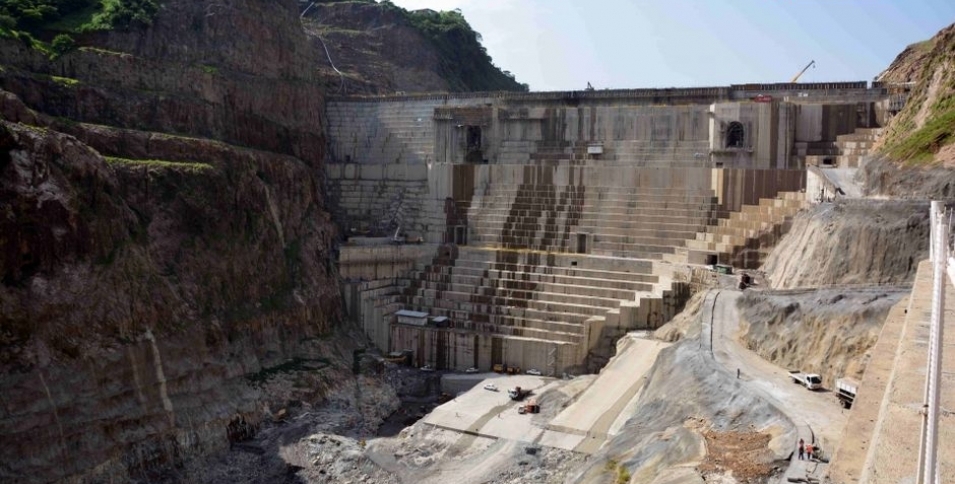
Several notable successes have been rolled out in the country in recent months, including the launch of Gibe 3 hydroelectric dam, which was built at a cost of US$1.6 billion and has a capacity of 1,879MW. The Gibe 3 will generate up to 6,500 Gigawatt hours (GWh) of electricity per year, increasing Ethiopia’s production capacity by at least 80 percent.
Another key hydro power project is the Grand Ethiopian Renaissance Dam (GERD), which is due to be completed later this year.
The brainchild of former prime minister Meles Zenawi, the dam drew ire from environmental activists and the Egyptian government over its projected impact on the Nile River. Once complete, the GERD will become Africa’s biggest hydro power dam and the 7th-largest in the world. It will have a capacity to produce 6,450MW per year.
Who will buy?
Regional exports are key to Ethiopia’s electricity expansion strategy. “The top customers will definitely be Sudan and Kenya, because of very simple topographical reasons and how cheap it is to import electricity for them, but also because politically they are the ones most closely aligned with Addis Ababa,” says Verhoeven.
The Gibe dams in the south of the country are well positioned to send electricity to Ethiopia’s southern neighbors. Kenya and Tanzania have both signed agreements to import 400MW, and Kenya is likely to become one of Ethiopia’s largest power importers.
Ethiopia hopes that GERD’s location – less than 15 kilometers (9 miles) from the border with Sudan – will entice Khartoum into buying significantly more power than the 100MW it currently imports. Sudan is struggling to provide power to its population, less than half of whom have access to electricity. The country has aimed to increase its thermal power production from 900MW in 2015 to 4,555MW by 2021.
Djibouti currently imports an estimated 60MW of electricity from Ethiopia. That amount is set to rise when a new transmission line becomes operational. But Djibouti’s ambitious US$14 billion infrastructure development strategy, which includes building new ports, airports and telecommunications towers, could create competition for Ethiopia.
“We are building energy infrastructure. We are investing a lot in renewable energy – wind, solar – to really serve East Africa,” according to Aboubaker Omar Hadi, chairman of Djibouti Ports and Free Zone Authority.
Outrunning politics
Ethiopia’s ambitions to export power as far away as Europe and South Africa are far-fetched, according to Verhoeven. “Let Ethiopia play its role in its own region and for its own development rather than starting to dream of Ethiopian electricity keeping the lights on in Rome.”
But, “as always in the Horn of Africa, politics is the Achilles heel,” says Verhoeven. “If you have been studying this region, then you know how quickly and how dramatically things can change. What looked like an absolute certainty yesterday will not be one tomorrow. The Ethiopian government knows that and that is another reason why it is trying to push ahead as fast as it can with some of these designs.”
Source: The Africa Report