Opinion
Ethiopia: Hydro electric power development indispensable to economic transformation
By Molla Mitiku Ayenew
Some three decades ago Ethiopia was in a dire situation. Millions of Ethiopians were affected by a devastating drought that displaced thousands internally and caused numerous deaths. The famine and the resulting catastrophe happened in part due to a lack of political commitment and the absence of appropriate developmental policies/strategies by the then administration.
Fast forward to the present. The socio-economic and political situation of the country was altogether altered with the removal of the military junta and the coming of a new political dispensation in 1991.
The country’s economy has gone through a remarkable transformation. In the past decade alone, the country has consistently enjoyed double digit growth; private enterprise has expanded and similarly, there has been a rapid growth in manufacturing sector which in turn has created employment for thousands of Ethiopians.
Given that the standard of living has improved, the consumption of electricity has also increased. Ethiopia has embarked on massive infrastructure projects all geared to take the country from the pre-industrial stage to a post-industrial and middle income country.
Though Ethiopia is now one of the emerging economies, it has had deep rooted cultural and social retarding attitudes. There was no strong working culture. Replacing the backward culture and building positive attitude towards possibility of altering the country is not as such easy as it refers to changing the attitudes of people which is a crucial factor for any change.
Moreover, the struggle to develop the economy was directly linked with ensuring an enduring peace and realizing democracy. These three: peace, democracy and development are intertwined. One could not exist without the existence of the other. In this regard, the Ethiopian government overtly wrote in its policy, “Poverty is Ethiopia’s arch foe. However, in alleviating poverty, ensuring sustainable economy, realizing lasting peace and building strong democracy are indispensable elements. Ascertaining three of them at the same time is not only necessary but also mandatory”. One of the key factor for sustainable economic development is the development and maintenance of infrastructure – and an emphasis on electric power.
The purpose of this piece is; therefore, to indicate the indispensability of electric power development for Ethiopia’s economic transformation. As the country’s economy is growing fast and the industrial sector is booming, developing electric power is mandatory. The country has ample hydro power potential and should concentrate on it to realize its transformation.
According to the country’s Ministry of Water, Irrigation and Energy, Ethiopia has 12 river basins with an annual runoff volume of 122 billion cubic meters of water and an estimated 2.6 – 6.5 billion cubic meters of ground water potential. This corresponds to an average of 1,575 cubic meters of physically available water per person per year. However, only about 3 percent of water resources are used currently, and only 2 percent of the population has access to electricity in the rural areas.
Recognizant of this, the incumbent government has been heavily investing in the development of hydro electric power over the past decade. However, various international organizations have indirectly worked to sabotage these efforts and have negatively influence donors from financing the projects. “The use of renewable resources has made limited headway in Ethiopia, primarily because of financial constraints,” Assefa Abreha, et al (2002:38).
Human Rights Watch, Amnesty International, International Rivers and other organizations sponsored by some “irresponsible external governments” have been attempting to hinder the efforts for hydro electric power development. They have raised irrelevant justifications to “donors” to jeopardize Ethiopia’s efforts to alleviate poverty, ascertain sustainable economic growth and guarantee the respect of the democratic and fundamental rights of the people; fulfilling the right of the people to have access to education, health and other facilities.
This blackmail has had a significant impact on the country’s move to alleviate poverty as its economy is an emerging one – however, recent developments – like the construction of the Grand Renaissance Dam without donor support have helped the country attain a certain level of independence from external donors and financiers.
Ethiopia is an agrarian economy where the agriculture, according to recent data from Ministry of Finance and Economic Development, accounts for 45.9 percent of the Gross Domestic Product (GDP). About 45 percent of Ethiopia’s land mass is arable. The manufacturing sector which accounts for 13.3 percent of GDP is dominated by food, beverage, textiles, hides & skins, and leather industries.
From 2007-2010 inclusive, the country registered an annual average growth of 11.6 percent, 10.2 percent, 11.3 percent and 13.7 percent respectively. Comparing it with 2014/2015, there is a significant change. In 2012/2013, Ethiopia was the twelfth fastest growing economy in the world. Average annual real GDP growth rate for the last decade was 10.9 percent.
Agriculture, grew by 7.1 percent, while manufacturing, rose by 18.5 percent; the relatively new services sector which has rapidly grown and accounts for an increasing percentage of GDP, increased by 9.9 percent in 2012/13.
Ethiopia has made great strides to become one of Africa’s fastest growing economies – this growing economy needs huge amount of energy. There are various challenges the country has been facing in developing its electric power and other mega projects. According to African Outlook, The Ethiopian economy has experienced strong and broad based growth over the past decade, averaging 10.9 percent per year in 2004/05 – 2012/13 compared to the regional average of 5.3 percent. Expansion of the services and agricultural sectors account for most of this growth, while manufacturing sector performance has been relatively modest.
Economic growth has brought with it positive trends in reducing poverty, in both urban and rural areas. While 38.7 percent of Ethiopians lived in extreme poverty in 2004/05, five years later in 2009/10 this was 29.6 percent – a decrease of 9.1 percentage points as measured by the national poverty line. The target is to reduce this further to 22.2 percent by 2014/15.
Due to the lack of finance, the country could not use its water resources that could contribute to the economic transformation. However, with more efficiency in revenue collection and reduction in waste, the government has been able to finance some major infrastructure projects without having to rely on external financial sources.
This in turn has positively impacted on the administration. The government has significantly become more accountable to its citizens. Ethiopia is working to improve governance and empower local authorities. This model is quite evident – there has been significant progress in various areas: school enrollments have already registered more than 98 percent growth, child mortality has been cut in half, and the number of people with access to clean water has grown to more than 65 percent.
At the current rate of infrastructure development, the country’s hydro electric power generation capacity will increase from the current 2,000 MW to 8,000 MW, and the number of customers from the current 2 million to 4 million and by the end of 2015, the construction of a further 2,395 kilometers (1488 miles) of railway line.
Ethiopia’s fast economic growth requires huge amounts of energy – electricity. The development of its hydro electric power resources is a necessity in order to sustain growth and help in reducing poverty. In other words, one of the most fundamental measures that the country has to take to reduce poverty and ensure fast and sustainable economic growth is parallel development of its energy resources – its huge water potential.
The past two decades, the electric power development policy and activities began to underway in the country, which aimed to play pivotal role towards economic growth and prosperity of the nation, with ultimate goal of regional economic cooperation and integration through additional mission of interconnecting neighboring countries with electricity.
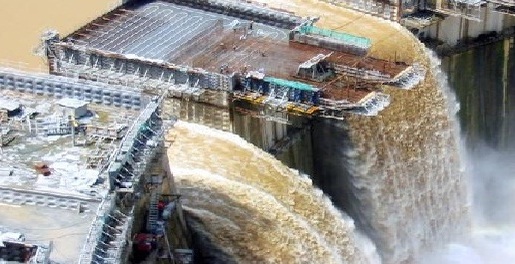
Among the major projects currently under construction is the Ethiopian Grand Renaissance Dam (GRD) with a generation capacity of 6,000 MW 45 percent of its work is completed. Other major hydro projects under construction include the Gibe III hydro power project which has the capacity of 1870 MW and the Genale Dawa III hydro power expected to generate 254 MW, launched in February 2011, nearing completion.
In line with the expansion of electric power generation plants Ethiopia has also given emphasis for the extension of hydro electric power transmission lines and establishment of electric power distribution stations, so far 10,000 kilometers (6213 miles) of electric power transmission lines have been constructed – the goal is a total of 17,0088 kilometers (10,617 miles) by the end of this year.
“The availability of affordable and convenient energy services is a necessary condition for improving lives and livelihoods…,” Assefa Abreha et al (2002:49).
Therefore, Ethiopia needs extensive electric power that could shoulder the fast growing economy. This is not a matter of choice but a matter of survival and sustaining the economic development to realize its vision of becoming middle income country in the near future. The development of its hydro electric power resources is indispensable for its economic transformation.