Business
Ethiopia Finalizes $3 Billion Fertilizer Plant Deal with Aliko Dangote
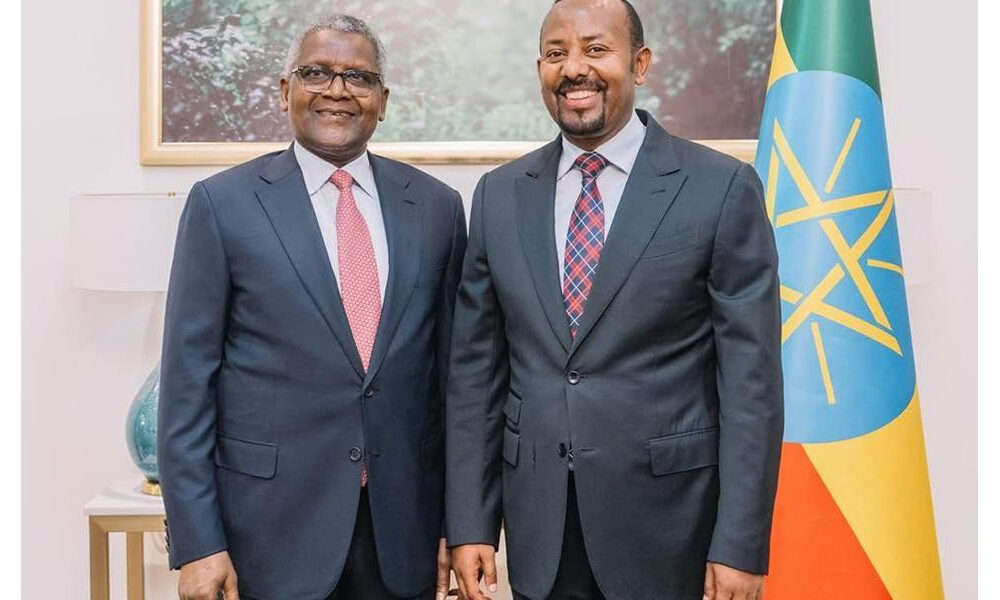
Ethiopia is set to finalize a US$3 billion agreement with Nigerian business magnate Aliko Dangote to build a large fertilizer plant in Gode, Somali Regional State. The project – slated to begin construction later this year – represents one of Ethiopia’s largest industrial investments from a private foreign investor and aligns with the country’s strategy to reduce reliance on imported agricultural inputs and strengthen supply chain resilience.
Prime Minister Abiy Ahmed confirmed the deal will be formalized in mid-July, amid ongoing disruptions in fertilizer supply chains. Only 40 percent of the required fertilizer for the 2025 Meher planting season had arrived by April, underscoring vulnerabilities linked to global logistics bottlenecks and geopolitical instability.
Ethiopia currently imports most of its fertilizer from Morocco and Russia but faces persistent delays due to foreign exchange shortages and logistical constraints.
Strategic Location and Economic Implications
The proposed facility will produce urea and nitrogen-based fertilizers, serving both domestic needs and export markets in East Africa. Its location in Gode – strategically situated near the Ethiopia-Djibouti transport corridor – ensures efficient access to ports for raw material imports and product exports.
The site also reflects the federal government’s broader effort to direct industrial investment toward historically underdeveloped regions.
To support such development, Ethiopia is expanding infrastructure, energy access, and road networks in eastern regions, designating Gode as a priority industrial zone. The Dangote Group, already operating a cement plant in Oromia since 2015, continues to deepen its regional footprint across petrochemicals, energy, and agribusiness.
Dangote’s new Ethiopian plant is expected to match the capacity of its US$2.5 billion Nigerian facility, which produces 3 million metric tons annually. Output could expand depending on regional demand dynamics.
The deal supports Ethiopia’s Homegrown Economic Reform II (HGER II), a policy framework aimed at liberalizing key sectors, modernizing agriculture, and attracting foreign direct investment. Given that agriculture contributes roughly one-third of GDP and employs nearly 70 percent of the workforce, improving input availability is critical to boosting productivity, curbing food inflation, and supporting rural livelihoods.
Development finance institutions, regional trade partners, and agribusiness investors are closely monitoring the initiative. If implemented successfully, the project could transform Ethiopia from a fertilizer importer into a regional production hub, offering long-term economic stability amid volatile global commodity markets.