Owusu on Africa
Ethiopia Completes Mega Dam, Marking Milestone for Africa’s Water Security and Diplomacy


By Fidel Amakye Owusu
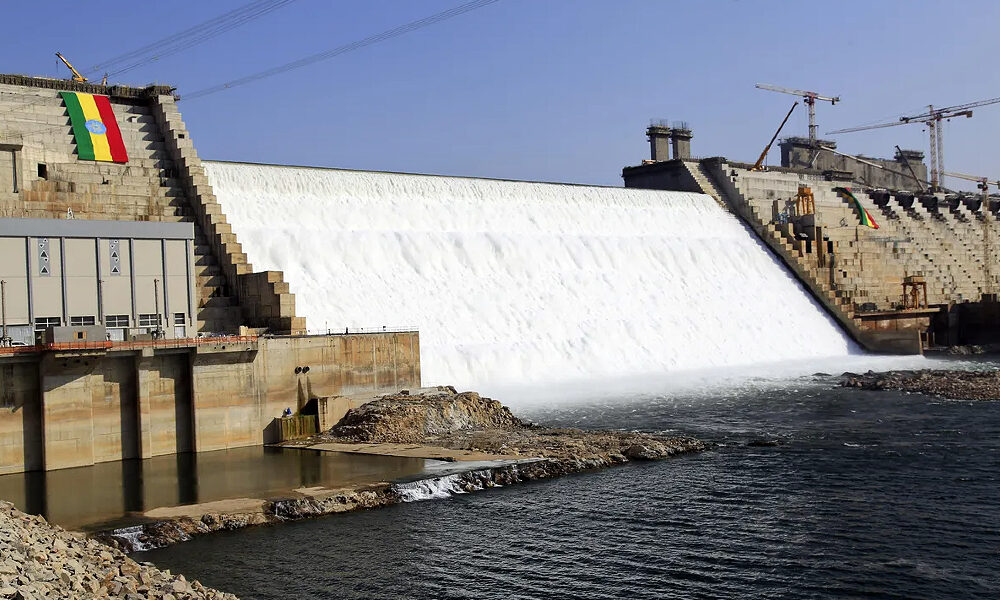
In a landmark announcement, Ethiopian Prime Minister Abiy Ahmed declared the full completion of the Grand Ethiopian Renaissance Dam (GERD), Africa’s largest hydroelectric power project. This milestone marks not only a triumph for Ethiopia’s energy ambitions but also a pivotal moment in the continent’s ongoing struggle to balance transboundary water management with national development goals.
Abiy was quick to emphasize that the dam is not intended to harm downstream nations – particularly Egypt and Sudan – but rather to serve as a catalyst for regional cooperation and shared prosperity. He reiterated that the electricity generated by the GERD will be available to neighboring countries, potentially transforming the regional energy landscape.
Since its launch in 2011, the GERD has become the centerpiece of Ethiopia’s foreign policy and a flashpoint in its relations with Egypt and Sudan. Egypt, in particular, has viewed the dam as an existential threat, citing concerns over its impact on the Nile River – the lifeline of its agriculture, economy, and population.
The Blue Nile, which originates in Ethiopia and contributes about 80 percent of the Nile’s downstream flow, has long been a source of geopolitical tension. Cairo argues that the dam’s filling and operation could significantly reduce its water supply, violating colonial-era treaties from 1929 and 1959 that allocated the majority of the Nile’s waters to Egypt and Sudan.
Ethiopia, however, has consistently rejected these agreements, asserting that it was never a party to them and that it has every right to harness its natural resources for development.
While direct military conflict between Egypt and Ethiopia remains unlikely at this stage, the enduring dispute underscores broader challenges facing water governance across Africa – a continent where nearly two-thirds of surface water flows across national borders.
Africa’s Rivers: Lifelines and Flashpoints
Africa is home to some of the world’s most significant transboundary river basins. The Nile spans at least ten countries, the Congo River flows through six, and the Niger connects ten nations.
In Southern Africa, the Zambezi Basin affects six states, while the Orange River touches three. These rivers are more than geographic features – they are economic arteries, cultural symbols, and increasingly, sources of diplomatic friction.
Climate change, rapid population growth, and the push for agricultural modernization and energy independence are intensifying pressure on these shared water systems. As upstream nations like Ethiopia seek to build dams and irrigation projects to fuel their development, downstream countries fear reduced water availability and ecological disruption.
Even in regions where alternative water sources exist, poor governance and environmental degradation threaten sustainability. In Ghana, for instance, illegal mining operations have polluted key tributaries of the Volta River, which serves six West African countries.
Such mismanagement not only endangers ecosystems but also risks inflaming regional tensions.
Toward Cooperative Water Governance
The completion of the GERD should serve as a wake-up call for African leaders: without cooperative frameworks for managing shared water resources, disputes will escalate, and regional stability will suffer.
There is a pressing need for inclusive, science-based negotiations that respect both historical rights and emerging developmental needs. Institutions such as the African Union must play a stronger role in facilitating dialogue and mediating conflicts before they reach crisis levels.
Moreover, investment in sustainable infrastructure, cross-border data sharing, and climate adaptation strategies can help turn water into a bridge rather than a barrier between nations.
Conclusion
The Grand Ethiopian Renaissance Dam is now a reality. Its implications extend far beyond Ethiopia’s borders – it represents a turning point for how Africa manages its most vital resource: water.
If handled wisely, the GERD could become a model for equitable, cooperative development. If mishandled, it may foreshadow deeper divisions across a continent already grappling with climate uncertainty and political fragility.
African nations must recognize that water security is not just a technical issue – it is a matter of diplomacy, justice, and survival.
Fidel Amakye Owusu is an International Relations and Security Analyst. He is an Associate at the Conflict Research Consortium for Africa and has previously hosted an International Affairs program with the Ghana Broadcasting Corporation (GBC). He is passionate about Diplomacy and realizing Africa’s global potential and how the continent should be viewed as part of the global collective.