Opinion
Ethiopia and Rwanda Are Redefining Africa’s Manufacturing Future
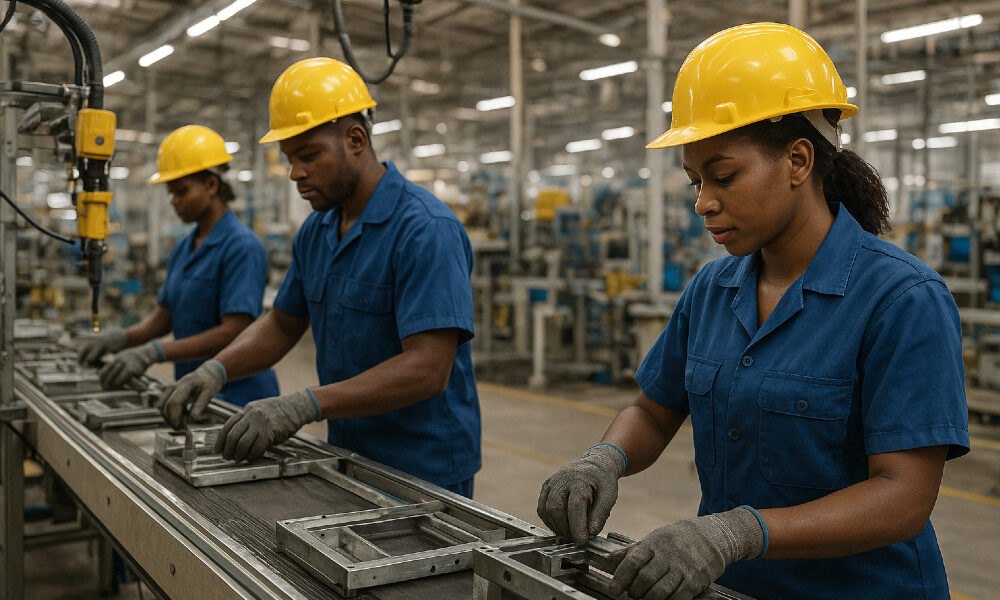


By John Kourkoutas
While global manufacturers pursue “China+1” strategies in Asia, a quieter, more profound shift is unfolding in an unexpected corner of the globe. Two landlocked East African nations – Ethiopia and Rwanda – are not just participating in this realignment; they are rewriting the rules for industrial development in Africa.
For European manufacturers seeking resilience, growth, and duty-free access to vast markets, the time for evaluation is over. The time for engagement has begun.
Ethiopia’s $1.3 Billion Industrial Park Revolution
Ethiopia isn’t planning or debating – it’s executing. By the end of 2025, the country will have 30 fully operational industrial parks, backed by US$1.3 billion in strategic investment.
The flagship Hawassa Industrial Park alone has generated over 50,000 direct jobs and attracted more than 80 foreign investors from China, India, Turkey, and South Korea. Focused on textiles, apparel, leather, and agro-processing, these parks leverage preferential access to U.S. and EU markets under AGOA and the EU’s Everything But Arms (EBA) initiative.
Rwanda: Vision 2050, Accelerated
Rwanda’s Kigali Special Economic Zone has drawn more than 40 foreign manufacturers in just a few years. The secret? Turnkey factory spaces, meaningful tax incentives, and a near-zero-friction regulatory environment.
The outcome: thousands of young workers employed, regional exports rising, and global supply chains taking note.
Debunking the Doubts
Critics cite familiar concerns – infrastructure gaps, skills shortages, landlocked logistics. But Ethiopia and Rwanda anticipated them:
- Infrastructure? Built for manufacturing, not as an afterthought.
- Skilled labor? Government-backed vocational training is embedded in every park.
- Landlocked? Regional trade corridors and AfCFTA integration turn geography into a logistical advantage, not a barrier.
Why European Manufacturers Should Act Now
These hubs offer low-cost production with duty-free access to over a billion consumers across Africa, the U.S., and Europe. Incentives are real, not rhetorical.
And crucially, there’s still first-mover advantage – before capacity fills and competition intensifies.
Having executed more than 100 projects across African markets, I have learned this: success doesn’t go to those with the most polished feasibility studies. It goes to those who move while others deliberate.
Ethiopia and Rwanda aren’t “emerging” manufacturing hubs. They are open for business – export-ready, scaling fast, and operating now.
John Kourkoutas is business development expert that specializes in helping companies, export teams, and business leaders succeed in Africa’s dynamic and emerging markets.