Business
EthicsSA launches fact vs feelings survey on perceptions of Africa China growing trade
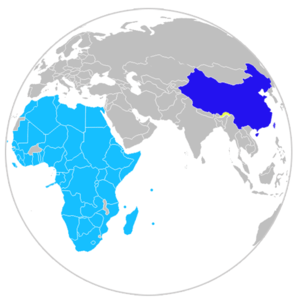
(PR Republic) – The Ethics Institute of South Africa (EthicsSA) has launched a survey to gauge perceptions about Chinese companies doing business across 15 African countries. The Institute’s CEO, Deon Rossouw, says the survey aims to provide a factual basis for dialog with the Chinese government and Chinese companies about their involvement in Africa.
“China has become a major investor across Africa and it’s clear that there are widespread negative perceptions about its involvement,” says Professor Rossouw.
“China is now Africa’s largest trading partner, and Chinese investment in Africa is now sitting at over US$120 billion per year. Given the importance of the relationship, particularly to Africa, we cannot rely on rumor and misinformation, hence the importance of this survey.”
According to Rossouw, it is important to recognize that Africa accounts for a relatively small percentage of China’s total foreign investment – approximately 10 percent, and yet attracts a disproportionate amount of attention.
Many believe this suits China as it deflects attention away from the major investments it is making in Asia, Europe and the United States.
“One must also concede that China has made a positive and very visible impact on Africa’s infrastructure, with many of the big projects across the continent funded by that country,” he says.
Several factors are contributing to negative perceptions about Chinese investment in Africa, Professor Rossouw believes. The most important is probably the Chinese policy of non-involvement in any trading partner’s internal politics; as a result, China has had high-profile interactions with administrations the western world likes to term as “dubious” such as Zimbabwe and Sudan.
In addition, many of China’s deals to access energy, mineral and other natural resources are secret, opening them up to suspicions of corruption.
There are also allegations – again from the west, that some Chinese infrastructure projects are of inferior quality, and that insufficient attention is paid to ongoing maintenance.
Indeed, some commentators feel that although perhaps more benevolent than previous colonial enterprises, China is essentially a neo-colonial power intent solely on extracting African resources. This perception is fueled by the labor and general corporate social responsibility practices of many Chinese companies, which mirror those prevalent on mainland China itself and which do not meet Western standards.
China currently engaged in drafting legislation to guide its foreign investments – probably an indication that it is alive to how these negative perceptions could affect its ongoing foreign investments.
Many Chinese believe that the negativity surrounding their African activities is fanned by the Western media because China is “threatening” Western interests.
“The survey we are launching today will help us to move beyond impressions by determining what Africans themselves think about China’s impact on their economies and communities, and what Chinese workplace and environmental practices are really like,” says Professor Rossouw.
“EthicsSA intends to use the survey results, along with a supporting literature survey, to initiate a process of dialogue with China and Chinese companies active in Africa.”
The survey will be open to citizens of the 15 participating countries, and can be located at g3research.co.za/index.php/257173/lang-en
About EthicsSA: EthicsSA (Ethics Institute of South Africa) is a non-profit, public benefit organization. EthicsSA offers a wide range of ethics-related services to organizations and individuals in the public and private sectors, as well as in the professions. These include: thought leadership, training, advisory services, assessments, certification and project management
Source: Ethics Institute of South Africa