A Diaspora View of Africa
Entanglements in US Peace Efforts


By Gregory Simpkins
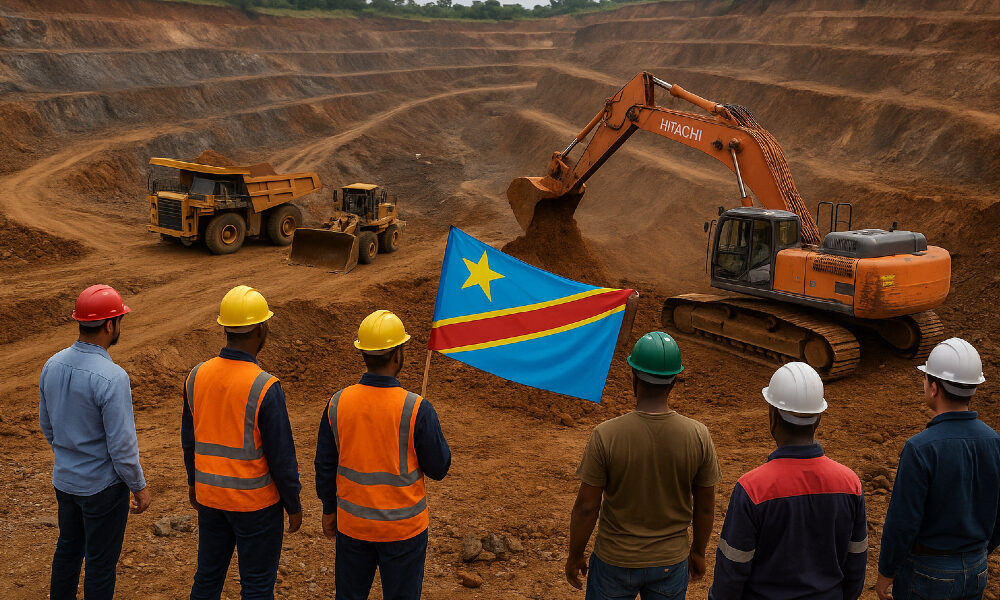
Recently, I wrote about US President Donald Trump’s global peace efforts. One of the peace efforts involved the Democratic Republic of the Congo (DR Congo) and Rwanda, in which the latter allegedly has been using the M23 militia to expropriate mineral resources as reported by the United Nations and others.
As I wrote in my earlier blog post, Rwandan President Paul Kagame expressed uncertainty about whether the peace accord would last, and that clearly is a self-fulfilling prophecy even if M23 has signed onto the peace process.
As reported by the World Politics Review on July 24, Trump’s administration promised to once and for all bring peace to a region consumed by more than three decades of some of history’s bloodiest wars and rampant violence. Building on this momentum, Trump’s envoy, Massad Boulos, participated in parallel talks mediated by Qatar between DR Congo and the M23 rebellion, which culminated in the signing of a preliminary agreement for a permanent ceasefire in the eastern DR Congo.
While Trump has all but proclaimed a historic peace achievement, worthy in his mind of the Nobel Peace Prize he covets, the war continues, according to a trusted source in the country. The deepening humanitarian catastrophe is made worse by the impact of U.S. funding cuts to international aid.
The Review said contradictions have fueled skepticism among observers about whether these diplomatic breakthroughs will deliver on the ambitious promises made to the people of the region, or whether they are simply politically expedient transactional exchanges based on narrow security and economic interests, specifically the US effort to acquire critical minerals from DR Congo.
Shifting Focus to Sudan’s Escalating Crisis
Now Trump’s administration has moved onto another difficult conflict situation in Africa: Sudan. The civil war between the Sudanese Armed Forces (SAF) and the Rapid Support Forces (RSF) has led to a humanitarian crisis, with reports of atrocities and human rights abuses.
The RSF has recently announced a parallel government.
Likely as a result, the United States has cancelled a high-level Quad meeting on the Sudan conflict that was scheduled for July 30, according to a media report, a move that came without a public explanation.
The meeting of the Quad group – comprising the United States, Saudi Arabia, Egypt and the United Arab Emirates – was called off despite intensive preparations, the Asharq Al-Awsat newspaper reported on July 29, citing unidentified U.S. State Department sources. The talks had been intended to launch a political dialogue between Sudan’s army and the RSF and to issue a joint statement calling for an end to hostilities and improved humanitarian access, the report said.
Egypt’s ambassador to Washington, Moataz Zahran, told reporters there was a “possibility the Quad meeting could be postponed until next September,” adding that the group remained focused on pressuring the warring parties.
As described by The Africa Report on July 28, this would have been the second meeting of the so-called Quad, after Deputy Secretary of State Christopher Landau and senior adviser for Africa Massad Boulos hosted the three countries’ ambassadors to Washington in early June.
Landau underscored that the US does not believe the conflict is amenable to a military solution and that the Quad should therefore endeavor to persuade the warring parties to cease hostilities and reach a negotiated solution, the State Department said at the time. Again, the proposed meeting likely was postponed due to the decision by the Tasis Alliance, a coalition of Sudanese armed groups formed in February to announce a parallel ”transitional peace” government to rival Sudan’s wartime government in Port Sudan.
The Tasis Alliance and the Struggle for Political Legitimacy
Tasis is based on a partnership between the RSF and the Sudan People’s Liberation Movement-North (SPLM-N), a powerful armed group that controls swaths of South Kordofan and Blue Nile states in southern Sudan as reported by Al Jazeera on July 28.
SPLM-N has been fighting a rebellion against the central government and the SAF for 40 years – a conflict rooted in aggressive land grabs by central elites. The RSF and SAF are former allies, yet a power struggle triggered an all-out civil war in April 2023.
Analysts have told Al Jazeera that Tasis is determined to challenge SAF for legitimacy and power after more than two years of conflict.
“The Tasis government is the RSF’s latest desperate attempt to rebrand itself as a state authority rather than a militia,” said Anette Hoffmann, an expert on Sudan at the Clingendale Institute think-tank in the Netherlands.
Other Possible African Peace Efforts
The DR Congo peace effort by the US was spurred by the American desire to compete with China for critical minerals on the continent. The DR Congo government of Félix Tshisekedi was eager to engage US investment in its mineral resources in return for security guarantees against continuing assaults and alleged plunder by Rwanda – a guarantee the Chinese have been reluctant to provide.
In its effort to acquire African mineral resources, other conflict countries on the continent also may be willing to grant US investment in mining if the Trump administration provides security guarantees, but that could easily lead to entanglements beyond what the US Congress would be willing to tolerate.
Other Current Conflicts:
- South Sudan: Tensions are escalating, with a risk of civil war, particularly between the Nuer and Dinka ethnic groups. The SAF and RSF are backing opposing sides, which could fuel further conflict.
- Ethiopia: The Tigray conflict has drawn in multiple ethnic groups, leading to significant humanitarian concerns. Clashes between the Ethiopian National Defense Forces (ENDF) and Fano militias in the Amhara region also have been reported.
- Somalia: Al-Shabaab militants continue to wage attacks against the government and African Union forces. Recent clashes have been reported in Mogadishu and other parts of the country.
- Burkina Faso: State forces and auxiliary militias have been linked to massacres of civilians, exacerbating ethnic grievances and fueling further violence.
Imminent Conflicts:
- Horn of Africa: Tensions between Egypt, Ethiopia, and Somalia are escalating, driven by disputes over the Grand Ethiopian Renaissance Dam and security agreements. The situation is volatile, with risks of military escalation.
- Ethiopia and Eritrea: The two countries have mobilized for war, with Eritrea implementing a nationwide military mobilization and Ethiopia deploying troops toward the Eritrean border. These conflicts have significant humanitarian implications, with millions displaced and in need of assistance. The international community is working to address these crises, but more efforts are needed to prevent further escalation and promote peace and stability in the region.
Now a new conflict has erupted in a mineral-rich African region. The New York Times reported on July 30 that, backed by tanks and artillery, soldiers from Uganda sneaked across the border with South Sudan and opened fire on troops long considered to be allies, South Sudanese officials said.
When the firefight was over, the bodies of eight men, some in army fatigues, one in blue jeans, were left crumpled and bleeding on the ground.
It was not immediately clear what prompted the surprise attack in the border county of Kajo Keji in South Sudan, a country teetering on the edge of civil war. Uganda has long provided military support to the South Sudanese government.
The violence claimed the lives of at least eight soldiers, five from South Sudan and three from Uganda, according to South Sudanese officials and a clergyman.
“Children went unattended as they got separated from their parents, the elderly remained scattered as they began to get out of the bushes to look for their unaccompanied kids and the sick and injured had no medicine to be given,” said Joseph Aba Nicanor, the bishop of the Episcopal Diocese of Liwolo, who mediated the collection of remains.
These conflicts, as well as others that may appear, are not now nor will they become easily resolved any time soon. Since the desire for critical minerals, largely found on the African continent, will continue to tempt the Trump administration – also enamored of building the reputation for establishing peace globally – one can expect future African peace efforts.
It will be interesting to see if the mineral hunt becomes worth the problems caused by guaranteeing security for troubled African governments.
Gregory Simpkins, a longtime specialist in African policy development, is the Principal of 21st Century Solutions. He consults with organizations on African policy issues generally, especially in relating to the U.S. Government. He further acts as a consultant to the African Merchants Association, where he advises the Association in its efforts to stimulate an increase in trade between several hundred African Diaspora small and medium enterprises and their African partners.