Opinion
Energy Security and Africa: Avoiding a New Extractive Trap


By Danilo Desiderio
The global energy conversation is undergoing a profound transformation. As the World Economic Forum recently highlighted, advanced economies are increasingly prioritizing energy security – defined as access to affordable, reliable, and nationally controlled energy – over their earlier emphasis on climate mitigation and energy transition.
For Africa, this shift presents a double-edged sword: opportunity tinged with peril.
The continent’s energy crisis remains staggering. More than 600 million Africans lack access to electricity, while unreliable and expensive power supply continues to strangle industrialization across much of the region.
Without stable, affordable energy, factories cannot operate efficiently, production cannot scale, and sustained job creation remains a distant dream.
A Window Opens – But for How Long?
The renewed global focus on energy security has undeniably expanded Africa’s policy space. Governments now face fewer external constraints in developing domestic energy resources – hydropower, solar, natural gas, oil, and geothermal – than under previous climate-focused financing regimes.
If harnessed effectively, expanded energy production could catalyze industrial growth, employment, and structural transformation.
Yet generation capacity alone will not deliver development. Across the continent, transmission and distribution infrastructure represents the primary bottleneck.
Chronic underinvestment in grid networks has produced high technical and commercial losses, operational inefficiencies, and frequent curtailment – even in countries that have expanded renewable generation. Without reliable, adequately scaled grids, additional power cannot reach households, businesses, or industrial zones, fundamentally undermining the developmental impact of new energy investments.
The Extractive Trap Reimagined
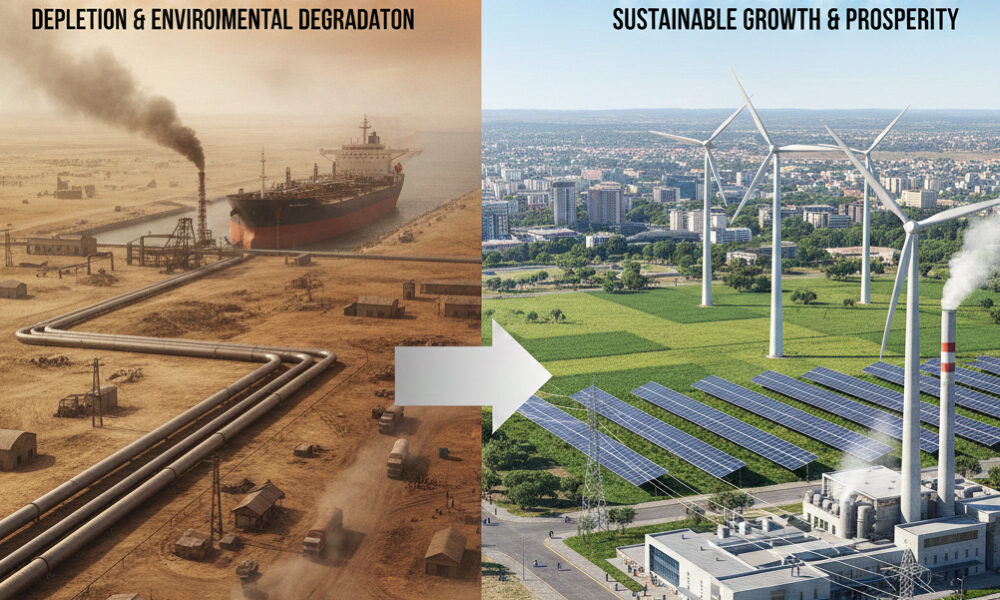
Without parallel investment in grid infrastructure, Africa risks reverting to a depressingly familiar pattern: exporting energy and energy-related resources to support the growth and energy security of advanced economies, while domestic productive capacity and economic transformation remain stunted.
As wealthy nations seek secure supplies of gas, oil, and critical minerals, Africa is increasingly positioned as a strategic supplier of:
- Natural gas for electricity generation and industrial use abroad
- Crude oil for refining outside the continent
- Critical minerals – lithium, cobalt, copper, and manganese – essential for clean energy technologies
If these resources are exported largely in raw or minimally processed form, the predictable outcomes will be:
- Limited job creation
- Weak industrial development
- Continued dependence on imported manufactured goods
- Modest gains in skills, incomes, and fiscal revenues
This would constitute nothing less than a repetition of the traditional extractive model, merely rebranded under the rhetoric of energy security rather than colonial trade.
Energy as Input, Not Export
Energy is necessary for development, but far from sufficient. Wealth is created not by producing energy, but by how it is deployed.
Successful economies use energy to:
- Power factories and industrial parks
- Process raw materials and minerals domestically
- Manufacture higher-value goods
- Build integrated domestic and regional supply chains
If Africa expands energy production primarily for export – while domestic grids remain inadequate and industrial capacity underdeveloped – the continent risks remaining energy-poor at home while fueling prosperity elsewhere.
A Development-First Energy Strategy
To avoid this outcome, African governments must treat energy as a strategic input to industrialization, not merely as an export commodity. This requires:
- Prioritizing domestic power generation and grid expansion alongside new energy projects
- Using natural gas for local electricity generation, fertilizers, and petrochemicals before exporting it
- Refining oil domestically to reduce fuel import dependence
- Processing minerals into battery materials and industrial inputs
- Linking energy investments to manufacturing, skills development, and employment
In practical terms, energy projects should be approved only where they demonstrably support domestic productive capacity and economic transformation. While attracting investment into the energy sector is essential, not all energy investment contributes equally to development.
African governments should therefore exercise caution regarding projects that:
- Are primarily export-oriented
- Generate limited local employment
- Lock countries into long-term resource dependence
- Increase public debt without strengthening grids or productive capacity
Financing priorities should favor projects that expand transmission and distribution networks, strengthen local value chains, and reduce dependence on imports.
Beyond Extraction: What Genuine Partnership Looks Like
International partnerships can play a constructive role in providing access to modern energy technologies. However, these partnerships must extend beyond extraction and include:
- Local manufacturing: Establishing production or assembly facilities within African countries rather than exporting only raw materials
- Skills and technology transfer: Ensuring that local workers and institutions acquire the knowledge and technical expertise needed to operate, maintain, and innovate in energy and industrial sectors
- Research and development: Supporting local innovation through joint R&D programs, technology adaptation, and context-specific solutions
- Support for African firms: Creating opportunities for local companies to participate in supply chains, contracts, and value-added activities linked to energy and industrial projects
Without these fundamentals, Africa risks becoming dependent on foreign technologies while remaining merely an extraction or low-value assembly site.
The Narrow Window
The global shift toward energy security opens a window of opportunity for Africa – but it is a narrow one. If the continent focuses primarily on exporting energy and minerals, it risks repeating history: supplying others’ energy security while remaining economically insecure itself.
If, instead, African countries invest strategically in grids, industries, skills, and regional markets, energy can become the foundation for genuine structural transformation.
The central challenge facing Africa is not merely increasing energy production, but ensuring that energy reaches the people and industries that can drive development, is delivered efficiently and reliably, and generates tangible economic and social benefits for the continent itself.
The choice between extraction and transformation has never been starker – or more consequential.
Danilo Desiderio serves as the CEO of Desiderio Consultants Ltd in Nairobi, Kenya, specializing in African customs, trade, and transport policies. He is a customs and trade expert at the World Bank and a senior associate to the Horn Economic and Social Policy Institute (HESPI).