Opinion
ECOWAS at a Crossroads: Can West Africa’s Bold Vision Overcome Its Challenges?


By Dishant Shah
In 1975, a bold vision brought together a group of West African nations – what if borders no longer hindered trade, travel, and economic growth?
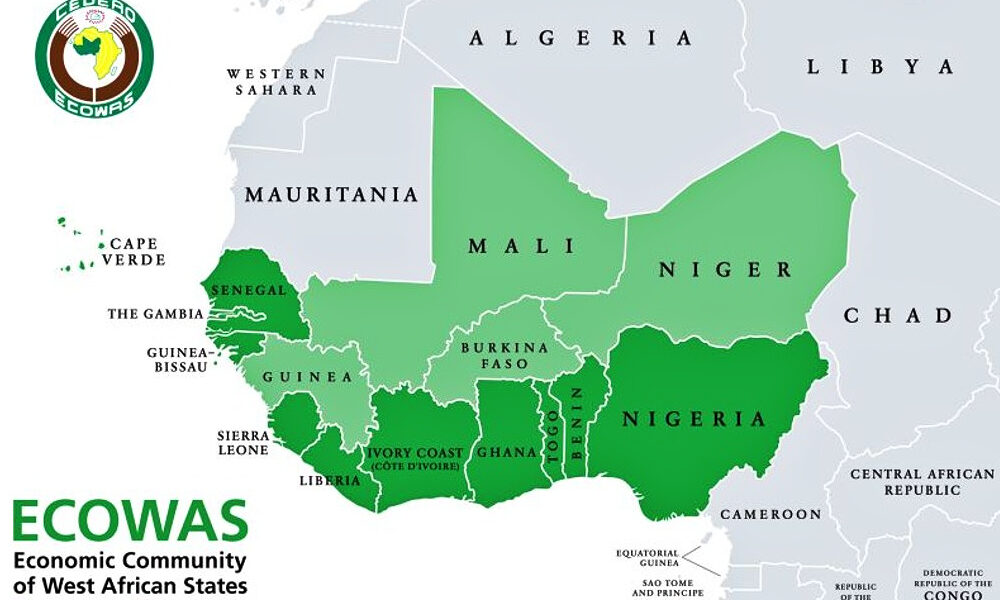
That vision gave birth to the Economic Community of West African States (ECOWAS), a regional bloc uniting 15 countries in pursuit of economic integration, political stability, and free movement of people and goods. Today, ECOWAS stands as one of Africa’s most ambitious regional organizations, and despite numerous challenges, its impact is undeniable.
Economic Achievements and Challenges
With a combined market of over 400 million people, ECOWAS is one of Africa’s largest economic zones. It has introduced a free movement protocol, allowing citizens to travel visa-free across member states, and established a common external tariff to facilitate trade and reduce economic barriers.
In many ways, ECOWAS mirrors the European Union – though without a single currency, at least for now.
The proposed “ECO” currency, intended to replace national currencies in some ECOWAS countries, has faced persistent economic and political hurdles, keeping it as an unrealized dream for the time being.
ECOWAS and Regional Stability
Beyond economics, ECOWAS has played a pivotal role in regional stability. It has intervened in conflicts, deployed peacekeeping missions, and mediated political crises in nations such as Liberia, Sierra Leone, and Mali.
The bloc even boasts a standby military force – an uncommon feature among regional organizations.
If ECOWAS can navigate political instability, enhance trade infrastructure, and reignite efforts toward a common currency, it has the potential to become a true economic powerhouse.
ECOWAS has also taken a firm stance against unconstitutional power grabs, suspending countries like Niger, Mali, and Guinea in response to military coups. However, the organization is now at a crossroads.
Political Struggles and Member-State Dissatisfaction
Some member states feel that ECOWAS prioritizes politics over economic development. A recent surge in military takeovers has further tested its authority, with Mali, Niger, and Burkina Faso announcing plans to exit the bloc.
Meanwhile, internal trade remains lower than expected, hampered by weak infrastructure and bureaucratic roadblocks.
The Future of ECOWAS: Challenges and Opportunities
Yet, optimism remains. West Africa is home to some of the fastest-growing economies in the world.
Nigeria alone is projected to surpass a GDP of US$1 trillion by 2030. The African Continental Free Trade Area (AfCFTA) presents an opportunity for ECOWAS to expand its reach beyond West Africa, strengthening its role in global trade.
If ECOWAS can navigate political instability, enhance trade infrastructure, and reignite efforts toward a common currency, it has the potential to become a true economic powerhouse. The journey won’t be easy, but the dream that took root in 1975 is far from over.
Can ECOWAS rise above its challenges and fulfill its vision of a united, prosperous West Africa?
Dishant Shah is a partner at Legion Exim, a company specializing in facilitating the export of high-quality engineering products directly sourced from manufacturers in India to Africa. His areas of expertise include new business development and business management.