Business
East African Community studying West African integration model – dumps EU model
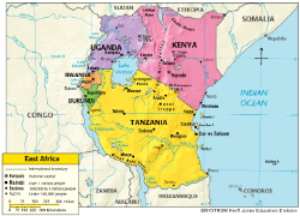
Experts negotiating rules for unifying economic policies of the five East African Community countries have turned to West Africa for lessons on integration as the Eurozone crisis undermines confidence in the Western model.
A taskforce is touring West Africa to meet representatives of the Commission of West African Economic and Monetary Union (UEMOA) the whole of this week.
“The task force will discuss and share experiences with practitioners from UEMOA to understand the formation and conduct of the monetary policy in West Africa,” the East African Community secretariat said in a statement.
The 22-member team, the statement says, will visit the National Central Bank of Burkina Faso, the Regional Statistical Center of the Commission, the Central Bank of West African States and Senegal’s finance ministry.
“The team will discuss the roles of the different institutions, co-ordination of fiscal policies and best practices,” says the East African Community Secretariat said last week.
The eight-member UEMOA created in 1994 by countries which already shared the franc as a single currency operates more like a currency union than a monetary one that the East African Community seeks to create.
Benin, Burkina Faso, Côte d’Ivoire, Mali, Niger, Senegal, Togo and Guinea-Bissau are members.
East Africa’s Monetary Union protocol currently under negotiation not only targets a single currency but also uniform fiscal and monetary regime by end of this year.
The East African bloc borrowed heavily from European Union’s experience to draft its custom and common market protocols. Early this year, the East African Community team was back in Europe to study its model for monetary union.
The shift of attention to West Africa comes just weeks after the International Monetary Fund (IMF) warned early this year that the East African Community’s single currency would not result from the same macroeconomic landscape as Europe’s since the risks are different.
“Unlike the case with East Africa, the EU single currency plan provided members with access to very large internal and global pool of savings at low rates of interest that allowed some countries to sustain private sector imbalances for a long period of time,” it said.