Opinion
Duty-Free Is Not Value-Added: Africa’s Real Trade Test
Duty-free access to China and a debate over coffee roasting point to the same truth: African producers win by owning the brand and the customer, not by removing a border charge or buying a machine.


By Wilbert Chaniwa
Put a coffee roaster and a trade minister in the same room and you will get two arguments that sound unrelated. The roaster will ask whether an African producer should roast at home or where the coffee is sold. The minister will ask whether Beijing’s new duty-free access is a breakthrough or a bargain. Both are asking the same question: who keeps the value?
Start with the coffee. In the first eight months of the 2025/26 coffee year, roasted coffee made up just 0.5 percent of global exports. Green beans made up 86.5 percent. Uganda still ships more than 98 percent of its coffee green. One widely shared estimate puts African green coffee at US$3 to US$4 a kilo, and the same beans, roasted and branded overseas, at US$20 to US$30. The gap is so large that the instinct is automatic: roast at home and keep the margin.
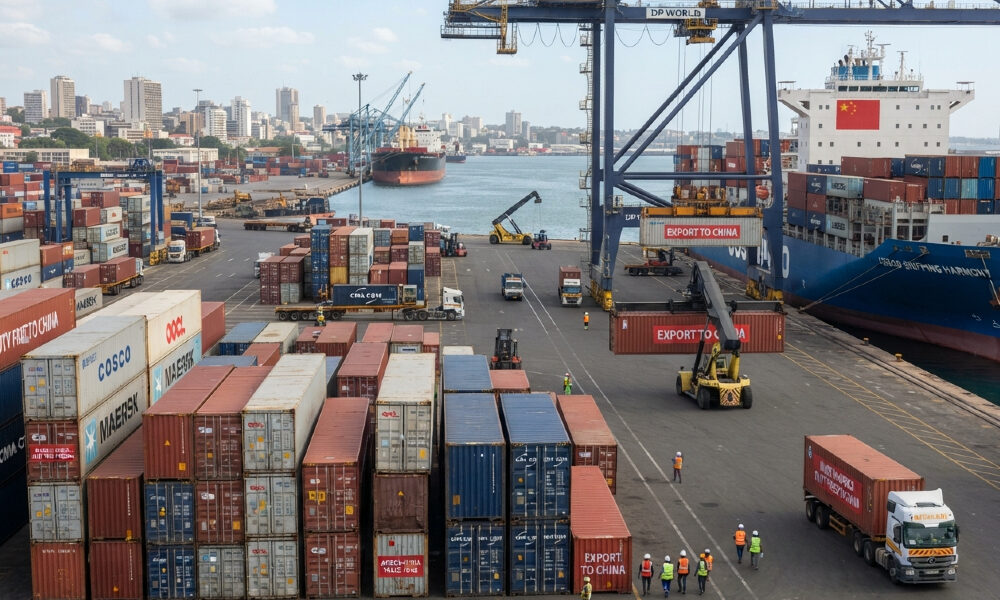
Now the trade. On May 1, Beijing extended zero-tariff treatment to all 53 African countries with which it has diplomatic ties, up from 33. Kenya, Ghana and South Africa are among the 20 newly covered, with access guaranteed through April 2028. The early numbers look strong. China-Africa trade reached US$312.11 billion in the first nine months of 2026, up 22.3 percent. Chinese imports from Africa rose 18.5 percent to US$109.14 billion. Tariffs on South African citrus fell from 10-12 percent to zero, and one Chinese importer reports its South African citrus purchases up 50 percent. Kenya’s Sunripe plans to double its avocado shipments next year.
Both stories invite the same mistake: treating a visible lever, a roasting machine or a tariff schedule, as if it were the prize.
The Case for Roasting at Source
It is a strong one. Jobs, skills, tax revenue and foreign exchange stay in the country. Kenyan exporters earned about 240 shillings (US$1.85) more per kilo on roasted coffee than on green in 2023/24. A producer who controls the roast controls the story, and one who builds home and regional markets gains a cushion against the commodity cycle.
But the costs are real. The freshness clock starts at origin. Green coffee can wait; roasted coffee degrades during weeks at sea and in customs. Kenyan traders warn that roasted coffee rejected on quality grounds is hard to reroute. Packaging is expensive, and markets such as Europe impose demanding standards. Above all, many buyers will not touch the product. Specialty roasters buy green precisely because the roast is their craft, and UNCTAD describes the market for origin-roasted coffee as limited.
The Case for Roasting Where You Sell
Roasting near the customer means fresher coffee, shorter lead times and smaller batches. Green beans ship more cheaply and more safely. Germany, which grows no coffee, built one of the world’s largest roasting industries on logistics and market access alone.
The drawbacks are the mirror image. The jobs and skills stay abroad, which is the very problem producers want to fix. A roastery demands capital, or a producer pays toll-roasting fees. Newcomers must compete with established brands on those brands’ home turf. And without a brand of their own, an origin becomes one line on someone else’s label.
The Debate is Framed Wrongly
The money is not in the machine. It is in who owns the brand and the customer.
A producer who roasts at origin and sells unbranded through a distributor is still a price taker. A producer who toll-roasts in London under their own name, selling to their own customers, has moved up the chain without owning a single drum roaster. Location matters less than control.
So split the strategy by channel. Sell green to specialty roasters who want to control the roast. Roast at source for home and regional markets, where freshness is on the producer’s side. Roast in the destination market under the producer’s own brand for retail, hospitality and subscriptions. Then use the margin to bring more roasting home, one contract at a time. Secure the customer first. Build the factory second.
Now Read the Trade Deal the Same Way
Apply that logic to Beijing’s offer and the celebratory headlines look incomplete. Removing a tariff is not the same as capturing value. Five questions deserve answers that have not yet been given.
Who audited the product list? Nobody has published a product schedule, a Harmonized System code list or an audit of which goods qualify. Exporters are being asked to celebrate a benefit whose boundaries are unclear.
Who keeps the savings? Importers report costs down around 10 percent. No African exporter has spoken publicly about farmgate prices or reinvestment. A tariff cut that lands entirely with the buyer is a subsidy to Chinese importers.
Where does processing happen? Côte d’Ivoire (Ivory Coast), the world’s largest cocoa producer, made its debut at China’s international import expo with more than 20 companies. On display were raw cocoa, cashews and tropical fruit, not Ivorian chocolate or cocoa butter. No Chinese co-investment in processing, packaging or technology transfer has been disclosed.
What about the African Continental Free Trade Area? The policy may clash with AfCFTA rules of origin and the ambition to expand trade among African countries. Nobody has yet published that analysis.
What does it mean for Britain? British buyers of African cocoa, cashews and auto components now compete with Chinese importers who pay no duty. The UK has no equivalent offer.
Tariffs Without Transformation
The pattern is familiar. Coffee is exported green because that is where the demand is, and cocoa is exported raw because that is what is on offer. Duty-free access that is not tied to investment in processing risks locking Africa into its old role as a supplier of raw materials, only without the tariff. That looks less like development cooperation and more like procurement policy: efficient for the buyer, and thin on transformation for the seller.
None of this makes the deal bad. More market access is better than less, and farmers who can sell more avocados or citrus at lower cost to the buyer are not worse off. But access is a door, not a destination. Whoever owns the brand, the processing capacity and the customer relationship decides what walks through it.
What Should Happen Next?
Three things would turn an opening into a strategy:
- Publish the schedules. African trade ministries, the African Union and the AfCFTA Secretariat should release the full product schedules and tariff-line audits, so exporters and analysts can see what qualifies.
- Demand matching investment. Access should be paired with commitments to processing, packaging and technology transfer on the continent.
- Guard against leakage. Duty-free access must not become a faster route for value to leave Africa. Britain, for its part, must decide how it will respond to the competitive pressure on its own buyers.
The lesson from the roastery applies to the negotiating table. Secure the customer first, then build the factory. A continent that wins the tariff but loses the brand will have mistaken a receipt for a profit.
Wilbert Chaniwa is an entrepreneur, corporate consultant, and author specializing in African agribusiness, investment advisory, and agri-food value chains. He is the Founder and CEO of RIC Brands, a UK–Africa agribusiness and hospitality company operating in the United Kingdom and Rwanda. His work focuses on food and soil sovereignty, reducing import dependency, restoring soil health, and scaling domestic food production. He also advances indigenous crop commercialization – such as fonio, moringa, baobab, teff, and bambara groundnut – while promoting knowledge transfer, market access, and agri-CPG trade across Africa.