Opinion
DR Congo Awakened: Powering the Global Economy
The Democratic Republic of the Congo is not a nation waiting to be discovered. It is one already doing the heavy lifting – for the world’s electric vehicles, smartphones, and green-energy ambitions. The question is no longer whether the DR Congo matters. It is whether the world will finally deal with it fairly.


By Lance Chisue
For decades, the Democratic Republic of the Congo has been described with a phrase that flatters the speaker more than the subject: “sleeping giant.” The implication is one of latent promise – a vast, resource-rich country somehow waiting for the world to notice it.
The reality is considerably less passive, and considerably more consequential.
The DR Congo is not sleeping. It is, in fact, doing some of the most critical industrial work on the planet. It simply has not been adequately compensated for it.
The Mineral Backbone of the Modern Economy
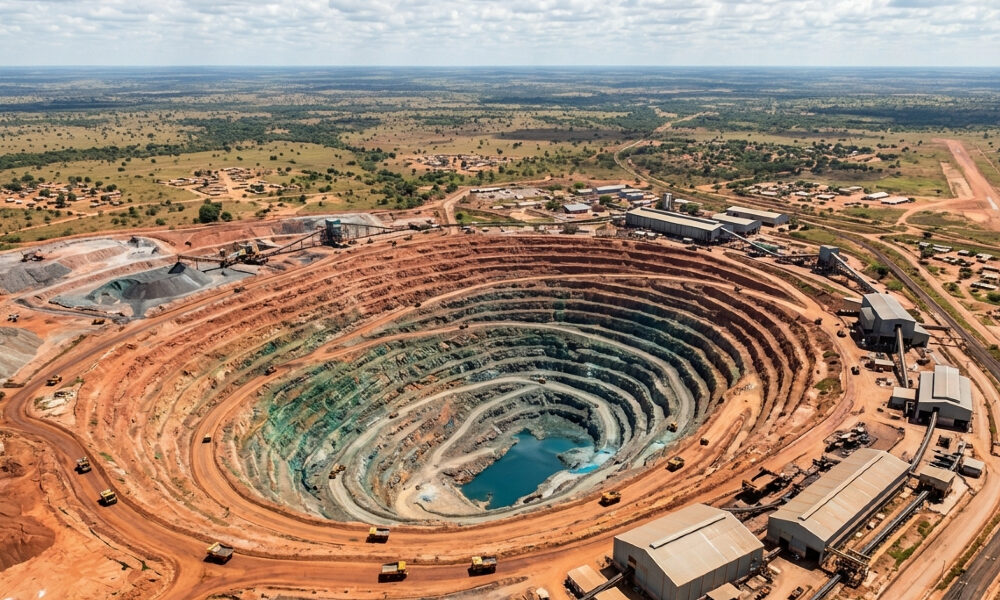
Africa’s second-largest country by land area, spanning 2.34 million square kilometers of equatorial terrain, the DR Congo holds what may be the most strategically important mineral portfolio on Earth. It supplies approximately 70 percent of the world’s cobalt – the element that makes the rechargeable batteries in electric vehicles and consumer electronics possible.
It ranks among the world’s top two copper producers, a metal whose demand is surging as electrification accelerates across every major economy. Its reserves of lithium, coltan, and gold further position the country as an indispensable partner in the clean-energy transition that Western governments and corporations have staked their climate credibility on.
Industrial diamonds, often overlooked in favor of their gemstone counterparts, add another layer of strategic depth. With an estimated 150 million carats in reserves, the DR Congo supplies the cutting, drilling, and high-precision manufacturing sectors that underpin modern industry.
These are not luxury goods. They are production inputs.
To put the stakes plainly: there is no credible path to a decarbonized global economy that does not run directly through Kinshasa.
A Young Nation, a Massive Market
Beyond its subsoil, the DR Congo’s demographic profile deserves serious attention from investors and policymakers alike. Its population of more than 112 million people – the majority under the age of 30 – represents not merely a labor pool but a future consumer market of enormous scale.
As household incomes rise and urbanization accelerates, the country’s internal demand for goods, services, and infrastructure will compound. For international manufacturers, this reframes the DR Congo from a sourcing destination into a market-entry opportunity.
That reframing is not a rhetorical flourish. It carries real strategic implications. The companies positioning themselves now – building local partnerships, navigating regulatory complexity, and investing in downstream capacity – will be far better placed than latecomers scrambling for access in a decade’s time.
A Climate Asset the World Cannot Afford to Lose
Beneath the economic calculus lies an ecological one. The Congo Basin rainforest, the second-largest on Earth, functions as one of the planet’s most critical carbon sinks.
Its preservation is not a peripheral environmental concern; it is central to any serious global climate strategy. The DR Congo’s stewardship of this ecosystem constitutes a contribution to global public goods that has, until recently, gone largely unacknowledged and uncompensated in international climate finance negotiations.
The Gap Between Wealth and Welfare
For all its strategic importance, the DR Congo’s domestic economy tells a sobering story. Gross domestic product has grown to approximately US$82 billion, yet GDP per capita hovers around US$770 – a gap that lays bare the structural failure to translate resource wealth into broad-based prosperity.
More than one million artisanal miners depend on diamond extraction alone for their livelihoods, operating outside the formal economy in conditions that expose them to exploitation and precarity. This is not a footnote to the DR Congo’s economic story. It is the central moral challenge of it.
The path forward demands formalization of the artisanal sector, transparent and equitable value distribution, and supply chains that can withstand – and deserve – ethical scrutiny. Consumers and regulators in Europe and North America are already demanding it; the only question is whether industry will lead or be dragged.
The Real Competition: Processing, Not Possession
The defining economic contest of the next decade will not be fought over who owns these resources. Ownership, in the form of mining rights and extraction concessions, is already well-established.
The real competition – and the real opportunity – lies in who processes them, who adds value to them, and who builds the industrial capability to do so within the DR Congo itself.
For too long, the country has exported raw materials only to import finished goods manufactured with those same materials at a substantial markup. Reversing that dynamic – through local refining, battery precursor manufacturing, and downstream industrialization – is the economic ambition that separates a resource-dependent economy from a genuinely industrialized one.
This is where international manufacturers and technology companies face a genuine strategic choice. Continuing to treat the DR Congo purely as a sourcing market is not only ethically fraught; it is increasingly commercially shortsighted.
The more durable competitive advantage belongs to those who invest in local processing capacity, build in-country relationships, and treat the DR Congo as a partner in value creation rather than a quarry to be managed from a distance.
The Indispensable Nation
The DR Congo is not a story about potential. It is a story about leverage – leverage that the country has rarely been in a position to exercise, but that the global economy’s dependence on its minerals is quietly beginning to confer.
The opportunity is no longer theoretical: move beyond raw extraction toward local processing, value-added manufacturing, and structured, long-term market engagement. The ethical case and the commercial case, for once, point in the same direction.
The sleeping giant, it turns out, has been awake all along. The question is whether the world is finally ready to treat it as an equal.
Lance Chisue is the Founder and CMO of Sales Connect Africa, a Pretoria-based firm specializing in helping manufacturers enter and grow in Southern African markets. He leverages sales expertise and strategic visibility to connect products with buyers, supporting manufacturers in navigating complex regional market dynamics and distribution channels. Lance is dedicated to empowering manufacturers to succeed by bridging gaps between products and customers in emerging African markets