Opinion
Does Africa Exist in Trade? The Challenge of Integration and Institutions


By Danilo Desiderio
A provocative question recently posed by a Semafor Africa article – “Does Africa really exist?” – offers a striking entry point into the continent’s persistent economic fragmentation. The piece highlights the cultural, regulatory, and logistical barriers that continue to limit intra-African trade and broader integration.
Its emphasis on entrepreneurial mindset and grassroots initiatives is valuable, underscoring the reality that top-down agreements, like the African Continental Free Trade Area (AfCFTA), cannot succeed without complementary bottom-up efforts. Indeed, research co-authored with Prof. Eric Tevoedjre echoes this view, advocating for regional value chain strategies anchored in Africa’s Regional Economic Communities (RECs), where coordination and harmonization are strongest.
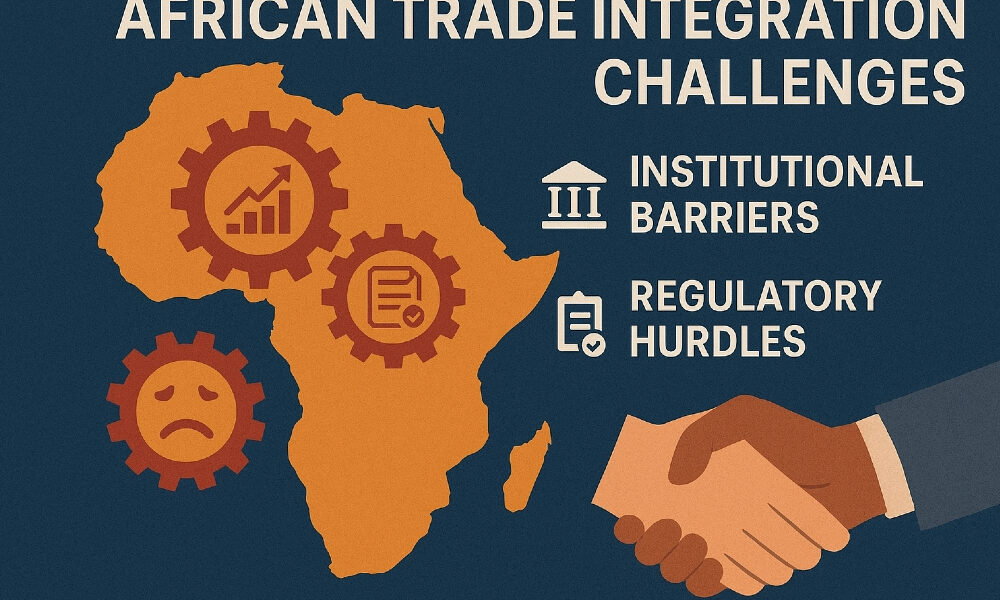
Structural and Institutional Barriers to Integration
However, while insightful, the Semafor article oversimplifies Africa’s integration challenges by underestimating structural and institutional constraints. The assertion that Africa “does not exist” from a trade perspective is misleading.
Since January 1, 2021, Africa has formally operated as a free trade area under the AfCFTA. The title, though, seems intended more as provocation than analysis, drawing attention to trade policy fragmentation rather than denying Africa’s economic reality.
The continent’s true challenge lies not in a trade vacuum but in the lack of centralized institutions with supranational authority to administer trade policies on behalf of member states. Unlike the European Union, where member states have ceded powers to negotiate binding treaties, the African Union (AU) does not possess exclusive trade competence.
Its legal and institutional limitations prevent it from acting independently in areas essential for continental economic integration. Compounding this is the absence of effective enforcement mechanisms – compliance with AU trade policies remains largely voluntary, constraining efforts to harmonize regulations and advance integration.
…Africa does not yet speak with a unified voice in trade negotiations, limiting both its bargaining power and the AfCFTA’s potential impact.
Beyond Choice: Policy and Implementation
As a result, Africa does not yet speak with a unified voice in trade negotiations, limiting both its bargaining power and the AfCFTA’s potential impact. While cultural, regulatory, and logistical barriers are real, institutional weaknesses lie at the heart of the challenge.
Even reported intra-African trade figures – often cited at 14 percent – can be misleading, as they exclude informal trade, which remains the highest globally and forms a critical pillar of African commerce.
The article’s claim that “integration isn’t a policy, it’s a choice” also warrants nuance. Policy, by definition, translates choices into actionable frameworks, encompassing laws, regulations, enforcement, and funding.
Without these structures, even the strongest political will cannot generate meaningful integration. Harmonized customs procedures, dispute resolution mechanisms, and empowered continental institutions are essential for transforming intention into measurable outcomes.
In other words, integration is both a choice and a policy process – the latter indispensable for operationalizing the former.
Entrepreneurial initiative and a mindset of continental collaboration are essential, but they must be paired with institutional innovation, policy enforcement, and centralized coordination. Achieving meaningful African trade unity requires structures capable of harmonizing policies, enforcing rules, and representing Africa collectively on the global stage.
By acknowledging both behavioral and institutional dimensions, we gain a more complete understanding of why Africa has yet to fully realize its integration potential – and why the question of its “existence” is more about coordination than geography.
Danilo Desiderio serves as the CEO of Desiderio Consultants Ltd in Nairobi, Kenya, specializing in African customs, trade, and transport policies. He is a customs and trade expert at the World Bank and a senior associate to the Horn Economic and Social Policy Institute (HESPI).