A Diaspora View of Africa
Diaspora faces new gender issue

By Gregory Simpkins
For more than a decade, Western nations have pressured African governments and societies to accept lesbian, gay, bisexual, transgender and queer (LBGTQ) rights as they understand them despite the clash with African laws and traditions. I have personally witnessed threats to cut off aid if African governments did not comply. That battle is ongoing.
In these Western nations, there currently is a conflict over what to do with transexual people, especially men transitioning to women who want to compete with females despite inherent physical advantages. In some cases, transitioning or transitioned men have been allowed to compete with born females and have dominated the sports in which they participate. This is yet another issue that continues to evolve.
It has not yet become an issue for the African Diaspora, although it likely will at some point.
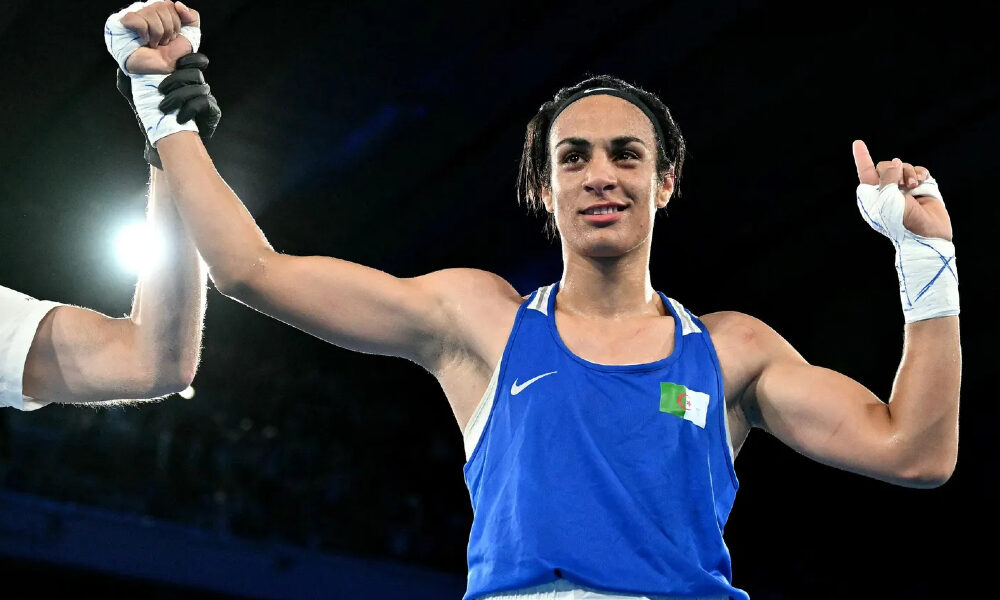
However, there is a new gender issue that has arisen as a result of the 2024 Olympics in Paris. Two Olympic boxers who had been declared physically male in 2023 and banned from competing against females were allowed to compete in Paris. This caused tremendous controversy, but it is not really an LBGTQ issue. If you are LBGTQ, there is an element of choice – if not in terms of how you feel then in how you manifest those feelings.
That is not the case in this emerging gender issue.
Algerian boxer Imane Khelif and Lin Yu-ting of Taiwan had been declared to be biologically female in 2023 and disqualified from the world championships last year, but the Olympics-banned International Boxing Association claimed the two fighters failed unspecified eligibility tests for women’s competition that probably involved whether their chromosomes were XX (female) or XY (male) and their relative level of the male hormone testosterone.
Because Algerian boxer Khelif is African, this is an issue that cannot fail to involve Diaspora sports authorities, not to mention Diaspora societies. The condition these two boxers face is not voluntary as the transexual issue is. It is a matter of acceptance of what nature has produced. In the case of Khelif, her family and society have accepted her as female. Yet will that be broadly accepted throughout the Diaspora?
African societies have long accepted gay and lesbian people so long as they didn’t make a public issue of their sexual orientation. Transsexualism has yet to become a significant issue in Africa, but intersexuality has now been thrust to the social forefront.
An emergent issue
People like Khelif and Yu-ting have existed probably for millennia. They used to be called “hermaphrodites” and could display both male and female physical features, though that is not always the case. In biology, the term hermaphrodite is used to describe an organism that can produce both male and female gametes – the reproductive cell containing only one set of dissimilar chromosomes or half the genetic material necessary to form a complete organism.
Some people with such traits use the term “intersex”, and some prefer other language. In clinical settings, the term “disorders of sexual development” (DSD) has been used since 2006, a shift in language considered controversial since its introduction. While physical traits may not be evident at birth, they often manifest during puberty. Then again that isn’t always the case either.
In the October 22 2018 issue of Nature magazine, clinical geneticist Paul James described what was a surprising 2010 intersex case.
A 46-year-old pregnant woman had visited his clinic at the Royal Melbourne Hospital in Australia to hear the results of an amniocentesis test to screen her baby’s chromosomes for abnormalities. The baby was fine – but follow-up tests had revealed something astonishing about the mother. Her body was built of cells from two individuals, probably from twin embryos that had merged in her own mother’s womb. And there was more, James wrote. One set of cells carried two X chromosomes, the complement that typically makes a person female; the other had an X and a Y. Halfway through her fifth decade and pregnant with her third child, the woman learned for the first time that a large part of her body was chromosomally male. “That’s kind of science-fiction material for someone who just came in for an amniocentesis,” said James.
Sex can be much more complicated than it at first seems. According to the simple scenario, the presence or absence of a Y chromosome is what counts: with it, you are male, and without it, you are female. But doctors have long known that some people straddle the boundary – their sex chromosomes say one thing, but their gonads (ovaries or testes) or sexual anatomy say another.
Parents of children with these kinds of conditions – known as intersex conditions, or differences or disorders of sex development (DSDs) – often face difficult decisions about whether to bring up their child as a boy or a girl. Some researchers now say that as many as 1 person in 100 has some form of DSD.
As I have written earlier, African societies have long accepted gay and lesbian people so long as they didn’t make a public issue of their sexual orientation. Transsexualism has yet to become a significant issue in Africa, but intersexuality has now been thrust to the social forefront.
Given the uncertainties regarding how intersex physical characteristics become evident, how will traditional Diaspora societies handle this issue international or Diaspora athletics on the international scene, but with boxers such as Nigeria’s Adeshina Zainab, Morocco’s Khadija el-Mardi and Jamaica’s Sherikee Moore and Jasmine Graham rising to international attention, that will not be an obscure matter much longer.
This matter calls for resolution since it likely won’t recede back into the shadows now that it has achieved global attention. In an early bout, Khelif punched Italian boxer Angela Carini so hard, she quit less than a minute into the fight. There have been incidents in which athletes born male have severely injured those born female.
Khelif’s suit fighting the harassment she faced during the Olympics is just the beginning of the effort to deal with intersex athletes. Just as transexual athletes pose an issue to be resolved, so too will intersex athletes. Of course, such matters extend far beyond sports and involve how traditional societies will handle acceptance of unorthodox gender appearances.
Technology and mass communication mean solutions must soon be sought and implemented; this will not be a closet issue. For the sake of all these people and the societies into which they are born and live, we must all come to some acceptable accommodation.
Gregory Simpkins, a longtime specialist in African policy development, is the Principal of 21st Century Solutions. He consults with organizations on African policy issues generally, especially in relating to the U.S. Government. He further acts as a consultant to the African Merchants Association, where he advises the Association in its efforts to stimulate an increase in trade between several hundred African Diaspora small and medium enterprises and their African partners.