Opinion
Development Before Democracy: Why Africa Needs Bulldozers More Than Ballots
“Development before democracy” is not a slogan. It is a budget question – and, for many African states, a matter of national survival.
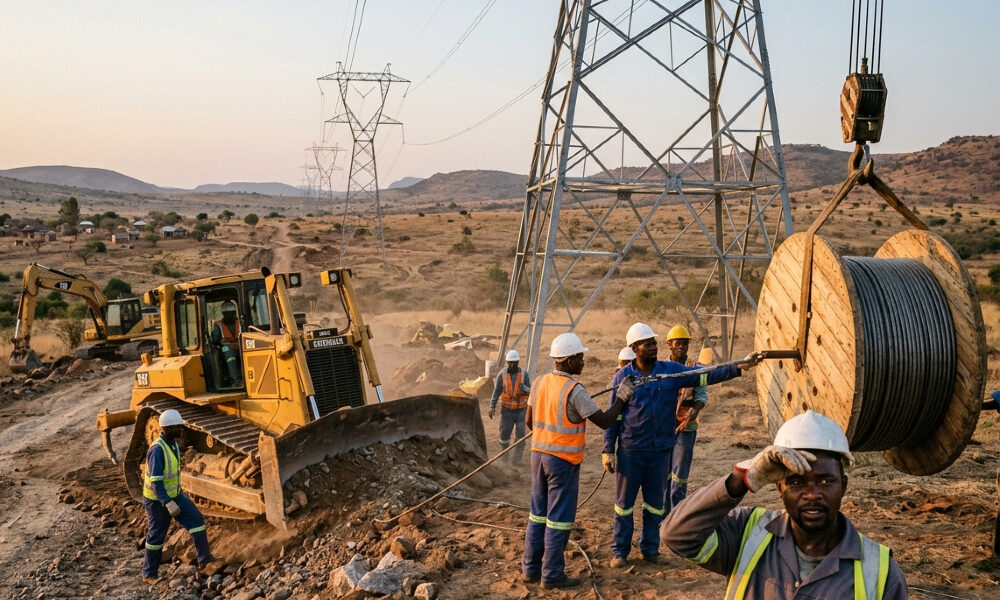


By Franco Bonghan
In the early 1980s, Nigeria and Malaysia occupied roughly comparable positions in the hierarchy of developing economies. Two decades later, they inhabited entirely different economic worlds.
Malaysia deployed long-horizon state leadership to drive manufacturing above 30 percent of GDP, built an export-oriented industrial base, and propelled its per-capita income into the several thousands of dollars. Nigeria, meanwhile, remained ensnared in commodity dependence, anemic manufacturing, and oil-rent politics, with far lower income per head.
The divergence had little to do with the frequency of elections. It had everything to do with whether the state was treated as an engine of transformation or as a prize to be captured and distributed every four years.
The Price of Ballots Without Bulldozers
The metaphor of “bulldozers” may sound rhetorical, but the arithmetic behind it is brutally concrete. Across sub-Saharan Africa, national elections now routinely consume hundreds of millions of dollars per cycle – much of it borrowed by governments already teetering on the edge of debt distress.
In Nigeria, recent general elections have carried price tags, once security deployments, electoral commission logistics, and voter-outreach operations are totaled, that rival or exceed the capital budgets for major power projects, interstate highways, or industrial zones. In several countries, the per-voter cost of holding elections now approaches that of wealthy democracies – even as per-capita income, electricity access, and industrial capacity remain anchored at low-income levels.
Every four or five years, scarce public resources flow into ballot papers, campaign vehicles, security cordons, and political carnivals that leave no physical asset in their wake. Meanwhile, transmission lines go unbuilt, water systems decay, and schools wait.
The opportunity cost is not theoretical – it is measured in megawatts never generated and roads never paved.
When Ballots Become Triggers
In far too many African nations, elections have hardened into something closer to ethnic censuses than policy contests. They have become high-stakes tournaments over which group will “eat” next – who will control procurement, patronage, and the public payroll – rather than disciplined competitions over governance performance.
The result is that political identity and group survival become fused in ways that are extraordinarily difficult to unwind.
Rwanda in 1994 stands as the continent’s darkest cautionary tale. Colonial-era identity engineering, deep economic stress, and the pressures of civil war converged with a return to multiparty politics in the early 1990s.
Elites weaponized party platforms, state radio, and community structures to mobilize fear and hatred along Hutu–Tutsi lines with lethal efficiency. Within roughly 100 days, approximately 800,000 people were massacred in a genocide that unfolded inside a political arena where ethnic identity had become an existential weapon and the contest for state power had been framed as a zero-sum struggle for survival.
Rwanda’s catastrophe was not caused by elections alone. But it illustrates with terrible clarity how fragile institutions and unresolved historical wounds, when combined with unchecked political competition, can transform ballots from instruments of accountability into triggers for mass violence.
Democracy Is Not the Enemy – Sequencing Is the Question
None of this amounts to an argument that democracy is inherently harmful or that African states should embrace authoritarian permanence. The point is narrower and more urgent: elections conducted in the absence of a coherent developmental project, functioning institutions, and a broad social compact are not simply ineffective – they are actively dangerous.
They concentrate political energy on capturing the state rather than building it. They encourage leaders to optimize for electoral cycles rather than generational investment horizons.
They can, under the wrong conditions, turn the machinery of democratic competition into an accelerant for instability.
The question for African policymakers, development economists, and international partners alike is not whether democracy matters – it does – but whether the current sequencing of institutional priorities is producing the conditions under which democracy can actually deliver. History’s most instructive development stories, from South Korea and Taiwan to Botswana, suggest that durable democratic governance tends to follow – rather than precede – the construction of capable states, diversified economies, and legitimate public institutions.
Counting ballots is not the problem. Missing the bulldozers is.
Franco Bonghan is an international development strategist and Co-Founder/Co-Chair of the African and Caribbean Energy Network (ACEN) and Founder of Bright Light Projects (BLP). He curates the LinkedIn newsletter Global Pulse Africa, unpacking Africa’s economic challenges and showcasing innovative solutions for a sustainable future. He can be reached on X via https://x.com/Francobonghan