Opinion
Deepening China-East Africa ties
By Morris Kiruga
The leaders of Ethiopia and Kenya are seeking to deepen cooperation with China at the second Belt and Road Summit in Beijing, while the Asian giant tries to find ways to rebrand its global development model.
The leaders of the 2 largest economies in Eastern Africa – Ethiopia and Kenya – are in Beijing as the capital hosts China’s ‘most important diplomatic event,’ the second Belt and Road Summit.
– Ethiopia’s Prime Minister Abiy Ahmed has been chronicling his trip on his Twitter account, listing meetings and deals he has signed in the days leading up to the summit. For him, the immediate concern is the state of Ethiopia’s indebtedness to China, and guaranteeing continued investments to boost the countries economic prospects.
– At a meeting with China Railway Construction Company (CRCC), Abiy said, the company “expressed interest in investing in agro-industry parks development, oil and gas development and the Beautifying Sheger River Project”.
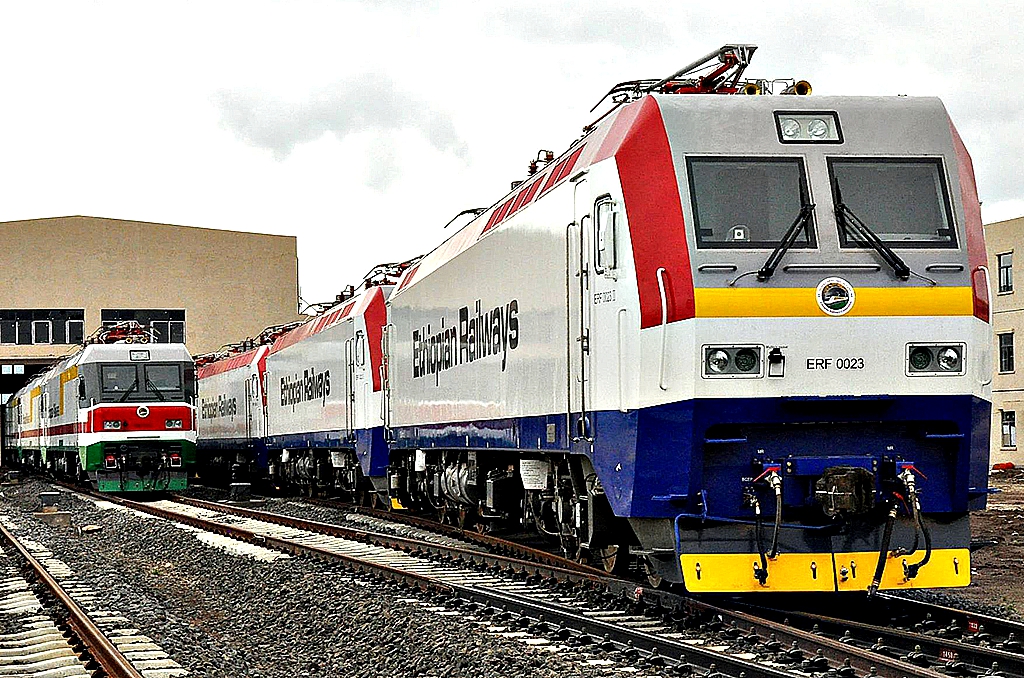
In a bid to solve Ethiopia’s power problems, which have hampered the new Addis-Djibouti railway and other projects, Prime Minister Abiy signed a US$1.8 billion deal with the State Grid Corporation of China. The deal will cover transmission and distribution lines to cities, 16 industrial parks, and the railway.
Following a meeting with State Grid Corporation of China, PM Abiy Ahmed oversaw the signing of a $1.8 billion investment agreement which covers provision of electric power transmission and distribution lines. 1/2 pic.twitter.com/m6Kmp10dtW
— Office of the Prime Minister – Ethiopia (@PMEthiopia) April 24, 2019
Abiy also met his host President Xi Jinping, a meeting where he said he sought to strengthen the Comprehensive Strategic Partnership which has, among other things, set the ball rolling for debt restructuring.
One of the telling meetings on Abiy’s plate was with executives from the China Export and Credit Insurance Corporation (Sinosure). Sinosure has been vocal on the losses it is making from Ethiopia’s new railway, using it as an example of the risky investments Chinese companies are involved in developing nations.
Kenya’s President, Uhuru Kenyatta, is also in Beijing where he’ll seek a KSh368 billion (US$3.6 billion) loan to build the standard gauge railway stretch from Naivasha to the lakeside city of Kisumu.
The presence of his rival-turned-friend, opposition leader Raila Odinga, suggests the Kenyan government intends to put up a united political front. Their rapprochement has given Kenyatta much-needed peace on the political front, where Odinga was a fierce critic of Kenya’s heavy borrowing.
– President Kenyatta has met the International Monetary Fund’s Managing Director Christine Lagarde, who posted after the meeting that they discussed “Kenya’s economic priorities and how the Fund can support them.”
– China’s new ambassador to Kenya, Wu Peng, wrote an opinion piece in The Daily Nation on 23 April extolling China’s relationship with Kenya and listing its successes.
Stability
Political stability is, however, just one of China’s many growing concerns since the launch of the Belt & Road Initiative (BRI).
The initiative has come under sharp criticism for what critics see as ‘debt diplomacy’ and an economic route to political might. The problem, for China, is that while it is too invested in economies such as Ethiopia and Kenya to make any drastic changes, it has to find ways to rebrand its global development model.
– Among the host of changes expected from the 2nd summit is a draft of rules for which projects can use the BRI brand. These rules may affect funding for certain projects, and its likely to be followed by a global rebranding effort to save perception of the BRI.
A more pressing concern for the Asian giant is how economies such as Ethiopia and Kenya will perceive its plans to strengthen auditing and anti-corruption mechanisms in foreign countries. A large part of China’s appeal to African economies was its approach to development, which promised less direct interference in their economies and politics than Western economies.
There are already signs that China is slowly shifting from its lone-wolf approach as it seeks to reduce its risk exposure. On the day before the summit was scheduled to start, President Xi Jinping invited international organizations to participate in the BRI. The invite was made during a meeting with Lagarde, who has in the past criticized China’s debt strategy.
The Africa Report © Copyright 2019