Business
Dangote Hints at Major Overhaul in Nigeria’s Oil Sector Following Presidential Visit
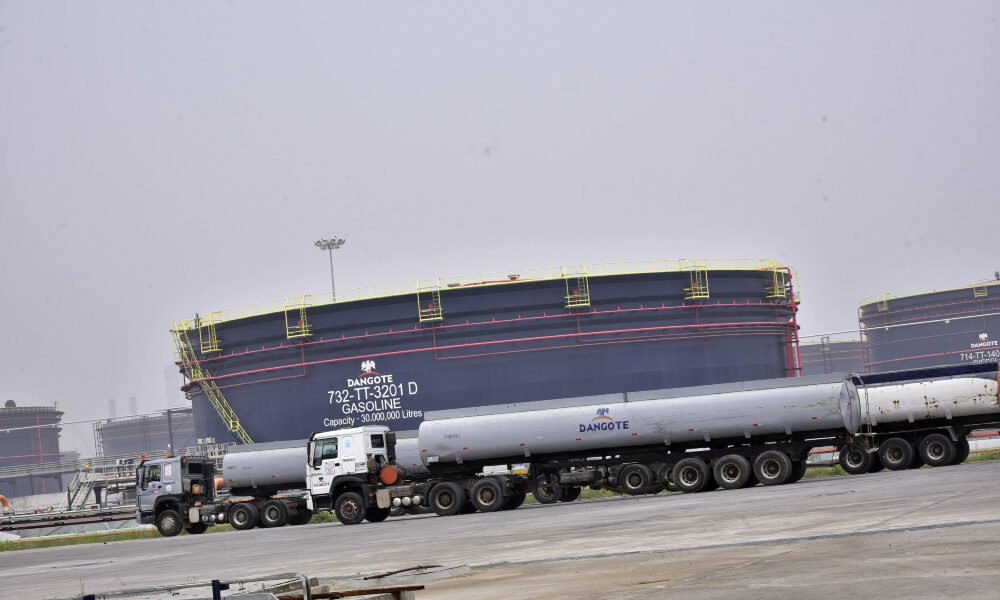
Aliko Dangote, CEO of the Dangote Group and founder of Africa’s largest petroleum refinery, has signaled a sweeping transformation in Nigeria’s oil and gas sector, describing it as an impending “major shake-up” that could redefine the country’s energy landscape.
The announcement came shortly after President Bola Tinubu’s recent visit to the US$20 billion Dangote Petroleum Refinery in Lekki, Lagos – a landmark facility now beginning to ramp up production amid high expectations of ending Nigeria’s decades-long reliance on fuel imports.
Speaking to reporters following the presidential tour, Dangote emphasized that the changes ahead would go far beyond fuel price reductions. Instead, he described a comprehensive overhaul of the downstream sector – the segment responsible for refining, distributing, and retailing petroleum products.
Acording to Dangote, “it is not just about reducing prices; it is about a total overhaul of the downstream.”
While details remain under wraps, the comments have sparked widespread speculation among industry analysts and policymakers about what could be one of the most consequential shifts in Nigeria’s energy policy in decades.
Sector in Crisis
Nigeria, Africa’s largest oil producer, has long struggled with inefficiencies in its downstream sector. Despite being a major crude oil exporter, the country has remained heavily dependent on imported refined fuels due to chronic undercapacity and mismanagement of state-owned refineries.
Key challenges include outdated infrastructure, rampant fuel smuggling, volatile pricing in a deregulated market, foreign exchange constraints, and years of costly subsidy distortions. These issues have collectively stifled growth and undermined the sector’s potential contribution to the national economy.
The Dangote Effect
Enter the Dangote Petroleum Refinery – a private-sector behemoth poised to disrupt the status quo. Even before reaching full operational capacity, the refinery has begun reshaping Nigeria’s energy dynamics.
With a projected refining capacity of 650,000 barrels per day – making it the largest single-train refinery in the world – the facility represents not only a technological leap but also a strategic pivot toward self-sufficiency in fuel supply.
President Tinubu’s visit to the site was widely interpreted as a strong endorsement of Dangote’s vision, particularly within the context of his administration’s broader economic reforms, including the removal of longstanding fuel subsidies.
What Lies Ahead?
Analysts suggest that a full-scale restructuring of the downstream sector – long plagued by corruption, inefficiency, and opaque pricing mechanisms – could fundamentally transform Nigeria’s energy economics.
Industry observers are now closely watching for the next move from Dangote and his team, whose influence appears set to extend well beyond refinery walls into the very architecture of Nigeria’s energy policy.
As the countdown begins, one thing is clear: the era of business-as-usual in Nigeria’s oil sector may soon be over.