News
COVID-19: Barbados PM calls for implementation of global leadership initiative
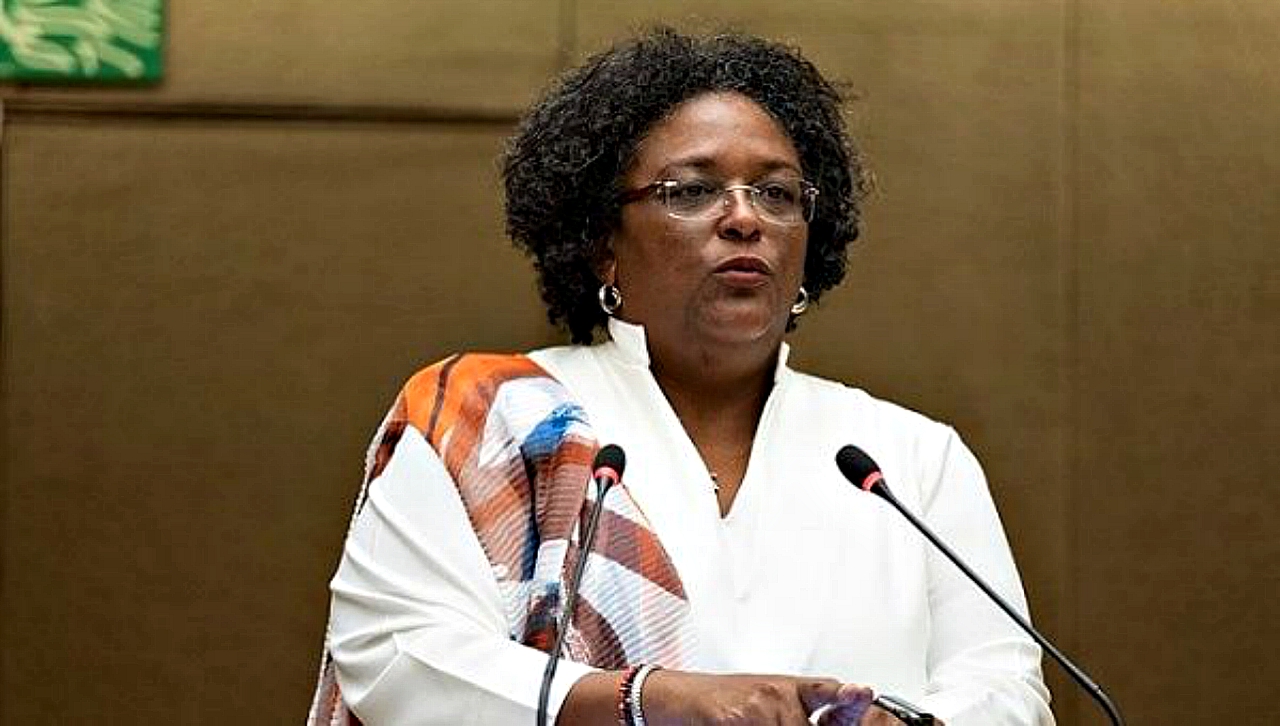
Barbados Prime Minister Mia Mottley on Wednesday said she would like to see a global leadership initiative emerging from the Coronavirus (COVID-19) pandemic, reiterating that the Caribbean and other small island developing states (SIDS) were not prepared to remain “invisible and dispensable”.
In an interview with Christiane Amanpour, the Chief International Anchor for the US-based television network, CNN, Mottley, who is also the chairman of the 15-member regional integration grouping, Caribbean Community (CARICOM), said while the United States had not been able to show its leadership since the outbreak of the pandemic that has killed more than 200,000 people worldwide, “it is generally a time for all countries to step up and for all global leaders.
“If there is one thing I would like to see coming out of this is a global leadership initiative,” she said, noting that 75 years ago the United Nations was formed and “we used the opportunity of post-World War 11 to create a number of vital institutions to be able to bring countries together to protect the most vulnerable (and) the weakest among us”.
“We also used it to create the Bretton Woods institutions which we are relying on. But we need to re-purpose these organisations and having a global leadership initiative, make sure we are really reacting to what is real. We are told that we can access concessional funding or grant funding only if we have historic per capita incomes that are below certain levels. Well, Christiane that is like telling me that I should use my blood pressure reading from 2 years ago to determine whether I am vulnerable tonight to a stroke. It is absolutely futile,” Mottley told the host of CNN International’s nightly interview program Amanpour.”
The Barbados leader said that Barbados and other Caribbean countries “have been carrying on this thesis and argument for over 30 years”.
She said the developing countries were also faced with problems when the World Trade Organization (WTO) was being formed telling her international viewers “we recognised, for example, that much of our domestic production would shut down and it would make us more open”.
She said following the terrorist attacks on the United States in September 2011, “we had other issues that were imposed on us on a one size fits all prescription”.
“Now we have this pandemic. We need global leadership similar to what we had post-World War 11 to be able to recognize that we need a plan that protects not just the strongest among us, but also the most vulnerable and on what we should really be spending money on. Does it make sense to continue to build large military constructs when as a result of a mosquito or a pandemic our populations can be put at risk? Doesn’t make any sense,” Mottley said.
Mottley, an attorney, and the first woman to head a government in Barbados, said a number of health care systems are being re-purposed as her island-nation and others in the Caribbean seek to lessen the devastating impact of COVID-19 that has infected more than 2 million people worldwide since it was first detected in China last December.
“But, really where we are feeling it more than ever is in the shutdown. To have a hotel with no revenue coming in, to have no airplanes landing from Jamaica and Bahamas in the north right down to Barbados and Trinidad & Tobago in the south. These things are having a devastating impact particularly on the smaller island-nations of the Eastern Caribbean and to a lesser extent Barbados. So that we now have to see how we can hold our people up, because if you don’t have a successful neighborhood all of us are at risk in terms of public health, all of us are at risk in terms of lack of security, all of us are at risk of migration.”
“So we really, really need to be able to understand that this is about lives and livelihoods, this is about staving off the pandemic, but it is also about keeping people fed and keeping people being able to live,” she said.
Mottley has in the past called for a vulnerability index assessing how developing countries like hers are exposed to economic and public health issues like climate change, and she used the interview to reiterate her position including the inclusion of natural disaster clauses in sovereign debt contracts.
She said regarding the vulnerability index, the London-based Commonwealth Secretariat has settled on a framework in 1989 and “we believe it needs to be revisited, but we believe you can’t determine whether we need access to funding,” citing as an example, the Caribbean having to pay out US$8.8 billion in debt over the next 2 years.
Mottley also reiterated that the global leadership initiative was necessary “to be able to look at our debt and restructure it.”
“That’s why we need to look and see that moral leadership is important in this world today and that’s why we need to ensure that the Caribbean does not remain invisible and indispensable, nor the South Pacific. And if our voices have to be spoken over and over and over to make this point we shall not tire to do so because what is at stake is human lives and the wellness and well-being of global civilisation as was envisaged 75 years ago when the United Nations was established,” Mottley added. -(CMC)