Opinion
Competing in Africa: China, the European Union, and the United States
By Witney Schneidman and Joel Wiegert
Given recent developments in the global economy, especially Brexit and the Trump administration’s “America First” policy, it is worth assessing how Africa’s 3 largest commercial partners – China, the European Union, and the United States – are likely to impact the region in the near future as it relates to trade and investment trends.
China – Leaping Ahead
The China-in-Africa story may be increasingly familiar, but its complexity cannot be overstated. As China’s domestic growth began to surge at the end of the last century, demand for natural resources and job creation forced China to look for markets abroad. Africa was a willing partner, due to its abundance of commodities and need for infrastructure development.
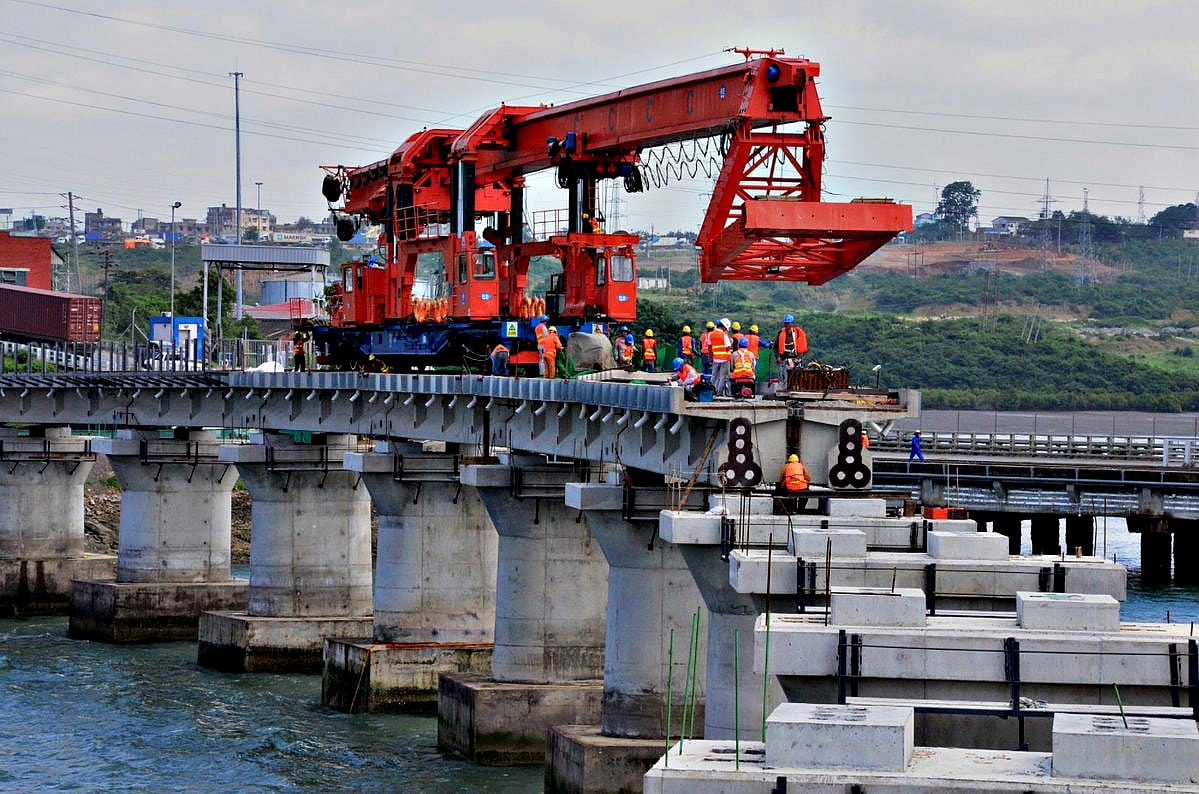
China’s role on the African continent has been defined by the financing of more than 3,000, largely critical, infrastructure projects, according to the AidData Project. China has extended more than US$86 billion in commercial loans to African governments and state-owned entities between 2000 and 2014, an average of about US$6 billion a year.
In 2015, at the 6th Forum on China-Africa Cooperation (FOCAC), Chinese President Xi Jinping pledged US$60 billion in commercial loans to the region, which would increase lending to at least US$20 billion a year if that pledge is fulfilled.
As a result, China has become the region’s largest creditor, accounting for 14 percent of sub-Saharan Africa’s total debt stock, according to Foresight Africa 2018. In Kenya, for example, the volume of Chinese loans to the government is 6 times larger than that of France, the country’s 2nd-largest creditor. The FOCAC that will be held in Beijing later this year is likely to continue this trend of extending commercial loans for infrastructure projects.
Job creation, skills development
While China’s level of foreign direct investment (FDI) is relatively low, accounting for just over 5 percent of total FDI inflows into the region in 2015, 2-way trade has grown 40 times over the last 20 years and now exceeds US$200 billion. More recently, there has been a surge in Chinese private investment combined with a continued, but more limited, state engagement.
A 2017 McKinsey study reports that there are more than 10,000 Chinese-owned firms operating in Africa today, about a 3rd of whom are involved in manufacturing. Notably, French academic Tierry Pairault points out that the overwhelming majority of these enterprises are small and micro businesses. McKinsey also reports that Chinese investment in Africa increasingly contributes to job creation, skills development, and the transfer of new technologies, practices more generally associated with “Western business norms”.
As China works to implement the Belt and Road Initiative (BRI), the largest public works program ever, the issue of China’s commercial loans and the subsequent debt incurred by African governments is likely to increase as a public policy concern. There is room to limit the negative consequences of these loans: China should consider transitioning toward a blended financing model, based on Western and Chinese sources of financing, for its support of Africa’s much-needed infrastructure projects. In addition, Africa would benefit if China were to more actively open tenders to international competition as opposed to tying commercial loans to the exclusive use of Chinese companies and materials on terms that are often opaque. A larger portion of grants, as opposed to a singular reliance on commercial loans, even at concessional rates, would be in Africa’s interest.
The EU – Building on historical advantages
Watch the viral video of President Akufo-Addo declaring his intent to free Ghana from aid while sharing a stage with French President Macron

While the history of colonialism continues to haunt the Europeans, when it comes to doing business, language, local knowledge, and historical connections matter.
The launch of the Africa-EU Strategic Partnership and the first-ever summit between the 27 members of the EU and the 54 nations of Africa in 2007 seem to have hit a reset of sorts in the 2 regions’ relationship. Indeed, over the last decade, the EU has worked, with a large degree of success, to transition to a partnership model based on reciprocal trade. The 5th EU-Africa Summit took place in Abidjan in 2017 against a background in which 2-way trade exceeds US$300 billion. In association with the summit, the EU pledged to mobilize more than US$54 billion in “sustainable” investment for Africa by 2020.
The EU is shoring up its commercial position in Africa through a web of free trade agreements, or Economic Partnership Agreements (EPAs), which Brussels is negotiating or has concluded with 40 African nations in sub-Saharan Africa. The EPAs provide European companies with preferential access to markets across the region and will liberalize about 80 percent of imports over 20 years.
Progress on concluding the EPAs is not without its challenges. Not surprisingly, Nigeria contends that an EPA undermines its industrialization strategies, and Brexit detracts from the EU ability’s to negotiate as a common market.
A comprehensive EU trade strategy combined with a private sector that has historic ties to local markets sets the stage for continued growth and influence by European firms in the African market. In addition, the EU is well positioned to share lessons learned from its decades of experience with regional economic integration as, especially as the Africa Continental Free Trade Agreement (AfCFTA) was signed by most African Union (AU) members in Kigali on March 21.
The United States – Global Brands, Lagging Support
Since 2000, U.S.-African commercial relations have been based on the African Growth and Opportunity Act (AGOA), a non-reciprocal trade agreement that grants about 40 countries duty-free access for approximately 6,400 products to the U.S.
AGOA has had a mixed legacy, given its goal of growing Africa’s export markets rather than building 2-way trade and investment partnerships. AGOA has helped integrate trade and investment into the U.S.-Africa policy dialogue and led to the creation of more than a million jobs, directly and indirectly, on the continent. However, only approximately 300 of the available product lines are utilized and a relatively small number of countries—principally Ethiopia, Kenya, Lesotho, Mauritius and South Africa – have taken advantage of AGOA to establish a significant volume of non-oil exports to the U.S. At the same time, the EU’s assertive free trade strategy and China’s surge in trade and commercial loans have left the U.S. in need of a new commercial strategy.
In fact, the U.S. commercial engagement in Africa is waning: Over the last five years, U.S. exports to sub-Saharan Africa have averaged US$19 billion. Two-way trade has fallen from a high of US$100 billion in 2008 to US$39 billion in 2017, largely due to U.S. energy self-sufficiency.
In addition, summits are central to setting government priorities, especially as it relates to trade and investment targets. While the Obama administration held the first-ever summit with African leaders in 2014, the EU has held 5 summits with Africa, and China is about to hold its 7th heads-of-state dialogue.
Indeed, the U.S. commercial impact in Africa should be more significant than it is. With US$54 billion of FDI stock, the U.S. is the largest investor on the continent. There are an estimated 600 U.S. companies in South Africa and more across the continent, including some of the largest American companies. The U.S. business model is welcomed across the continent, given the general practice of U.S companies to hire and promote locally, invest socially and reject corruption, among other practices.
There are important building blocks that could enhance the U.S. commercial presence in the region.
Between 2005 and 2017, the U.S. Millennium Challenge Corporation (MCC) invested more than US$6.5 billion in 14 sub-Saharan African countries through completed or ongoing compacts in infrastructure, health, education, and other sectors. These compacts are designed to drive investment into projects deemed too risky for the private sector, promote economic growth, and enhance regional economic integration in Africa. It is worth noting that MCC investments are grants that are implemented through open-tender bids. While a competitive tender model is a critical component of the agency’s commitment to international best practices, finding more ways to involve American companies should be a priority for the MCC.
Former U.S. President Barack Obama’s Power Africa initiative, in many respects, has become the flagship U.S. program on the continent. The program is addressing a critical need: About 600 million people on the continent do not have a reliable supply of electricity. Over the last 4 years, Power Africa has developed a transactional model, based on public and private partnerships, that has led to 80 projects valued at more than US$14.5 billion that are now either online, under construction, or have reached financial close. More than a 3rd of these transactions involve the U.S. private sector, and more than 10.6 million businesses and homes now have electricity as a result of this initiative.
Finally, in March this year, Congress introduced the BUILD Act, which would create the U.S. International Development Finance Corporation (IDFC) by integrating parts of USAID into the U.S. Overseas Private Investment Corporation (OPIC). The potentially transformative nature of this legislation is in the fact that the IDFC would have a US$60 billion lending cap, double the amount that OPIC currently can lend, and could make equity investments up to 20 percent of the total equity of a project. This will make the U.S. more competitive with Chinese state-backed funds, which often take a similar equity position in their projects.
Given that Africa comprises the largest share of OPIC’s investment portfolio – 27 percent, or US$6.2 billion – the proposed IDFC is likely to be a significant benefit to the U.S. commercial engagement in Africa.
The challenge for the Trump administration is to develop a coherent trade strategy for Africa that builds on AGOA, is based on reciprocity, and utilizes existing programs to enhance the U.S. commercial presence on the continent. Given President Trump’s alleged derogatory remarks about African nations and Former Secretary of State Rex Tillerson’s abrupt firing while on a visit to the continent, the administration has yet to show that Africa is a priority for the U.S. Fortunately, investing in Africa remains a priority for the U.S. Congress.
Trend lines
China’s commercial presence on the continent will continue to grow, raising the principal concern that China’s significant role in addressing Africa’s infrastructure deficit could be offset by its contribution to a new, and ultimately unsustainable, African debt burden. The EU will work to implement its trade relationship, which will provide European companies competitive tariff advantages. In many respects, the U.S. Congress is driving U.S. policy toward Africa with its numerous and highly relevant legislative initiatives. However, until the executive branch provides diplomatic and policy leadership, the U.S.-Africa partnership will not fulfil its considerable potential.
Witney Schneidman is a Nonresident Fellow at the Brookings Institute, his interests include Africa Growth Initiative; global economy and development, while Joel Wiegert is a Former US State Department official who served in Angola, Ghana, South Africa and Tanzania. The original version of this article was published on the Brookings Institute Blog.