Opinion
Climate-Smart Agriculture: Africa’s Most Compelling Investment Opportunity


By Sheena Raikundalia
The numbers don’t lie: simple farm practices are unlocking US$25–35 million in annual income gains with virtually no climate finance behind them. Yet investors keep looking elsewhere.
We talk endlessly about “green growth,” but precious few conversations actually follow the money. Perhaps it’s time we did.
The Investment Case No One’s Making
Most climate-smart agricultural practices aren’t revolutionary moonshots – they are low-cost upgrades with predictable financial returns. The unit economics are remarkably straightforward:
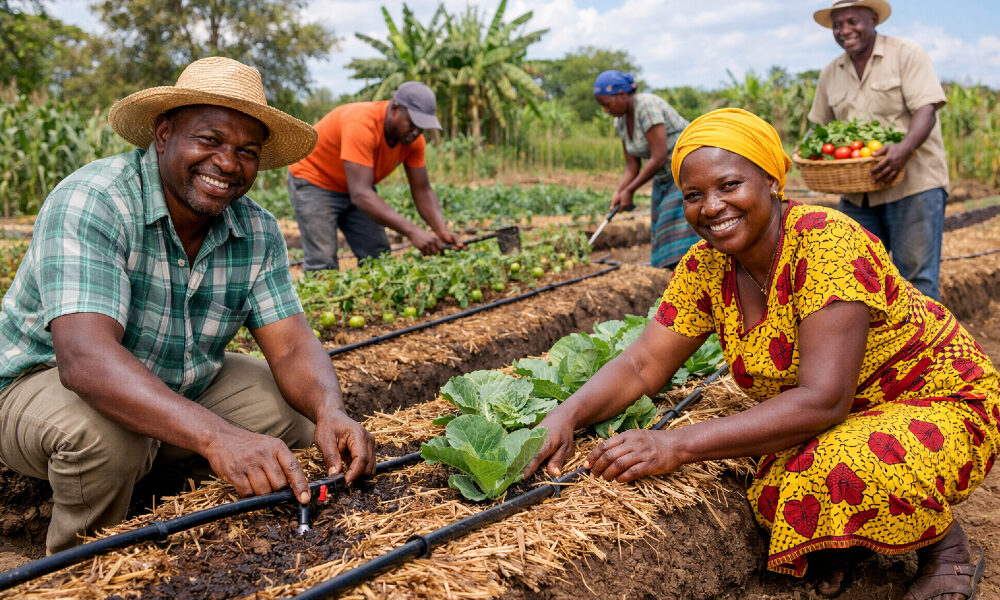
Tomatoes: US$625 additional annual income per farmer through raised beds, mulching, basic irrigation, and integrated pest management.
Potatoes: US$275 per year via certified seed, ridging, and improved soil and water practices.
Poultry: US$115 annually from ventilated housing, better hygiene protocols, and optimized feeding routines.
Dairy: US$125 per year through fodder shrubs, enhanced forage management, and selective breeding.
These gains materialize within one to three growing cycles and compound every season. The critical factor? When the economics make sense, 80–90 percent of farmers prove willing to adopt.
Across the farming networks we work with, these seemingly modest upgrades translate into US$25–35 million in annual income increases – and that’s before any value addition or green premium pricing enters the equation. That’s merely the baseline.
The Multiplier Effect
The upside expands dramatically when market demand begins favoring climate-smart practices and resilient crops: cassava, sorghum, millet, and amaranth. These varieties are drought-tolerant, require minimal inputs, and happen to be naturally gluten-free – checking boxes for both climate adaptation and evolving consumer preferences.
Climate-smart agriculture becomes commercially viable the moment finance aligns with ground realities. Market demand simply multiplies the effect.
What’s Actually Missing
It isn’t the solutions. It isn’t farmer willingness. It certainly isn’t scalability.
What’s missing is finance that backs what already works, rather than perpetually waiting for breakthrough innovations or photogenic pilot programs. The necessary tools aren’t radical.
They are the opposite: boringly, reliably effective.
- Offtake-linked working capital
- 12–24 month small-asset loans
- Straightforward outcome bonuses
- Blended finance structures to de-risk early adoption
No reinvention required. No convoluted climate jargon. Simply funding the practical upgrades already delivering measurable returns.
The Bottom Line
Africa doesn’t need new climate narratives or another round of feasibility studies. It needs investors capable of reading unit economics and recognizing bankable opportunities when the data sits directly in front of them.
The evidence is already here. The returns are documented. The farmers are ready. The only question remaining: when will the capital follow?
Sheena Raikundalia is an accomplished entrepreneur, former lawyer, government policy advisor, and angel investor with deep expertise across the legal, financial services, and impact investment sectors in Europe and Africa. She has played a pivotal role in advancing Africa’s technology and innovation ecosystems, leveraging a career that spans top-tier London law firms, leadership as Country Director of the UK-Kenya Tech Hub for the UK Foreign, Commonwealth & Development Office (FCDO), and her current position as Chief Growth Officer at agri-tech company Kuza One. Sheena is recognized for her strategic vision, commitment to fostering innovation, and strong advocacy for Africa’s growth potential in technology, entrepreneurship, and impact investment.