Opinion
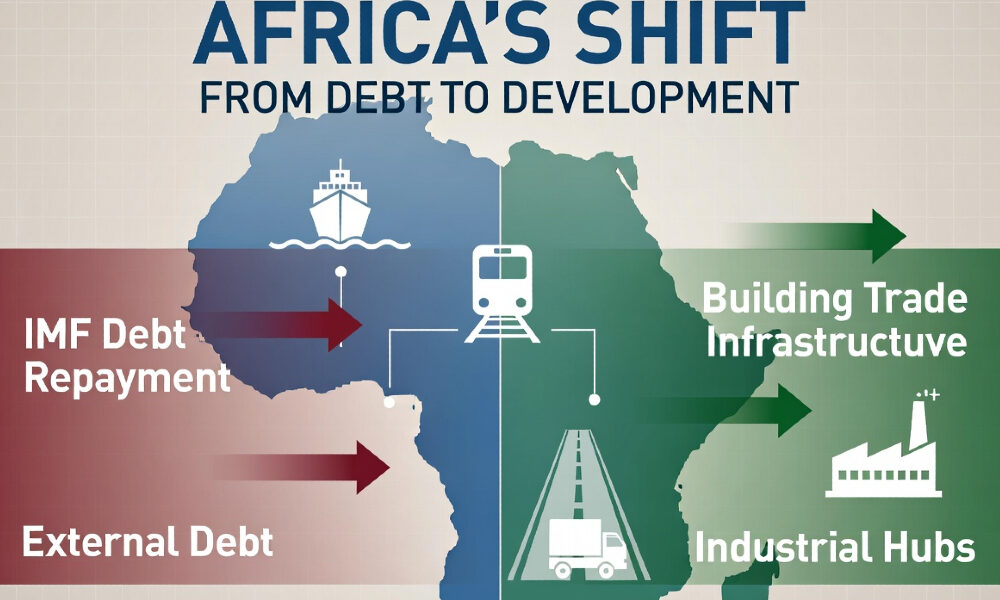
Clearing the Ledger Is Only the Beginning: What Africa Must Build After the IMF


By Franco Bonghan
Mozambique’s early repayment of its US$701 million IMF debt is a symbolic earthquake in a continent long portrayed as permanently indebted. As of March 31, 2026, its outstanding credit to the Fund stands at zero – making it the only country on earth with no IMF obligations on the books.
Namibia has similarly retired its US$750 million Eurobond, while Nigeria has cleared the US$3.4 billion emergency loan it drew during the COVID-19 crisis. Together, these moves signal genuine fiscal discipline and a growing determination among African governments to reclaim policy space from international creditors.
Mozambique, Namibia, and Ghana should be celebrated, but this is not an end point, it is just the beginning.
Early repayment of concessional debt, however symbolically powerful, does not by itself shift the structural reality that African economies still depend overwhelmingly on external markets for trade, logistics, and capital – and still capture far too little value from what they produce. The more urgent question is not who has repaid the IMF, but what Africa builds after the last check clears.
The Structural Paradox Behind the Headlines
Intra-African trade remains stubbornly below 15 percent of the continent’s total trade. By comparison, intra-EU trade accounts for roughly 60 to 70 percent of Europe’s total.
Data from Afreximbank show that formal intra-African trade rose to US$192.2 billion in 2023, nudging the intra-African share from 13.6 percent to 14.9 percent – genuine progress, but still a fraction of the 30 to 50 percent range that economists identify as the threshold for meaningful continental economic resilience. Studies on the African Continental Free Trade Area (AfCFTA) suggest that full implementation could lift intra-African trade by 24 to 35 percent over the coming decades.
Yet that potential will remain largely theoretical as long as logistics costs average 12 percent of GDP across the continent, compared with 8 percent globally. That four-percentage-point gap functions as an invisible tax on every product moved across an African border.
Paying off IMF loans without closing that gap is the equivalent of settling a credit card balance while leaving a structural leak in the roof unrepaired.
Three Imperatives for the Morning After
The countries now emerging from IMF dependency face a defining choice: treat debt repayment as an endpoint, or leverage it as a launching pad.
First, they must use their cleaner balance sheets to negotiate from a position of genuine strength. Mozambique, Namibia, and Nigeria should exploit their improved creditworthiness to demand fairer terms in future borrowing – longer maturities, lower spreads, and fewer of the conditionalities that have historically constrained public investment in infrastructure and industry. Debt freedom is only valuable if it translates into greater sovereignty over domestic policy.
Second, heavy investment in connective infrastructure is non-negotiable. The AfCFTA’s projected trade gains will not materialize through diplomatic instruments alone. They require physical architecture: deep-water ports capable of handling regional container traffic, cross-border rail corridors, cold-chain networks for perishable agricultural exports, digitized customs systems, and one-stop border posts that reduce the time and cost of moving goods between Lagos, Lusaka, and Luanda. Without that investment, the free trade agreement remains a framework in search of the freight to fill it.
Third, Africa’s regional economic blocs must be repurposed as engines of industrial specialization rather than forums for endless negotiation. West Africa’s hydrocarbon base positions it for a petrochemical processing hub. Namibia and Mauritania, endowed with exceptional solar and wind resources, are natural candidates to anchor a green hydrogen corridor aimed at both continental energy needs and European decarbonization demand.
East and Central Africa’s agricultural potential makes it the logical spine of an agro-processing belt. And the Caribbean small-island states associated with Atlantic trade – often overlooked in these conversations – could serve as logistics and financial intermediaries connecting Africa’s western seaboard to broader global value chains. Coordinated specialization of this kind is how regions move from exporting commodities at world-market prices to setting prices in their own right.
The Destination, Not the Departure
Debt repayment should be the starting point of Africa’s industrial transformation, not its destination. Paying off the IMF is good. Building the highways, ports, pipelines, data centers, and integrated regional markets that make another IMF program unnecessary is better – and considerably harder.
The continent has spent decades being defined by what it owes. The countries now clearing those obligations have earned the right to be defined instead by what they build.
That construction project – logistical, industrial, institutional – is the real test of whether this moment of fiscal reckoning becomes a durable turning point, or merely a footnote in a longer cycle of dependency. The check has cleared. The work has just begun.
Franco Bonghan is an international development strategist and Co-Founder/Co-Chair of the African and Caribbean Energy Network (ACEN) and Founder of Bright Light Projects (BLP). He curates the LinkedIn newsletter Global Pulse Africa, unpacking Africa’s economic challenges and showcasing innovative solutions for a sustainable future. He can be reached on X via https://x.com/Francobonghan