Business
China is now Africa’s most important trading partner
By David Thomas
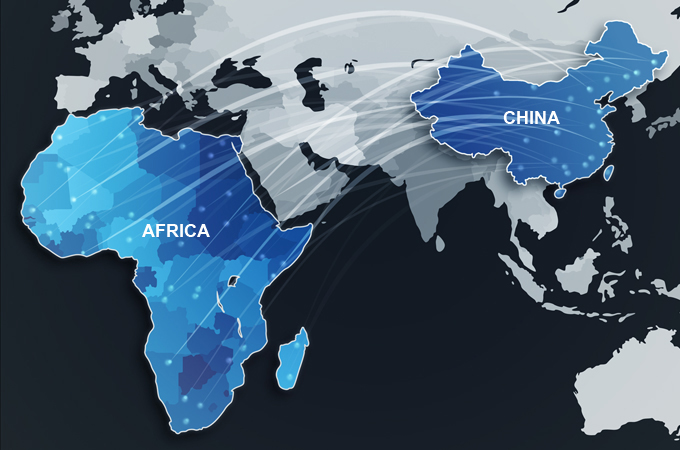
China is now Africa’s most important partner in trade and investment. Approximately 10,000 Chinese businesses are active in Africa, dwarfing previous estimates, according to findings from consultancy firm McKinsey that challenge traditional views of China’s engagement with the continent.
In an investigation of 8 African countries, detailed in new report “Dance of the Lions and Dragons“, researchers found that the number of Chinese-owned firms was between double and 9-times the number registered by China’s Ministry of Commerce.
Nearly a third of firms polled are involved in manufacturing, while Chinese firms also have a significant presence in services, trade, and construction and real estate.
Around 90 percent of the firms are privately owned, a rebuke to the common narrative that many enterprises active in Africa are backed by the Chinese state. Extrapolating the numbers to the entire continent, McKinsey estimates that some 10,000 enterprises already employ ‘millions’ of Africans, given that 89 percent of employees at the 1000 businesses polled are local.
Strong net positive for Africa’s economies
Two-thirds of those businesses offer skills training to their staff, suggesting that Chinese firms are cultivating a long-term interest on the continent. The report’s authors concluded that China’s engagement with the continent is a “strong net positive” for Africa’s economies, governments and workers.
The report found that Chinese financial flows to Africa are around 15 percent larger than official figures suggest when non-traditional flows are included.
Seventy four percent of Chinese firms said that they feel optimistic about their future on the continent.
Nevertheless, the report does not provide a wholly uncritical view of China’s engagement.
Only 47 percent of Chinese firms’ sourcing was from local African firms, suggesting that integration with local economies remains weak.
Meanwhile, Africans still struggle for promotion within Chinese businesses, with African managers only comprising 44 percent of the total. Labor and environmental violations are still being recorded in some firms active on the continent, while the researchers call for additional progress in the areas of corruption, personal safety and language and cultural barriers.
The report outlined 2 scenarios for future growth in the relationship. Under a “business as usual” scenario, revenues of Chinese firms could grow to around US$250 billion by 2025, up from US$180 billion today, with manufacturing, resources and infrastructure the key drivers. In a second scenario, Chinese firms could rapidly accelerate their growth, expanding into sectors including agriculture, banking, telecommunications and transport and commanding revenues of US$440 billion by 2025.
Either scenario could provide challenges for African incumbents, who the report says will need to partner with incomers or “dramatically improve their productivity and efficiency”.
The researchers call for African governments to define their China strategy and build bureaucracies capable of dealing with the influx, while the Chinese government is encouraged to play its part by opening government finance to private firms and extending responsible business guidelines.
Copyright 2017 African Business Magazine