Opinion
China Deepens Ties with Africa: What It Means for the Continent’s Economic Future


By Mark-Anthony Johnson
In a bold move underscoring its commitment to strengthening economic ties, China granted 33 African countries zero tariffs on all their exports to the Chinese market in 2024. This landmark decision not only reinforces China’s position as Africa’s largest trading partner for the 15th consecutive year but also highlights the growing importance of Sino-African trade relations.
Over the years, the share of China-Africa trade in Africa’s total foreign trade has steadily increased, signaling an ever-deepening partnership between the two regions.
But what does this mean for Africa’s trade dynamics – and how do these shifts impact the continent’s relationship with other global powers like the United States?
The Shifting Landscape: China vs. the U.S. in Africa
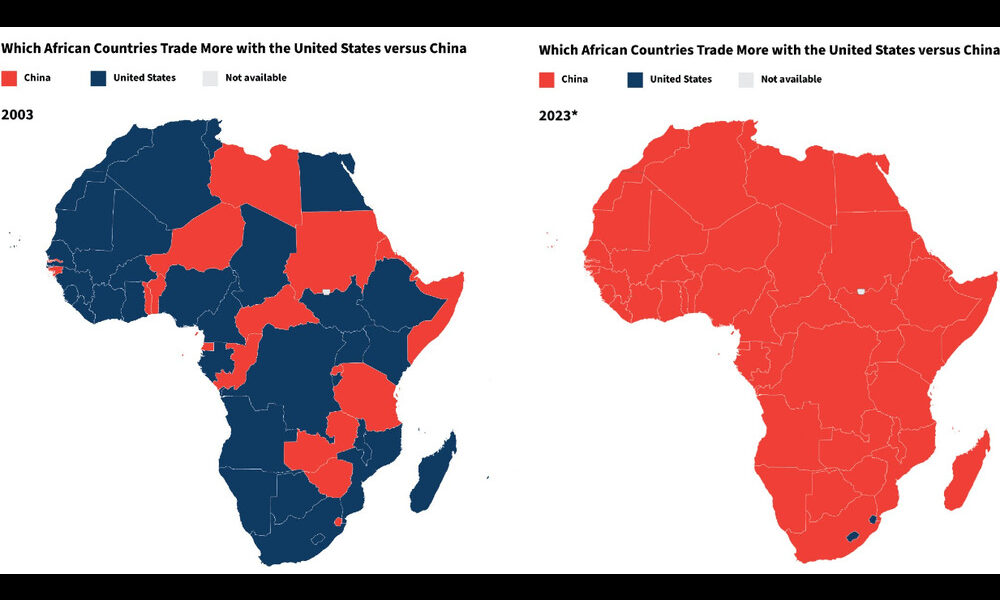
Recent data paints a clear picture: China has decisively surpassed the United States as Africa’s primary trading partner. Over the past two decades, African nations have increasingly pivoted toward Beijing, drawn by its massive market, investment opportunities, and infrastructure development initiatives.
Meanwhile, the U.S.’s influence on the continent has waned, leaving it struggling to compete with China’s strategic economic outreach.
While the introduction of reciprocal tariffs by the U.S. may not directly affect Africa, the broader implications of escalating trade tensions between Washington and Beijing are cause for concern. A prolonged trade war could ripple across the globe, with significant consequences for Africa’s economy.
The Risks of Over-Reliance on China
African economies are particularly vulnerable to fluctuations in China’s economic performance. Many nations rely heavily on China as a key export destination for commodities such as oil, copper, cobalt, and agricultural products.
For resource-rich countries like Angola, Nigeria, Zambia, and the Democratic Republic of Congo (DR Congo), any slowdown in Chinese demand could lead to reduced export revenues, worsening trade deficits, and heightened financial instability.
Consider this scenario: If China’s growth stalls due to prolonged trade disputes or internal challenges, African exporters could face plummeting prices for their raw materials. This would exacerbate existing vulnerabilities, including mounting debt burdens and foreign exchange shortages.
Additionally, a downturn in China’s economy might force Beijing to reassess its ambitious investment strategies, potentially scaling back funding for critical infrastructure projects under initiatives like the Belt and Road Initiative (BRI).
For African countries that have come to depend on Chinese financing to build roads, railways, and energy plants, a reduction in external funding could bring much-needed development projects to a grinding halt – further straining already fragile economies.
Diversifying Africa’s Trade Strategy: The Path Forward
Given these risks, African nations must take proactive steps to mitigate potential second-order effects stemming from global trade uncertainties. While direct tariff impacts may be minimal, the continent’s over-reliance on China underscores the urgent need for diversification in both trade partners and export portfolios.
Here are three key strategies to bolster Africa’s resilience:
- Broaden Trade Partnerships: Reducing dependence on a single market is essential. By cultivating stronger ties with emerging economies like India, Turkey, and Brazil – as well as re-engaging traditional partners like the European Union and the U.S. – Africa can create a more balanced and diversified trade ecosystem.
- Expand Export Offerings Beyond Raw Materials: To break free from the “commodity trap,” African nations should focus on adding value to their natural resources before exporting them. Investing in processing industries, manufacturing, and technology-driven sectors will help unlock new revenue streams and reduce reliance on volatile commodity markets.
- Strengthen Regional Integration Through AfCFTA: The African Continental Free Trade Area (AfCFTA) offers a golden opportunity to enhance intra-African trade and build regional value chains. By eliminating barriers to cross-border commerce and fostering collaboration among member states, Africa can harness its collective strength to weather global economic storms.
The Future of Africa’s Trade Lies Within the Continent
Ultimately, while China remains a vital partner, Africa’s long-term prosperity hinges on its ability to chart an independent course. By embracing diversification, innovation, and regional cooperation, the continent can transform itself into a dynamic player in the global economy – one that no longer depends solely on external powers for its growth.
As the saying goes, “The future belongs to those who prepare for it today.” For Africa, the time to act is now. The road ahead won’t be easy, but with strategic foresight and collective effort, the continent has the potential to redefine its place in the world – and secure a brighter, more resilient future for generations to come.
Key Takeaway: While China’s zero-tariff initiative strengthens its role as Africa’s top trading partner, the continent must seize the moment to diversify its trade relationships, expand its export base, and leverage regional integration through AfCFTA. Only then can Africa truly unlock its full economic potential.
Mark-Anthony Johnson is the founder and CEO of JIC Holdings, a global asset and investment management firm founded in 2009. With over 30 years of experience and strong ties to Africa, his investments span mining, infrastructure, power, shipping, commodities, agriculture, and fisheries. He is currently focused on developing farms across Africa, aiming to position the continent as the world’s breadbasket.