Business
Central Africa working to revive stalled integration process
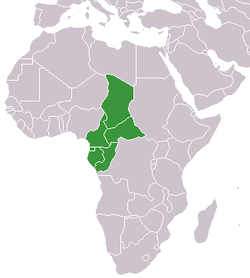
Central Africa, one of the regions that has recorded the slowest progress in regional integration despite huge natural resources, is seeking to forge a harmonized regional identity.
Finance and integration ministers of member countries of the region’s trade blocs meeting in Cameroon’s capital Yaoundé last week said they would fast-track their integration process.
Integration programs in Central Africa have stumbled along because of political, economic, institutional and financial obstacles caused by overlapping memberships to the region’s two blocs.
The seven-member Central African Economic and Monetary Community and the 11-member Economic Community of Central African States both claim to be seeking to eliminate the problem of small-sized national markets, and to open up and to create a larger area capable of facing market competition resulting from globalization, however both groupings seem to have so far missed their mark.
Central Africa has the lowest infrastructure network on the continent, especially in transport and energy which impacts negatively on the region’s productive capacity and trade.
According to figures released by the United Nations Economic Commission for Africa, trade within the Central African Economic and Monetary Community in 2006 represented only between 0.5 percent and 1 percent of the region’s total exchanges.
This is a sharp contrast, with intra-community trade in the Common Market for Eastern and Southern Africa (COMESA) which accounted for 5 percent of exchanges that same year.
During the same period in both the Southern African Development Community (SADC) and the Economic Community of West African States (ECOWAS), exchanges stood at 10 percent and 15 percent in the West African Economic and Monetary Union (WAEMU).
The African Union and the United Nations Economic Commission for Africa are pushing for a Free Trade Area in Africa which will help the region and the continent better harness their resources.
Recent trends, however, suggest integration seems to be growing in Central Africa and regional governments are working towards harmonization.
Central Africa’s pivotal and strategic location makes it a potentially preferred transit zone between regions of the continent. Recently, proven oil reserves in the region are estimated at 31.1 billion barrels, representing 28 percent of the continent’s total reserves, according to the African Development Bank (AfDB).
It abounds in minerals, agriculture and forestry and hosts the continent’s largest hydro-electric power potential which stands at 60 percent.
Source: The Africa Review