News
CARICOM Eminent Person Group concludes Haiti visit
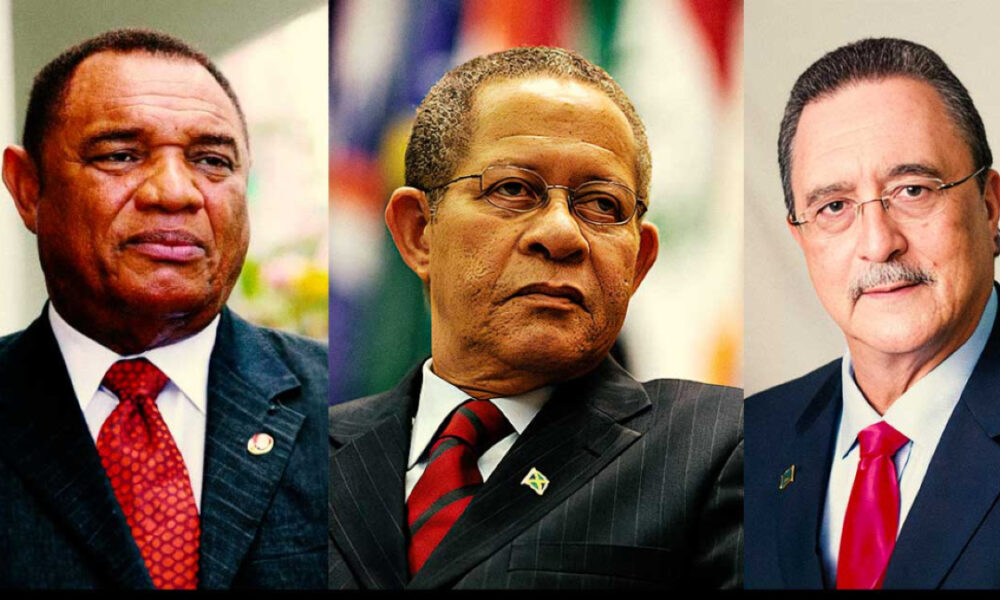
The three-member Caribbean Community (CARICOM) Eminent Persons Group (EPG) has concluded a six-day visit to Haiti, emphasizing the need to return to the principles of the March 11 agreement in Jamaica.
In a statement, the EPG noted that the visit provided an opportunity for dialogue with various Haitian society representatives, including the dual-executive government, the Director-General of the Haitian National Police, and political party leaders not represented in the Transitional Presidential Council (TPC) or the government.
The EPG, consisting of former Prime Ministers Kenny Anthony (St. Lucia), Bruce Golding (Jamaica), and Perry Christie (The Bahamas), also met with representatives from Haiti’s key international partners, such as Canada, France, and the United States. Additionally, they engaged with the United Nations Office in Haiti (BINUH), the Organization of American States, and the Multinational Security Support Mission (MSSM) Force Commander.
The statement highlighted that the visit with the TPC and the Prime Minister provided updates on the current situation, their activities, plans, and concerns. The EPG was encouraged by the TPC’s efforts to address delays in establishing key institutions and entities required under the April 3 Accord, such as the Provisional Electoral Council, the Government Action Oversight Organ, the National Security Council, and the National Conference.
Concerns were raised about the friction between some sectors and their Council representatives, the lack of publication of the April 3 Accord, the absence of critical institutions, and the negative impact of inaction on corruption allegations against three Council members.
The statement also addressed significant concerns regarding the challenges faced by the Haitian police and the Kenyan forces in addressing insecurity. The EPG noted that the Kenyan force was understaffed and under-equipped, limiting its capacity to maintain control over reclaimed territories. Adequate funding for the MSSM was emphasized as essential for resolving these issues.
Haitian Prime Minister Garry Conile acknowledged the urgency of the situation, emphasizing that the window of opportunity for addressing the people’s expectations would not last long. He pointed out that the lack of resources and the breakdown of State institutions were significant obstacles but noted ongoing efforts to tackle critical socio-economic and humanitarian issues.
The Prime Minister stressed that resolving the issue of insecurity was crucial for progress in other areas of government action.
In meetings with civil society representatives and political parties not represented in the TPC and government, there was a consensus that a reset and reconfiguration of the TPC were necessary. Common concerns included the State’s inability to improve security, disappointment over the lack of impact from the Kenyan forces, erosion of public confidence in the TPC due to the corruption scandal, and fears that delays could jeopardize the transition process’s deadline of February 2026 for electing a president.
Political party representatives not affiliated with the TPC criticized the non-inclusive nature of the Council of Ministers and the potential advantages enjoyed by political parties represented on the Council through their designated ministers. Delays in establishing critical institutions, the need for greater effectiveness in achieving major objectives within the allotted time, and the corrosive impact of corruption allegations have all contributed to the fragility of the transition process.
The EPG emphasized that the corruption allegations had come at a particularly challenging time and called for a swift resolution to preserve the institution’s integrity and public confidence in the transition process. The anti-corruption investigative agency’s inquiry will be crucial in this regard.
The EPG members concluded by stressing the importance of returning to the ethos of the March 11, 2024 agreement in Jamaica, which was based on inclusiveness, consensus, and accountability.