Owusu on Africa
Cameroon’s Crossroads: Paul Biya’s Legacy and Future Challenges
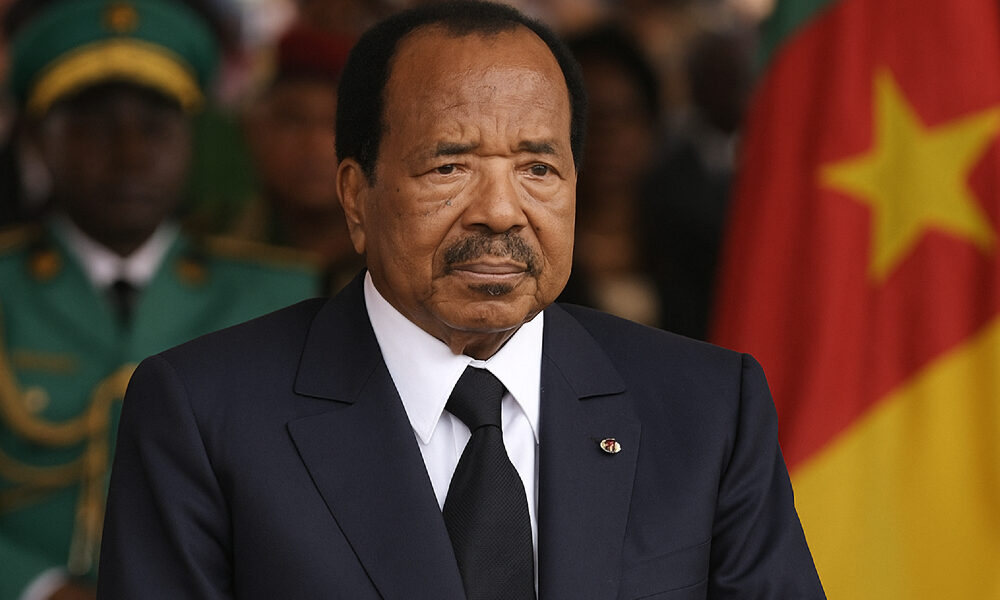


By Fidel Amakye Owusu
On November 6, 1982, Paul Biya assumed the presidency of Cameroon. This year, as he marks his 43rd year in office, the nation stands at a crossroads – not of progress, but of profound political inertia.
At 92 years old, Biya is not only one of the world’s longest-serving leaders but also a living symbol of a governance model increasingly out of step with the demands of the 21st century.
Two years ago, I posed a simple but urgent question: What has four decades of Paul Biya’s rule meant for the people of Cameroon? The answer, regrettably, remains as troubling as it was then.
The Making of a Longevity Legacy
Biya’s ascent to power was uneventful on the surface. Appointed Prime Minister by Cameroon’s first president, Ahmadou Ahidjo, in 1975, he was the designated successor when Ahidjo stepped down in 1982.
But what followed was anything but peaceful. A bitter power struggle erupted between the outgoing president and his protégé.
Ahidjo, accused of plotting a coup, fled into exile in 1983. His allies were purged, and Biya emerged unchallenged – consolidating power with a firm grip on the military, the judiciary, and the ruling party.
Over the years, Biya perfected a system in which loyalty trumps competence, dissent is silenced, and institutions exist to serve the executive, not the people. After the wave of democratic reforms that swept Africa in the 1990s, Cameroon briefly opened up – only for those gains to be rolled back.
Constitutional amendments in 2008 abolished term limits, effectively granting Biya a lifelong mandate. Today, there is no legal barrier to his continued rule – only the limits of age, health, and accountability.
Governing in Absentia: Power Without Presence
And yet, accountability remains elusive.
Cameroon today faces multiple, overlapping crises. In the Far North, the shadow of Boko Haram continues to bring violence, displacement, and humanitarian suffering.
In the Anglophone regions of the Southwest and Northwest, a separatist insurgency – born from decades of political marginalization – has escalated into a brutal conflict.
Government forces have been accused of widespread human rights abuses, including extrajudicial killings and the burning of villages. Armed separatist groups, in turn, have targeted civilians and security forces alike.
The result is a humanitarian catastrophe: over half a million displaced, schools shuttered, and entire communities torn apart.
Meanwhile, youth unemployment hovers above 30 percent, corruption remains systemic, and economic inequality deepens. The state’s resources are too often indistinguishable from the wealth of the elite.
A political class enriched by proximity to power has little incentive to change the status quo.
Biya himself spends extended periods abroad – often in Switzerland – where he has access to advanced medical care. His absences, sometimes lasting months, raise serious questions about presidential continuity and governance.
Yet, upon his return, he resumes office without public scrutiny or constitutional challenge. The machinery of government continues to function – on autopilot – sustained by a loyal inner circle that benefits from the stability of stagnation.
Reigning vs. Ruling: A Dangerous Conflation
This is not governance. It is custodianship of power for its own sake.
Critics often draw comparisons between long-serving African leaders and European constitutional monarchs. But the distinction is crucial: monarchs reign but do not rule.
They are ceremonial figures in democratic systems where real power is exercised by elected officials and institutions. In Cameroon, Paul Biya does both – he reigns and rules, concentrating authority in a way that undermines accountability, weakens institutions, and stifles political renewal.
There is no denying Biya’s political longevity. But longevity is not leadership.
True leadership is measured not by time served, but by progress delivered.
A Nation Waiting for Its Future
Cameroon is a nation of immense potential – strategically located, rich in natural resources, and home to a young, dynamic population. But that potential is being squandered by a system that prioritizes the survival of one man over the future of millions.
The question is no longer whether Paul Biya can continue to govern. The question is whether Cameroon can afford to wait any longer for a transition that empowers a new generation of leaders – leaders who are present, accountable, and committed to national unity over personal power.
The clock is ticking. For Cameroon, the next 43 years must not mirror the last.
Fidel Amakye Owusu is an International Relations and Security Analyst. He is an Associate at the Conflict Research Consortium for Africa and has previously hosted an International Affairs program with the Ghana Broadcasting Corporation (GBC). He is passionate about Diplomacy and realizing Africa’s global potential and how the continent should be viewed as part of the global collective.