Zina’s Youth View on Africa
BRICS Bets on Consensus as the Global South Tests Its Muscle
Eleven members speak for nearly half the world. Getting them to speak with one voice is the harder task.


By Godfred Zina
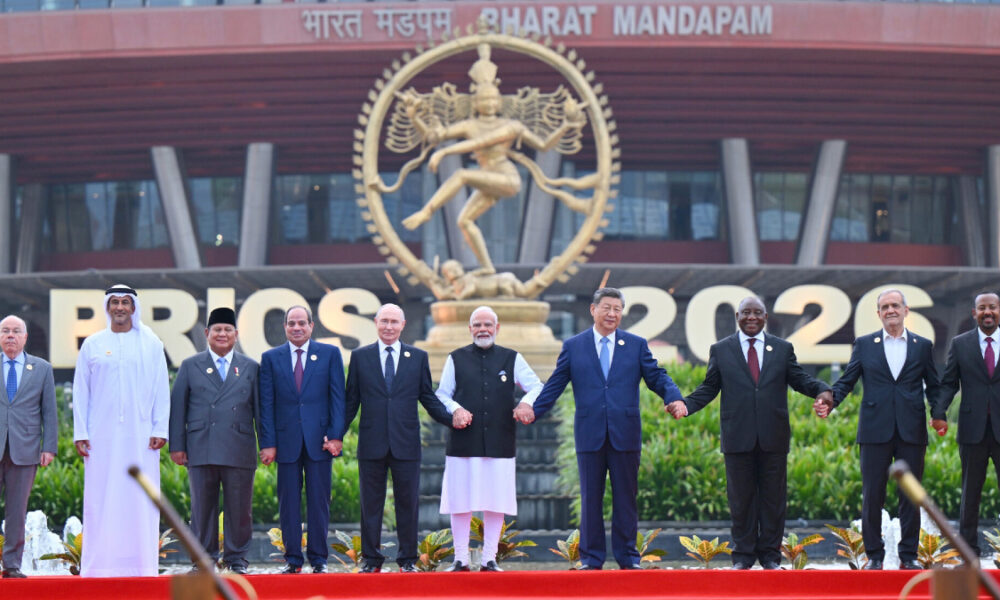
As American dominance meets mounting resistance, leaders of the Global South have gathered in India for the 18th BRICS Summit. Their agenda is ambitious: coordinate economic policy, press for reform of global institutions, and build a more multipolar world.
The numbers help their case. BRICS now has 11 members, representing nearly half of the world’s population and roughly 40 percent of global GDP. That gives Africa, Asia and Latin America a collective voice that is harder to ignore. But the same diversity that makes the bloc large makes it unwieldy. When national interests collide, consensus becomes a feat of diplomacy rather than a formality.
India, the Reluctant Referee
This summit tested that proposition. Iran and the United Arab Emirates are at odds, yet India still secured a joint declaration. That is no small achievement, and it suggests New Delhi is emerging as the bloc’s chief broker, able to manage rivalries among competing powers instead of merely hosting them.
The price of agreement was caution. The bloc called for restraint in the Middle East without assigning blame to the US, Israel, Iran or the Gulf states. The careful wording preserved dialogue, but it also exposed a weakness. On the most sensitive geopolitical crises, BRICS still struggles to speak with one firm voice.
So What?
The larger significance lies in what the bloc is asking for. Members called for greater representation for Africa, Asia and Latin America in global decision-making. Prime Minister Narendra Modi urged the Global South to become “rule-shapers” rather than “rule-takers,” a direct challenge to the existing distribution of power.
Washington went unnamed, but the target was plain. The declaration criticized unilateral tariffs, sanctions and economic coercion, reflecting members’ unease about their reliance on Western-led financial systems. That unease strengthens the case for alternatives.
The omissions were just as telling. The 2026 declaration dropped explicit references to Ukraine, a sign that members would rather avoid a subject that could deepen divisions over Russia’s war and break the bloc’s fragile unity.
Yet BRICS is not always timid. On Palestine, it adopted firmer language, opposing displacement and backing a two-state solution and Palestinian statehood. The lesson is that when members share enough common ground, the bloc is willing to take a stronger stand.
From Declarations to Delivery
Words alone will not shift the balance of power. The New Development Bank gives BRICS a practical instrument, but its long-term influence depends on whether members can turn communiqués into concrete economic, diplomatic and institutional initiatives. Ambition is abundant. Execution is the test.
That test runs through New Delhi. India must keep working relationships with China, Russia, the United States, Iran and the Gulf states while asserting leadership of the Global South. How well it balances those ties will shape not only BRICS’ cohesion but also its relevance in the years ahead.
Godfred Zina is a freelance journalist and an associate at DefSEC Analytics Africa, a consultancy specializing in data and risk assessments on security, politics, investment, and trade across Africa. He also serves as a contributing analyst for Riley Risk, which supports international commercial and humanitarian operations in high-risk environments. He is based in Accra, Ghana.