Opinion
Botswana’s Diamond Era Is Fading – Can the Country Survive?


By Ondiro Oganga
For over half a century, Botswana stood as Africa’s most compelling economic success story. Born from the sands of the Kalahari, its wealth was forged not by colonial exploitation, but by prudent governance, transparent institutions, and the strategic partnership with De Beers through Debswana – the world’s most profitable diamond joint venture.
Diamonds didn’t just fund development; they funded democracy.
But today, that dream is cracking.
Diamonds are no longer forever – not in the market, and increasingly, not in Botswana’s fiscal future.
The Cracks Beneath the Shine
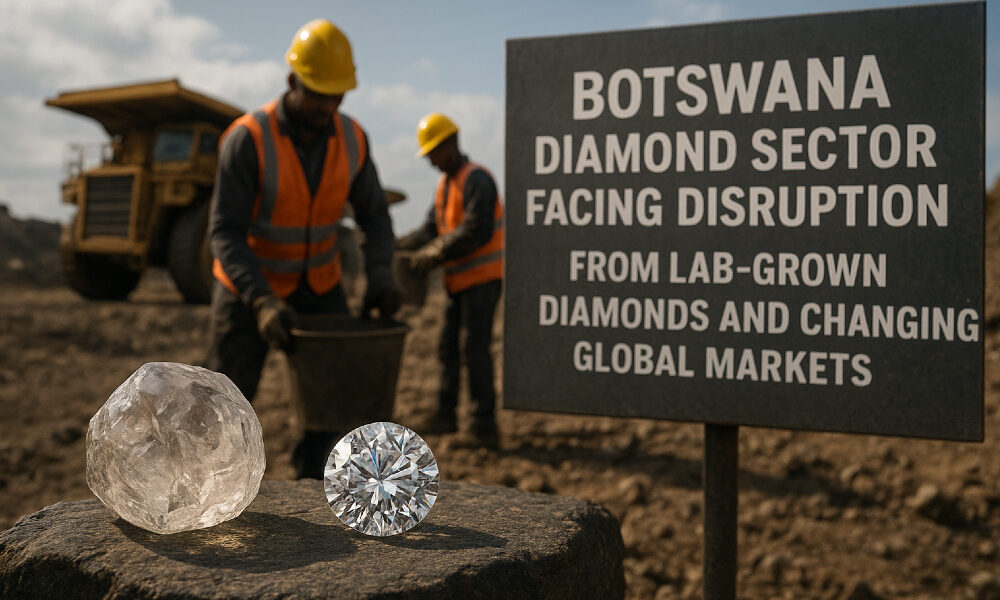
Diamonds still account for nearly 80 percent of Botswana’s export earnings. But global demand has flatlined for three consecutive years, even as lab-grown diamonds – cheaper, ethically unburdened, and technologically superior – capture an ever-larger share of the jewelry market.
In 2023, De Beers slashed production by over 30 percent, citing plunging profits and shifting consumer preferences. The message was clear: the era of inexhaustible diamond wealth is over.
President Duma Boko has urged the government to “sell what we have” – a pragmatic call in theory, but economically perilous in practice. Boosting output won’t rescue prices when supply outpaces demand. Worse, it risks flooding the market and accelerating price erosion – a death spiral for a nation whose budget depends on every carat.
The Human Cost of a Resource Curse
The fiscal fallout is no longer theoretical – it’s unfolding in hospital corridors and rural clinics.
With revenues shrinking, Botswana’s public finances are under severe strain. The government now faces deficits exceeding 6 percent of GDP.
Healthcare – a system upon which 80 percent of citizens rely – is buckling. Shortages of basic medicines, expired stockpiles, and delayed treatments are becoming routine.
In desperation, authorities allocated US$18 million for emergency medical procurement – and then deployed the military to oversee distribution. The move, intended to restore order, instead exposed systemic corruption: reports emerged of medical supplies marked up 5–10 times their fair value.
A national scandal erupted, eroding public trust at the worst possible moment.
This isn’t mismanagement – it’s the consequence of decades of overreliance on a single commodity.
The Search for a New Future
Botswana hasn’t sat idle. In response, it launched a US$348 million Fiscal Stabilization Fund, tapped the Botswana Development Corporation to catalyze private investment, and is aggressively courting new markets in the Middle East and Asia.
There are nascent efforts to diversify into tourism, fintech, and renewable energy.
But these are bandaids on a hemorrhage.
The real challenge isn’t finding new buyers – it’s redefining the country’s economic identity. Lab-grown diamonds now command over 15 percent of the global diamond jewelry market and are projected to reach 30 percent by 2030, according to McKinsey.
They are not a niche – they’re the new normal.
Botswana’s dilemma is existential: Can a nation built on the myth of “diamonds are forever” reinvent itself before its foundational asset becomes obsolete?
A Wake-Up Call for Resource-Rich Nations
Botswana’s crisis is not unique – but it is emblematic. From Nigeria to Kazakhstan, resource-dependent economies are waking up to the same brutal truth: commodities don’t guarantee stability.
Climate change, technological disruption, and evolving ethics are rewriting the rules of global trade.
What Botswana needs now isn’t more mining – it’s more vision. Strategic investments in education, digital infrastructure, and value-added processing (e.g., cutting and polishing domestically) could transform its diamond legacy into a knowledge economy.
But time is running short.
The question is no longer whether Botswana has diamonds. It’s whether it has the political will to let them go.
And if it doesn’t act decisively, the world may lose not just a diamond producer – but one of Africa’s last great models of responsible governance.
Ondiro Oganga is an award-winning multimedia journalist and international correspondent for Bloomberg TV, specializing in African financial markets, macroeconomics, and global economic trends. With a decade of experience, she is a trusted voice known for her exclusive interviews with Heads of State and Central Bank Governors. Her investigative reporting has influenced policy and her high-profile interviews feature global financial leaders.