Alorh’s eye on the Motherland
Biden’s visit highlights G7 efforts to counter China’s influence in Africa through Infrastructure Investment


By Mary Alorh
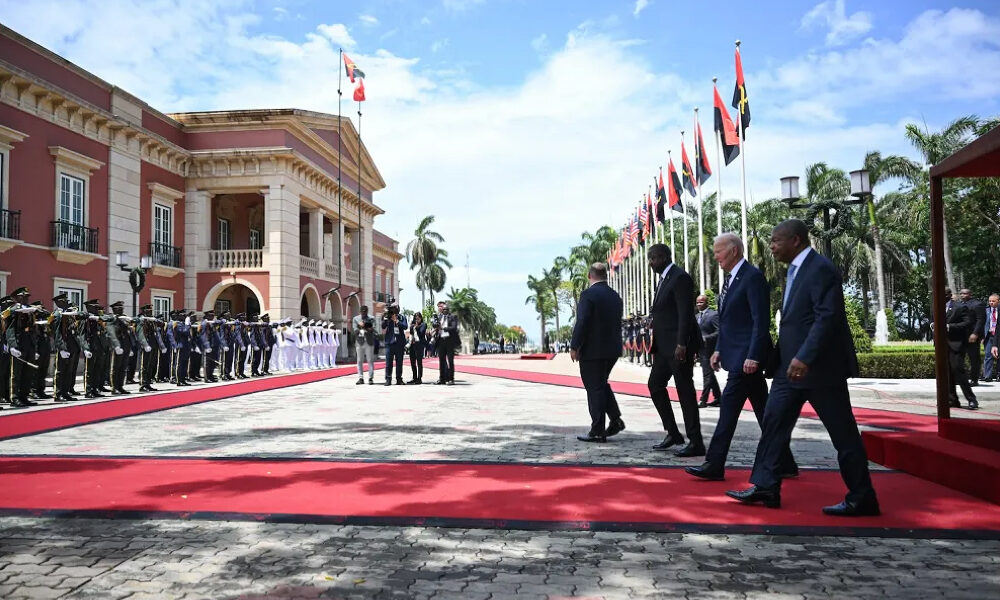
The recent visit of U.S. President Joe Biden to Africa marked a significant step in the G7’s strategy to counter China’s growing influence on the continent. Central to this effort is the Partnership for Global Infrastructure and Investment (PGII), an initiative aimed at developing critical infrastructure in resource-rich African regions.
As part of this initiative, the G7 nations are supporting the construction of a 1,344-kilometer (835-mile) railway connecting the Democratic Republic of Congo’s cobalt, lithium, and copper mines and Zambia’s copper belt to the Angolan port city of Lobito on the Atlantic Ocean. Once completed, the Lobito Corridor project is expected to facilitate the export of these valuable minerals to Europe and the United States.
While this infrastructure development has the potential to spur economic growth, it also draws comparisons to Africa’s colonial history. During the colonial period, European powers constructed road and railway networks to serve their interests, primarily to extract and export raw materials and minerals to Europe.
The G7 nations, some of which have historical ties to colonialism, must ensure that their investments prioritize sustainable and inclusive growth. Infrastructure projects should benefit both investors and African citizens, avoiding the pitfalls of past development models that prioritized foreign interests at the expense of local populations.
These projects were often designed without local input and failed to address the broader needs of African populations.
In Ghana, for example, colonial railways such as the line from Huni Valley to the coast were built to streamline the export of minerals, while broader connectivity and public benefit were neglected. Similarly, in Senegal, poor transportation infrastructure and limited connectivity contributed to the 2002 Joola ferry disaster, highlighting the critical need for inclusive infrastructure planning.
Modern infrastructure investments, including the Lobito Corridor, aim to address these historical shortcomings by reducing transportation costs, improving travel times, fostering economic activity, and creating jobs. However, the success of such projects hinges on their ability to incorporate the needs of local populations and prioritize long-term national development.
Angola, Zambia, and the Democratic Republic of Congo are endowed with abundant reserves of cobalt, lithium, and copper – resources critical to the global energy transition. Yet, their exploitation must translate into tangible benefits for the citizenry. In Angola alone, 64 percent of the road network remains in poor or critical condition, underscoring the need for broader infrastructure improvements that serve local communities.
Projects like the Lobito Corridor should aim to create a legacy of inclusive growth, empowering Africa to build resilient economies that serve both local and global interests.
The G7 nations, some of which have historical ties to colonialism, must ensure that their investments prioritize sustainable and inclusive growth. Infrastructure projects should benefit both investors and African citizens, avoiding the pitfalls of past development models that prioritized foreign interests at the expense of local populations.
Africa’s vast natural resources will continue to be a focal point in global geopolitics. However, the responsibility lies with African leaders to leverage these resources strategically, fostering partnerships that enhance sovereignty and drive infrastructure development for the benefit of their people.
Projects like the Lobito Corridor should aim to create a legacy of inclusive growth, empowering Africa to build resilient economies that serve both local and global interests.
Mary Alorh is Director of Administration at DefSEC Analytics Africa Ltd., and is an expert in Gender, Youth, and Peace & Security initiatives in West Africa.