Opinion
Beyond the Algorithm: Why Agriculture’s Future Demands Builders, Not Writers


By Jean Claude Niyomugabo
Imagine explaining artificial intelligence to a four-year-old child in rural Africa. You wouldn’t begin with algorithms or machine learning models.
Instead, you would start with a story – one about farms as vast gardens where plants live together, needing sunshine, fresh air, and water to thrive. Like children, plants require care.
Unlike children, they cannot speak when they are thirsty or struggling.
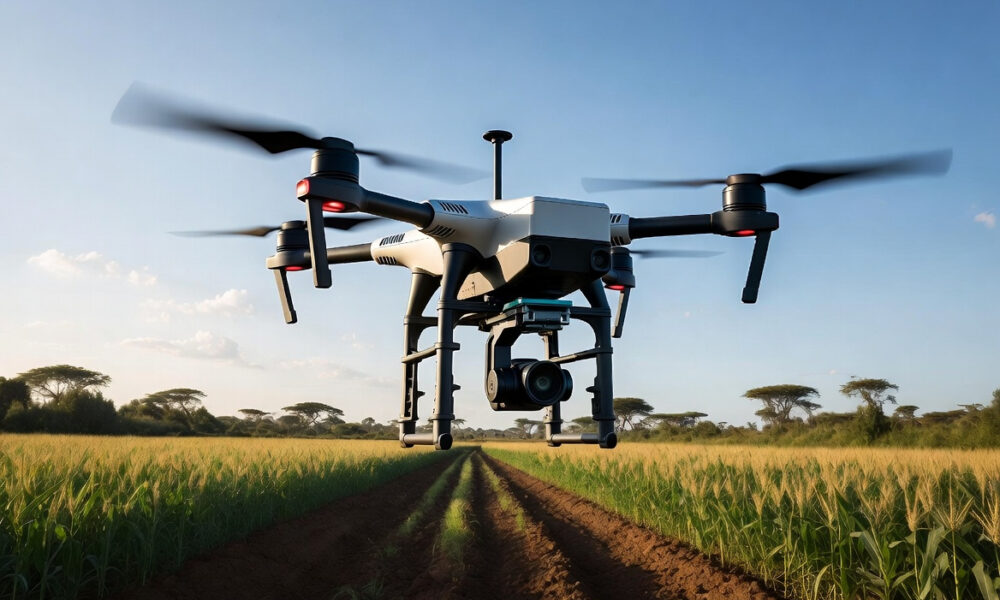
Enter the helper: a drone, that tiny mechanical bird soaring above the fields. Equipped with what we might call a “smart brain” – artificial intelligence – this drone becomes the plants’ voice.
As it glides over rows of crops, its AI-powered vision system distinguishes between healthy, vibrant leaves and those showing signs of distress. The technology identifies which plants need water and which have had enough, allowing farmers to irrigate with precision rather than abundance.
The elegance lies in its simplicity. Like offering juice only to thirsty friends rather than everyone indiscriminately, precision agriculture conserves precious water while ensuring each plant receives exactly what it needs.
For a child, this isn’t a lesson in technology – it’s a story about flying helpers, thoughtful farmers, and flourishing gardens. Technology becomes wonder rather than complexity.
Yet this very accessibility of AI-generated explanations raises a profound question for agricultural professionals: In an era when anyone can produce eloquent reports in minutes using tools like ChatGPT, what constitutes genuine expertise?
The Obsolescence of Eloquence
The uncomfortable truth is that real value in agriculture can no longer be measured by writing proficiency. Perfect prose means nothing if crops fail. Comprehensive proposals hold little weight if smallholder farmers cannot afford implementation.
The field demands a fundamental recalibration – from those who can articulate solutions to those who can engineer them.
Agriculture advances not through polished paragraphs but through tangible innovation: low-cost irrigation systems designed for resource-constrained farmers, AI-powered pest detection tools validated in actual fields, soil health dashboards that transform data into actionable insights, or cooperative platforms that help reduce post-harvest losses through predictive analytics. These experiences forge true professionals. Documents alone never could.
From Rhetoric to Reality
We stand at an inflection point, witnessing a transformation from writing about solutions to creating them. From theoretical frameworks to working prototypes. From abstract ideas to measurable impact on actual farms.
This shift doesn’t diminish the importance of rigorous thinking or research. Rather, it demands that intellectual work remain grounded in the realities facing farmers and communities.
AI should accelerate progress, not circumvent the essential journey of skill-building. The technology’s role is to help us analyze faster, design more effectively, and test more intelligently – not to provide shortcuts around the hard work of developing genuine competence.
Consider what farmers actually need. They don’t require another meticulously crafted policy brief gathering dust on a ministry shelf.
They need irrigation systems that function in harsh conditions, crop monitoring tools that work without reliable internet connectivity, and supply chain solutions designed by people who understand their constraints firsthand – not merely in theory.
The Competence Paradox
The agricultural professionals who will shape the next decade won’t be distinguished by their ability to prompt AI tools effectively. They will stand out through their capacity to combine domain knowledge, technological fluency, and practical experience – people equally comfortable in a laboratory, a coding environment, and a maize field during planting season.
This creates an interesting paradox. As AI democratizes the ability to produce professional-seeming work, it simultaneously raises the bar for what constitutes real expertise.
The credential of the future won’t be a well-written thesis but a portfolio of implemented solutions: systems deployed, problems solved, farmers empowered.
The implications extend beyond individual career trajectories. Agricultural education institutions, development organizations, and funding bodies must evolve their evaluation criteria.
How do we assess competence when AI can generate convincing grant proposals? What separates genuine innovation from well-articulated mediocrity?
The answer lies in demonstrated impact and hands-on achievement.
Building Versus Broadcasting
There’s a crucial distinction emerging between those who broadcast about agricultural challenges and those who build solutions to address them. The former group will find their role increasingly automated; the latter will become indispensable.
AI can analyze soil composition data and generate recommendations, but it cannot sit with a farmers’ cooperative to understand why a technically sound solution failed due to social dynamics it couldn’t model.
This is not a Luddite rejection of technology. Quite the opposite – it’s a call for deeper, more meaningful integration of AI into agricultural development.
The tools should serve as force multipliers for people who have earned their expertise through direct engagement with agricultural systems, not as substitutes for that engagement.
The Path Forward
For emerging agricultural professionals, the imperative is clear: Prioritize building over writing. Design systems, conduct field trials, collect real data, iterate on failures.
Let AI handle the documentation, the literature reviews, the synthesis of existing knowledge. Dedicate human effort to the work machines cannot yet do – the messy, complex, context-dependent problem-solving that happens where technology meets reality.
For established professionals and institutions, the challenge is to restructure incentives accordingly. Reward implemented prototypes as highly as published papers.
Value field testing as much as conference presentations. Recognize that in an AI-augmented world, the scarcest resource is no longer information or articulation but practical wisdom earned through direct experience.
The four-year-old in rural Africa who learns about drones and AI through the story of helpful flying birds will one day inherit a transformed agricultural sector. Whether that transformation serves her community well depends on whether today’s agricultural professionals embrace this shift – from eloquent observers to capable builders.
Artificial intelligence can generate your words, draft your proposals, and polish your presentations. But only you can build your impact. Only you can develop the judgment that comes from watching a promising technology fail in the field and understanding why.
Only you can earn the trust of farming communities through demonstrated competence rather than confident assertions.
The future of agriculture belongs to those who get their hands dirty – both literally and figuratively. Those willing to move beyond the comfort of well-crafted documents into the uncertain terrain of real-world implementation.
Because ultimately, expertise cannot be outsourced to algorithms. It must be earned, one solved problem at a time.
Jean Claude Niyomugabo is an entrepreneur and digital communication specialist with a strong passion for Africa’s development. He is dedicated to harnessing the power of social media to drive positive change and enhance livelihoods. With diverse interests and a strategic approach to digital engagement, he strives to create meaningful impact through innovation and connectivity.