Opinion
Beyond Policy: Why Africa Needs a New Architecture of Thought
Why the continent’s future depends on rebuilding the invisible architecture beneath its institutions – not just rewriting the rules on top of it.


By Wavinya Makai
For years, I believed the greatest obstacle to Africa’s progress was bad policy. Change the policy, I thought, and you change the outcome.
I was looking in the wrong place.
Policy is not where transformation begins – it is where transformation ends up. It is the final, visible expression of something far deeper: a framework. A framework is the invisible architecture beneath every society. It shapes how a people understand reality, what they value, how they solve problems, and what future they believe is possible for themselves.
This is why changing a government so rarely changes a country’s trajectory. New leaders arrive, new policies are announced, new promises are made – yet the results look strikingly familiar. The reason is simple: if the framework beneath the policy never changes, the policy will eventually reproduce the same outcome, no matter who is in charge.
The Chain Most Debates Never Reach
Consider the real sequence behind any decision a society makes:
Framework → Principles → Methodologies → Standards → Institutions → Policies → Outcomes
Nearly every political debate in Africa – and, frankly, everywhere else – begins at the policy level. Almost none begin with the question that actually determines the outcome: Which framework produced this policy in the first place?
This is where the conversation about Africa’s future needs to go deeper.
Decolonization was never meant to stop at replacing flags, renaming streets, or rewriting a constitution. Its unfinished work is examining the frameworks that still shape how African nations think about development, finance, governance, education, security, and knowledge itself – frameworks that, in many cases, were never built with African realities in mind.
A civilization becomes genuinely influential not when it wins an argument over policy, but when it contributes frameworks that other nations study, adapt, and build upon. That is the real measure of power on the world stage.
The Question Africa Should Be Asking
The question I hear most often is: How do we negotiate better policies?
I have come to believe that is the wrong question – or at least an incomplete one. The deeper question is this:
What frameworks must we build today so that future generations inherit institutions, policies, and possibilities rooted in African realities and African aspirations?
Frameworks shape centuries. Policies shift with election cycles and change with every new administration. The highest form of power was never simply writing the rules – it is designing the framework from which the rules emerge. Whoever controls that architecture controls the outcomes, generation after generation, regardless of who happens to be holding office.
What I’ve Seen on This Continent
Why am I a Pan-Africanist? Because I have seen what this continent is capable of.
I have sat in classrooms filled with extraordinary intelligence. I have watched communities show resilience that would break most institutions. I have seen creativity so limitless it defies the resources available to it. And I have also watched, again and again, how our people are taught to look everywhere except within ourselves for the answers.
That is the real tragedy – not a shortage of ideas, talent, or resources, because Africa is short on none of these. What the continent has too often lacked is coordinated leverage: the ability to turn 1.4 billion individual strengths into one organized force.
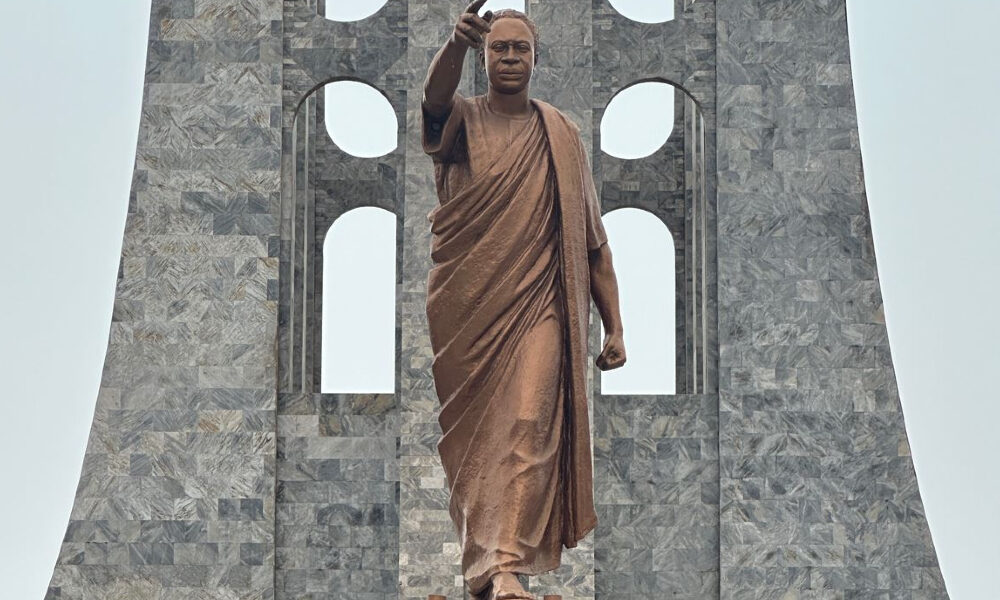
Kwame Nkrumah understood this more than half a century ago. He argued that Africa’s greatest strength would come not from any single nation acting alone, but from unity. When 55 nations begin thinking strategically together – sharing knowledge, building industries together, investing in one another, and solving African problems through African institutions – the continent’s greatest resource stops being what lies underground and becomes the organized power of its people.
Everything required to build prosperous, innovative, and dignified societies already exists on this continent. What remains is the courage to believe it, the discipline to organize it, and the wisdom to protect it.
Writing Our Own Rules
This is why I am a Pan-Africanist, and why my work is focused on building public consciousness about power: how it is created, how it is sustained, and why Africa must become an author of history rather than a consumer of someone else’s vision for it.
Africans must write our own rules. Build our own institutions. Develop our own knowledge. Finance our own future. Tell our own stories. Dignity, after all, is never imported – it is built.
Every real transformation begins the moment enough people start seeing themselves differently.
The future of Africa will not be inherited. It will be organized – by Africans, for Africans, on frameworks Africans design themselves.
Wavinya Makai is a Kenyan author, development strategist, and Pan-African scholar specializing in African economic sovereignty. Her work focuses on youth development, unemployment, and education reforms that cultivate innovators. She is the author of Capital Violence: The Economic War on African Dignity and holds a Master of Philosophy in Development Studies from the University of Cambridge. Makai has been featured as a development analyst on Citizen TV Kenya and is a frequent speaker on leadership and human rights.