Opinion
Beyond Dangote, Nigeria pushes for energy dominance
By Eromo Egbejule
From new liquefied natural gas (LNG) projects to expanding export markets, there is a great deal to play for.
And it is not just the Dangote refinery project that gives Nigerian energy sector executives a spring in their step.
Nigeria is making plans to upgrade its outdated infrastructure in the oil and gas sector, and spread its reach beyond West Africa. In the short to medium term, that means focusing on its gas pipelines; Nigeria has the largest gas reserves on the continent but barely has support infrastructure to use and export much of it.
– The 614km Ajaokuta-Kaduna-Kano gas pipeline system could change that. It is being built by the Nigerian National Petroleum Corporation (NNPC) to take advantage of Nigeria’s abundant gas resources and, as the NNPC says, to enable gas connectivity between the west and north. Now it is contemplating stretching the pipeline as far as Algeria.
The NNPC is also planning to extend the West African Gas Pipeline to Morocco and has completed the feasibility study for the 5,660 kilometer (3,517 mile) line, which could supply 15 countries in its path, when operational.
– The final investment decision for the 7th train at Nigeria LNG (NLNG) should be taken by the end of the year, with local content provisions recently signed off.
Less advanced: Brass Liquefied Natural Gas Plant, an idea mooted since the early 2000s. Along with OK LNG, it is struggling to reach financial close.
– They should not wait too long to move. Even though prices are high today, Anadarko is pushing ahead with big LNG projects in Mozambique, while the United States has invested hugely in LNG export capacity.
Oil promise
There is also hope for crude oil too, with investment from government and the private sector.
– Nigeria’s 4 current refineries all belong to the NNPC and are underperforming relics from the 1960s and 1970s. Their combined installed capacity is 445,000 barrels per day (bpd), but they can only refine a fraction of that for now. In 2017, they all worked at a combined 8.67 percent capacity. The federal government plans to fix them in 2020 and possibly expand total capacity to 1 million bpd.
– In the Niger Delta, another refinery – Azikel Group’s 12,000 bpd unit in Obunagh Gbarain community of Bayelsa State – is under construction.
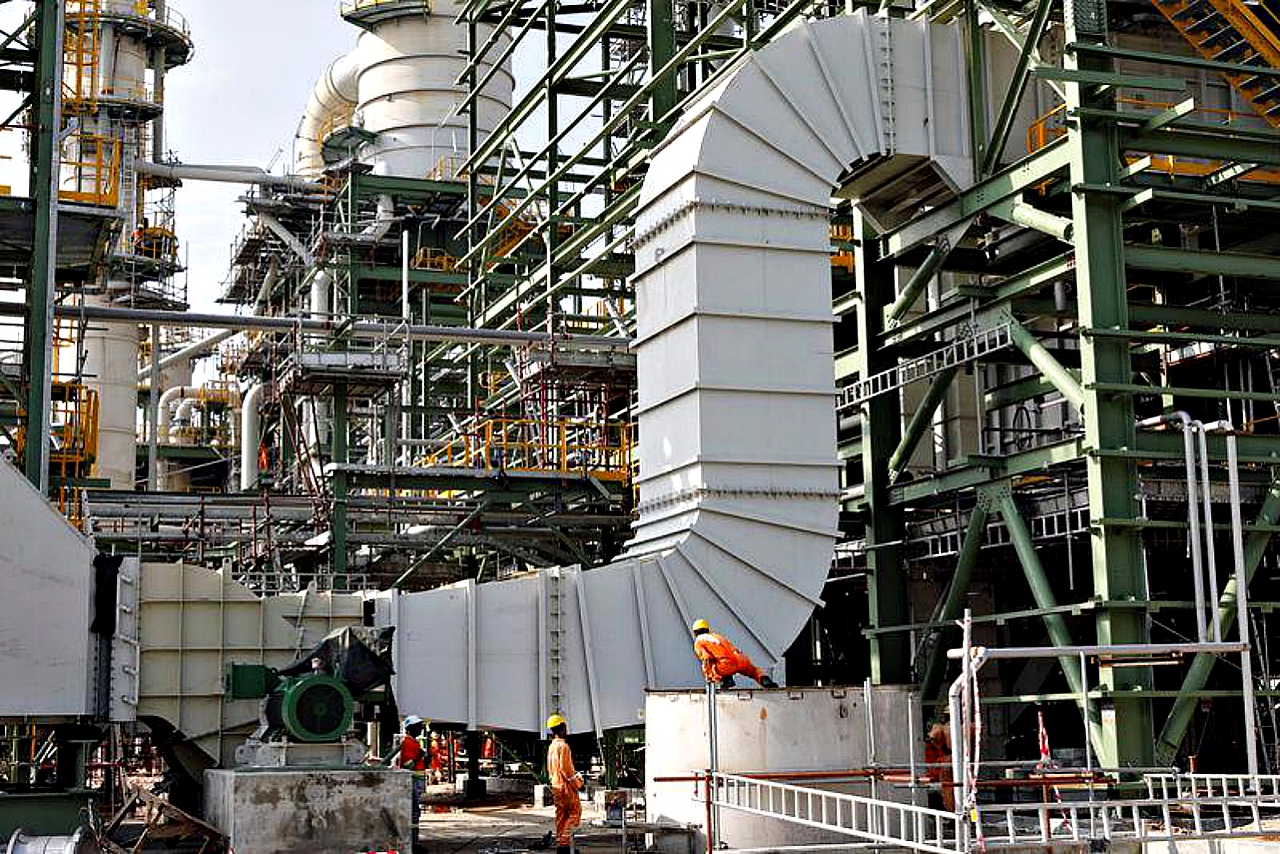
– And, of course, Africa’s richest man – Aliko Dangote – is far along with his plans. If things go on schedule, the 650,000 bpd refinery should go onstream sometime between 2020 and 2022. Located on the outskirts of Lagos, it will be fed with crude from the Niger Delta by two undersea pipelines.
The bottom line: For years, private-sector investment in refinery assets has been limited to small-scale plants scattered across the Delta, just like Azikel. Illegal refineries also exist, hidden in creeks within the Delta, keeping most of the (ex) militants busy while security agencies look the other way.
For the new refineries to become viable, a security and political settlement must surely be in the pipeline.
The Africa Report © Copyright 2019