Opinion
Before Africa Can Own Its Companies, It Must Own Its Corridors
Shared ownership of enterprise means nothing if the roads, borders, and logistics holding the continent together remain broken.


By Ziad Hamoui
The Africa CEO Forum in Kigali delivered a compelling rallying cry: Scale or Fail: Shared Ownership. It is exactly the right provocation for this moment. But as delegates return home and the memoranda of understanding move from signing ceremonies to desk drawers, a harder question demands an answer – one that no amount of boardroom enthusiasm can paper over.
Before Africa’s private sector can achieve meaningful shared ownership of companies and value chains, it must first secure shared ownership of something far more fundamental: the corridors, systems, and standards that make scale physically possible.
The Gap Between Vision and Velocity
This is where high-level policy collides with operational reality. Across West Africa today, CEOs deploying capital across borders must navigate a logistics environment that remains stubbornly fragmented.
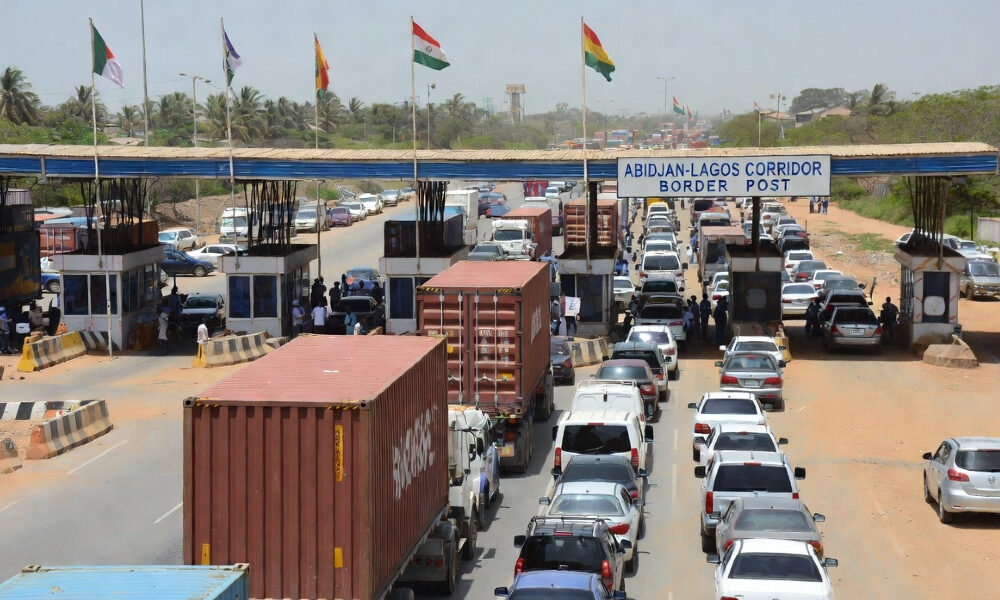
A truck traveling the 1,028-kilometer (639-mile) Abidjan-Lagos corridor – one of the continent’s most commercially vital arteries – can still be detained for up to 72 hours at a single border crossing. That is not a minor inconvenience. It is a structural tax on every investment made along that route.
Owning equity in a high-performing company does not generate returns if the roads linking its operations are unreliable. The value resides in the asset, but its commercial success depends entirely on the corridor.
Infrastructure is not a backdrop to investment – it is the investment’s nervous system.
Institutional Architecture That Must Follow the Money
Three structural interventions are non-negotiable if shared ownership is to mean anything beyond a forum theme.
First, transnational corridor bodies such as ALCoMA – which oversees the US$15.6 billion Abidjan-Lagos corridor – must be empowered with real coordinating authority, not merely convening power.
Second, the ECOWAS single-window system must move from aspirational policy to a genuinely functional digital reality, eliminating the documentary redundancies that bleed time and money at every crossing.
Third, harmonized axle load standards must be enforced consistently across member states; without them, the physical infrastructure deteriorates faster than it can be repaired, and private operators bear the cost.
None of this is technically complex. All of it is politically difficult. That is precisely why the private sector – not governments alone – must drive the demand.
Soft Infrastructure Is the Hard Problem
The Forum’s conversations on global overcapacity carried an important lesson: erecting tariff barriers is not a strategy for competitiveness. Building a genuinely integrated internal market is.
Yet that internal market cannot function while fragmented logistics erode Africa’s cost advantage before goods ever reach consumers.
Investment in so-called “soft infrastructure” – digital trade platforms, regulatory harmonization, and interoperable customs data systems – is not a secondary concern to be addressed after the big deals close. It is the precondition for those deals to deliver value at all.
CEOs and institutional investors must go further than committing capital. They must insist on tracking the metrics that reveal whether their operating environment is actually improving: transit times, customs clearance efficiency, and cargo dwell times.
What gets measured gets managed. What gets ignored gets worse.
The Question Kigali Left Unanswered
As the MOUs signed in Kigali begin their slow journey toward implementation, one fundamental question remains conspicuously unresolved: Can goods move freely, predictably, and affordably to the places where those investments are actually being made? If the answer is no – or even “not yet” – then shared ownership of companies remains a superficial achievement.
Equity stakes in well-run businesses operating inside broken logistics systems do not create the competitive, integrated Africa that the Forum envisions. They create islands of efficiency in a sea of friction.
The private sector has both the incentive and the credibility to lead the call for shared corridor governance and genuine institutional accountability. Governments respond to political pressure; they also respond to capital.
When Africa’s most influential investors make corridor performance a condition of deployment – not an afterthought – the political calculus changes.
From Aspiration to Accountability
The path forward is not complicated, even if it is demanding. Corridor performance data must be collected, published, and tied to the reputations of the institutions responsible for delivery.
Private sector coalitions must formalize their advocacy for logistics reform with the same energy they bring to tax negotiations. And multilateral development finance – which already funds hard infrastructure – must be explicitly conditioned on measurable improvements in the soft infrastructure that determines whether that hardware actually works.
Africa’s integration story is one of the most consequential economic narratives of this century. The continent has the demographics, the resources, and increasingly the entrepreneurial talent to build something genuinely transformative.
What it cannot afford is to let the ambition of shared ownership outrun the unglamorous, essential work of shared corridor governance.
Scale or fail. The choice is real. But scale requires movement – and movement requires corridors that work.
Ziad Hamoui is the Co-Founder and Past President of the Borderless Alliance, a leading private-sector advocacy group promoting economic integration and removing trade and transport barriers in West Africa. With extensive experience in Ghana’s road transport, logistics, and shipping sectors, he currently serves as Executive Director of Tarzan Enterprise Ltd., a long-established family business. He is a former Co-Chair of the Africa Food Trade Coalition, Co-Founder of the Trade Facilitation Coalition for Ghana, and serves on multiple high-level advisory committees on trade, transport, agriculture, and security. A Chartered Fellow of the Chartered Institute of Logistics and Transport (CILT) Ghana, he is also a former member of its Governing Council.