News
Barbados Prime Minister Mia Mottley calls for a reparations ‘Caribbean Marshall Plan’
“Reparations is an idea whose time has come”: Mia Mottley
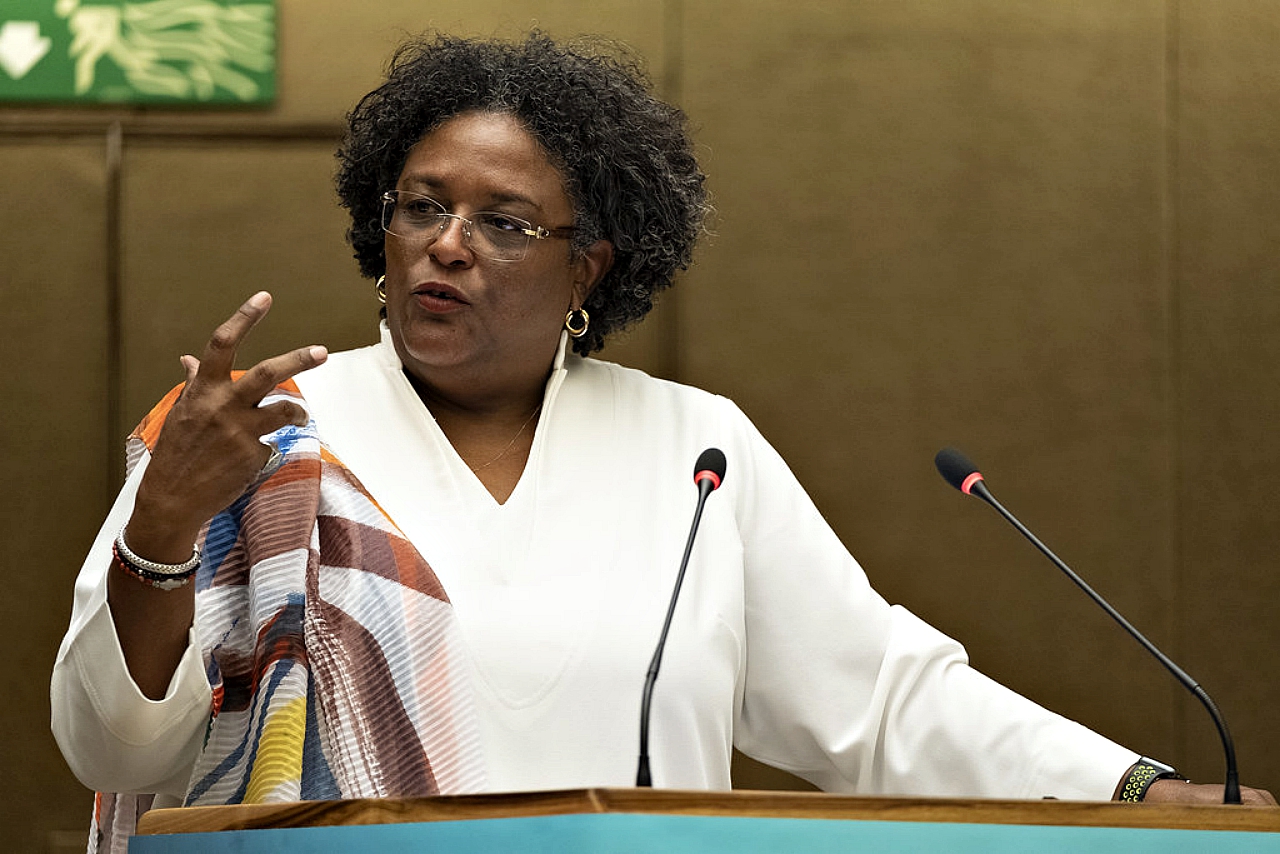
Barbados Prime Minister, Mia Mottley, is calling for a Caribbean Marshall Plan and for reparations to address “the economic decline” that the region will face as it confronts the negative impact of the pandemic and the inherent social and economic inequalities that continue to hinder its development.
The Prime Minister was referring to the US-funded economic recovery plan for the Western European nations that were devastated in the second World War. The initiative was named after George Marshall, who was the US Secretary of State at the time.
Mottley made her position known while addressing a recent virtual media engagement organised by the Caribbean Community (CARICOM) Reparations Commission (CRC) over which she has oversight as the current Chairperson of CARICOM’s Prime Ministerial Sub-committee on Reparations.
The CARICOM Reparations Commission was established in July 2013 by the region’s heads of government, to pursue reparations from the former slave-holding and colonising countries in Europe. Twelve Member States of CARICOM are today represented on the Commission.
Mottley said the poverty and underdevelopment that Barbados and other Caribbean countries inherited from the British and other European powers at the time of independence, meant that the region did not have the stability to easily move to the next level of growth while carrying large national debts and fighting the pandemic at the same time.
The Prime Minister argued that “it cannot be right” to accept that persons and states should, with no remorse, keep the proceeds of illicit gains from a crime against humanity without seeking to create a “development compact” for the people of this Region. She added that universities and commercial enterprises that benefited from slavery must also be held to account for their actions.
She said the international community needed to recognise that what the Caribbean Region would go through over the course of the pandemic threatened to undermine the medium-term viability of states in the region.
Mottley added that she was happy the rest of the world was beginning to understand now that “reparations is an idea whose time has come” and that the sensitivity to this issue was being appreciated, in particular, by the younger generation who had, over the course of the last few months, seen it come together with the public lynching of George Floyd and the subsequent massive protests in the United States and around the world against racism and racial violence.
She stated that the case for reparations for the Region, at this point, would allow it to move to the next level, with respect to education, healthcare, and access to capital, land and housing.
Mottley concluded her remarks by saying: “I have come here this morning to support, on behalf of our region, the legitimate cause that must continue to be the mission of those within both the public and private sector who recognise that we cannot get out of a forty-foot hole on our own, no matter how many decades have passed since the raising of the flag for independence; we need the assistance of the global community to right the injustices of the past, and to give us the appropriate platform, not just money, but space to ensure that we too can deliver for our people.”